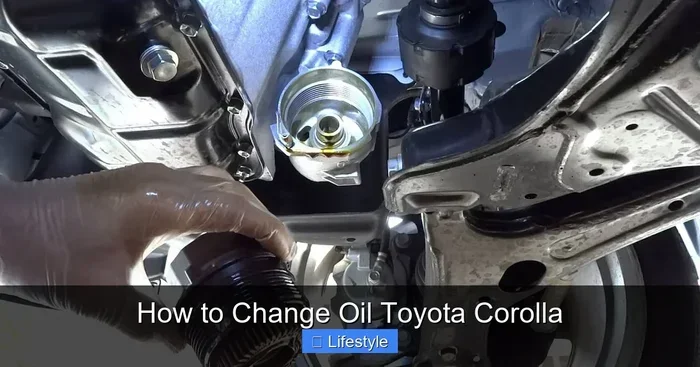
Can I Change My Toyota Corolla Oil Myself Right Now
Yes, you can change your Toyota Corolla oil yourself right now if you have the right tools and a little confidence. This guide walks you through every step, from picking the correct oil to draining the old stuff and replacing the filter. You will save money, learn a valuable skill, and keep your Corolla running strong.
You own a Toyota Corolla. You love that car. It has been reliable, affordable, and easy to maintain. But one question keeps popping up in your head: Can I change my Toyota Corolla oil myself right now? The answer is a confident yes. You do not need to be a mechanic. You do not need a fancy garage. All you need is a little knowledge, the right tools, and about thirty to forty-five minutes of your time.
Changing your own oil is one of the simplest and most rewarding DIY car maintenance tasks you can do. It saves you real money. It teaches you how your car works. And it gives you peace of mind knowing you did the job right. This guide covers everything you need to know. From picking the correct oil to draining the old stuff and replacing the filter. By the end, you will feel ready to roll up your sleeves and get it done.
Key Takeaways
- DIY oil changes save money: You can cut your Corolla oil change cost by 50% or more doing it yourself.
- You need basic tools: A wrench set, oil catch pan, jack stands, and a new oil filter are all you need.
- Pick the right oil: Check your owner manual for the correct viscosity and type for your specific Corolla model year.
- Follow safety steps: Always use jack stands and let the engine cool before starting.
- Dispose of old oil properly: Take used oil to a recycling center. Never dump it down drains.
- Know when to seek help: If you feel unsure or uncomfortable, a professional mechanic is always a smart choice.
📑 Table of Contents
Why Changing Your Corolla Oil Yourself Makes Sense
Let us talk about why DIY oil changes have become so popular among Toyota owners. The reasons are simple and practical. First, it saves you a significant amount of money. A typical shop oil change costs between fifty and one hundred dollars. When you do it yourself, your main cost is the oil and filter. That might run you twenty to forty dollars total. Over a year of regular changes, those savings add up fast.
Second, you control the quality of every part that goes into your engine. You choose the oil brand. You pick the filter. You know exactly what is happening inside your car. No upsells. No surprises. Third, learning this basic skill builds your confidence. Once you have changed your oil a few times, you start to feel more comfortable under the hood. That confidence can lead to tackling other maintenance tasks too.
Finally, there is the satisfaction factor. There is something genuinely rewarding about completing a maintenance job on your own car. You know you did it correctly. You saved money. And your Corolla runs better because of it. That feeling is hard to beat.
How Often Should You Change Your Corolla Oil
Most modern Toyota Corolla models need an oil change every five thousand to seven thousand five hundred miles. However, this can vary. Older models with conventional oil may need changes more often. Newer models using synthetic oil can sometimes go longer between changes. Always check your owner manual for the exact recommendation for your specific year and engine type.
Your driving habits also matter. If you frequently drive in stop-and-go traffic, tow heavy loads, or operate in extreme heat or cold, you may need to change your oil more often. These are called severe driving conditions. They cause oil to break down faster. The Toyota maintenance schedule in your owner manual will guide you on the right interval for your situation.
Tools and Materials You Will Need
Before you start, gather everything you need. Having all your tools ready makes the process smooth and stress-free. Here is your complete checklist:
- Correct engine oil: Check your owner manual for the right oil viscosity and type. Most Corollas use 0W-20 or 5W-30.
- New oil filter: Make sure it fits your specific Corolla model year. Check the part number in your manual or online.
- Oil catch pan: This catches the old oil as it drains. A pan with at least a six-quart capacity works well.
- Jack and jack stands: You need to lift the car safely. Never rely on just a jack. Use jack stands for stability.
- Socket wrench and drain plug socket: Usually a 14mm or 17mm socket, depending on your model year.
- Oil filter wrench: This helps loosen the old filter. A strap-style wrench works for most filters.
- Funnel: For pouring new oil cleanly into the engine.
- Disposable gloves: Keeps your hands clean and protects your skin from old oil.
- Rags or paper towels: For wiping spills and cleaning up.
- Torque wrench: To tighten the drain plug to the correct specification.
You can find all of these items at any auto parts store. A basic wrench set and a torque wrench are worth the investment if you do not already own them.
Quick Tips for Gathering Your Supplies
- Buy a little extra oil. You may need a half quart more than the listed capacity depending on whether you fully drain the old oil.
- Warm up the engine for two to three minutes before starting. This makes the oil flow faster and more completely.
- Place your catch pan directly under the drain plug. Old oil can spill when the plug first loosens.
- Check the oil filter size before you buy it. Filters vary even between similar model years.
Step-by-Step Guide to Changing Your Toyota Corolla Oil
Now for the main event. Follow these steps carefully and you will have a clean, successful oil change in no time.
Step One: Prepare the Vehicle
Park your Corolla on a flat, level surface. Turn off the engine and let it cool slightly. You do not want to touch hot engine parts. Engage the parking brake firmly. This is a critical safety step that should never be skipped.
Use your jack to lift the front of the car. Place jack stands under the designated lift points. You can find these points in your owner manual. Never work under a car supported only by a jack. Jack stands provide the stability you need to feel safe.
Step Two: Locate the Drain Plug and Oil Filter
Crawl under the front of your car. Look for the oil drain plug on the bottom of the engine block. It is usually a large bolt on the oil pan. Next to or near it, you will find the oil filter. On most Corollas, the filter is located on the front or side of the engine.
Place your catch pan directly beneath the drain plug. Make sure it is centered and large enough to hold all the old oil. A six-quart pan is usually sufficient for a Corolla.
Step Three: Drain the Old Oil
Using your socket wrench, slowly loosen the drain plug. Turn it counterclockwise. Be careful at first. The oil may be warm and could flow out quickly. Once the plug is loose, finish removing it by hand. Let the old oil drain completely into the catch pan.
While the oil is draining, take a moment to inspect the drain plug. Look for any signs of damage or wear on the threads. Check the oil gasket on the plug to make sure it is still in good condition. If the gasket looks worn or flattened, replace it before reinstalling the plug.
Wait about five to ten minutes for the oil to fully drain. This waiting period pays off in a cleaner result.
Step Four: Replace the Oil Filter
Position your catch pan under the oil filter. Use your oil filter wrench to loosen the old filter. Turn it counterclockwise. It may be tight. That is normal. Be patient and work it loose carefully.
Before installing the new filter, apply a thin layer of fresh oil to the rubber gasket on the new filter. This helps create a proper seal and makes future filter changes easier. Screw the new filter on by hand. Tighten it snugly but do not overtighten. Most filters need about three-quarters of a turn after the gasket contacts the engine.
Step Five: Reinstall the Drain Plug
Once all the oil has drained, reinstall the drain plug. Thread it in by hand first to avoid cross-threading. Then use your torque wrench to tighten it to the manufacturer specification. For most Corollas, this is between 25 and 30 foot-pounds. Using a torque wrench prevents over-tightening, which can strip the threads or damage the oil pan.
Step Six: Add New Oil
Remove the oil fill cap on top of the engine. Place a funnel in the opening. Pour in the new oil slowly. Check your owner manual for the exact oil capacity. Most Corollas take between four and five quarts.
After adding about three quarts, pause and check the oil level with the dipstick. Add more oil gradually until the level reaches the full mark on the dipstick. Do not overfill. Too much oil can cause engine problems.
Step Seven: Clean Up and Check Your Work
Replace the oil fill cap. Wipe away any spilled oil with a rag. Start the engine and let it run for about one minute. Check underneath the car for any leaks around the drain plug and oil filter. Turn off the engine and wait a few minutes for the oil to settle. Check the dipstick one more time to confirm the level is correct.
Lower the car off the jack stands. Remove the jack. Take your used oil and old filter to a recycling center. Most auto parts stores accept used oil for free. Never pour old oil down a drain or onto the ground. It is harmful to the environment and often illegal.
Choosing the Right Oil for Your Corolla
Picking the correct oil is one of the most important parts of this job. Using the wrong oil can reduce engine performance and even cause damage over time.
Understanding Oil Viscosity
Oil viscosity refers to how thick or thin the oil is at different temperatures. You will see numbers like 0W-20 or 5W-30 on every oil bottle. The first number (with the W for winter) tells you how the oil flows in cold temperatures. The second number tells you how it performs at operating temperature.
Most modern Toyota Corolla models require 0W-20 oil. This is a thin, lightweight oil that flows quickly in cold weather and protects the engine at high temperatures. Older Corolla models may use 5W-30. Always double-check your owner manual to confirm the correct oil viscosity for your specific car.
Synthetic vs Conventional Oil
Synthetic oil offers superior performance and protection. It resists breakdown at high temperatures and flows better in cold weather. It also lasts longer between changes. Conventional oil is more affordable and works well for standard driving conditions.
Many newer Corolla models come filled with synthetic oil from the factory. If your owner manual recommends synthetic, stick with it. The extra cost is worth the added protection for your engine.
| Oil Type | Pros | Cons | Best For |
|---|---|---|---|
| Synthetic | Best protection, longer intervals, flows well in cold | Higher cost | Newer Corollas, severe driving conditions |
| Conventional | Affordable, widely available | Breaks down faster, shorter intervals | Older Corollas, normal driving |
| Synthetic Blend | Good balance of cost and performance | Not as durable as full synthetic | Moderate driving, budget-conscious owners |
Common Mistakes to Avoid
Even simple tasks can go wrong if you are not careful. Here are the most common mistakes people make when changing their own Corolla oil.
- Skipping the new oil filter: Always replace the filter with every oil change. A dirty filter reduces oil flow and can harm your engine.
- Over-tightening the drain plug: This can strip the threads or crack the oil pan. Use a torque wrench and follow the specification.
- Under-tightening the drain plug: This causes leaks. Make sure the plug is snug and the gasket is in good shape.
- Forgetting to check the oil level: Always check with the dipstick after you finish. Running the engine low on oil is dangerous.
- Using the wrong oil: Wrong viscosity or oil type can lead to poor engine performance and increased wear.
- Not supporting the car safely: Never work under a car supported only by a jack. Jack stands are non-negotiable for safety.
- Disposing of old oil improperly: Always recycle used oil at a proper facility. It is the responsible and legal thing to do.
Expert Insight
Experienced DIY mechanics recommend keeping a maintenance log for your Corolla. Write down the date, mileage, oil type, and filter brand each time you change your oil. This simple habit helps you track your car’s health and makes future maintenance easier. It also adds value if you ever decide to sell the vehicle.
When to Call a Professional Instead
There is absolutely no shame in taking your car to a professional. Some situations make a DIY oil change less practical or less safe. Here are times when you should consider calling a mechanic.
- Your car is under warranty: Some warranties require oil changes to be performed by certified technicians. Check your warranty terms before doing it yourself.
- You lack the right tools: If you do not have a torque wrench or jack stands, it is safer to let a professional handle the job.
- You feel uncomfortable: There is no substitute for confidence. If you feel unsure about any step, a professional will do a better and safer job.
- Your car has unusual issues: If you notice leaks, strange noises, or low oil levels between changes, a mechanic can diagnose underlying problems.
- You are short on time: A professional oil change takes about fifteen minutes. If your schedule does not allow for a DIY session, that is perfectly fine.
A professional oil change at a Toyota dealership or trusted independent shop typically costs between fifty and one hundred dollars. The Corolla oil change cost at a dealership may be slightly higher but includes factory-trained technicians who know your specific model inside and out.
Finding a Reliable Mechanic for Your Corolla
If you decide to go the professional route, look for a shop that specializes in Japanese cars or Toyotas specifically. Ask friends for recommendations. Check online reviews. A good mechanic will treat your Corolla with care and give you honest advice about your maintenance needs.
Benefits of Regular Oil Changes for Your Toyota Corolla
Regular oil changes are the single most important thing you can do to extend the life of your engine. Clean oil lubricates moving parts, reduces friction, and carries heat away from critical components. Over time, oil breaks down and becomes contaminated with dirt, debris, and combustion byproducts. Old oil loses its ability to protect your engine effectively.
Here is what consistent oil changes do for your Corolla:
- Improve fuel efficiency by reducing engine friction
- Prevent costly engine repairs caused by metal-on-metal wear
- Keep your engine running smoothly and quietly
- Extend the overall lifespan of your vehicle
- Maintain your car’s resale value
- Reduce harmful emissions from your exhaust
Think of oil changes as health insurance for your engine. A small investment now prevents massive expenses later. A new engine can cost several thousand dollars. A simple oil change costs a fraction of that.
So to answer the question directly: Can I change my Toyota Corolla oil myself right now? Absolutely. You have the knowledge. You have the tools. You have the guidance. There is no better time than today to take control of your car’s maintenance and save money in the process.
Grab your supplies, find a flat spot in your driveway or garage, and get to work. Your Corolla will thank you with years of reliable service. And you will walk away with a new skill and a fuller wallet. That is a win-win situation every single time.
Frequently Asked Questions
What type of oil does a Toyota Corolla need?
Most modern Toyota Corolla models require 0W-20 synthetic oil. However, older models may use 5W-30 conventional or synthetic blend oil. Always check your owner manual for the exact specification for your specific model year and engine type.
How much does it cost to change oil on a Toyota Corolla yourself?
DIY oil change costs typically range from twenty to forty dollars for oil and a new filter. Compare that to fifty to one hundred dollars at a shop. The savings are significant, especially if you change your oil regularly throughout the year.
How long does it take to change a Corolla’s oil?
A first-time DIY oil change may take forty-five minutes to an hour. Once you have done it a few times, you can complete the job in thirty minutes or less. The key is to be prepared and have all your tools ready before you start.
Can I reuse the drain plug gasket when changing my oil?
It is best to replace the drain plug gasket every time you change your oil. The gasket is inexpensive and ensures a proper seal. Reusing a worn gasket increases the risk of leaks, which can lead to oil loss and engine damage over time.
Where can I dispose of my old oil and filter?
Most auto parts stores, including AutoZone and O’Reilly, accept used oil and filters for free recycling. You can also take them to your local municipal recycling center or hazardous waste facility. Never pour old oil down drains, onto the ground, or into the trash.
Do I need to reset the oil change reminder on my Corolla?
Yes, after completing an oil change, you should reset the maintenance reminder on your Corolla’s dashboard. The process varies by model year but usually involves holding a reset button on the instrument cluster while turning the ignition to the ON position. Refer to your owner manual for specific instructions.
=== CONCLUSION ===
Changing your own Toyota Corolla oil is one of the most practical and empowering skills a car owner can learn. The process is straightforward, the savings are real, and the satisfaction of doing it yourself is unmatched. Whether you are a complete beginner or a seasoned DIYer, the steps outlined in this guide give you everything you need to succeed.
Remember to gather your tools, choose the right oil, follow each step carefully, and dispose of your used oil responsibly. Your Toyota Corolla will run better, last longer, and serve you well for many miles to come. So go ahead, grab that wrench, and take on your next oil change with confidence. You have got this.