Ac Blower Motor Car Problems Symptoms And How To Fix
An ac blower motor car problem can leave you sweating on hot days, but the good news is most issues are easy to diagnose and fix. Weak airflow, strange noises, and intermittent operation are the top signs your car ac blower motor needs attention. This guide walks you through every symptom, cause, and fix step by step so you can get cool air flowing again fast.
There is nothing worse than climbing into your car on a scorching summer day and turning on the AC only to get warm air — or worse, nothing at all. The ac blower motor car system is the heart of your vehicle’s air conditioning. It pushes cooled air through the vents and into your cabin. When it stops working properly, your comfort goes right out the window.
Whether you are dealing with a noisy blower motor, weak airflow, or a motor that refuses to come on at all, this guide covers it all. We will look at the most common ac blower motor car problems, the symptoms you will notice, and exactly how to fix them. You do not need to be a mechanic to handle most of these repairs. With the right information and a little patience, you can save serious money on labor costs.
Let us dive into what makes your car ac blower motor tick, what goes wrong, and how to get things running smoothly again.
Key Takeaways
- Weak or no airflow: This is the #1 sign of a failing ac blower motor car issue and often points to a worn motor or bad resistor.
- Strange noises like grinding or squealing: These sounds usually mean worn bearings or debris inside the blower motor assembly.
- Intermittent operation: If your blower motor works sometimes and not others, the problem is likely a faulty resistor, relay, or wiring connection.
- Most fixes are DIY-friendly: Replacing the blower motor, resistor, or fuse is something most car owners can do at home with basic tools.
- Regular maintenance prevents problems: Cleaning the motor housing and checking electrical connections annually keeps your car ac blower motor running smoothly for years.
- Know when to call a pro: Complex electrical issues or repeated failures warrant a professional diagnosis to avoid costly mistakes.
📑 Table of Contents
- What Is an AC Blower Motor and Why It Matters
- Common AC Blower Motor Car Problems and Symptoms
- How to Diagnose Your AC Blower Motor Issues
- Step-by-Step Guide to Fixing Your AC Blower Motor
- AC Blower Motor Replacement: DIY vs. Professional
- Preventive Maintenance Tips for Your AC Blower Motor
- Common Mistakes People Make When Fixing AC Blower Motor Problems
- Expert Insights on AC Blower Motor Longevity
- Key Takeaways
- Conclusion
What Is an AC Blower Motor and Why It Matters
The ac blower motor car component is a small electric motor housed inside your vehicle’s HVAC (heating, ventilation, and air conditioning) system. Its job is simple but critical — it draws air across the evaporator coil or heater core and forces it through the dashboard vents. Without a working blower motor, your AC system cannot deliver cooled or heated air into the cabin.
Most automotive blower motor units are located behind the dashboard on the passenger side. They sit inside a housing that also contains the cabin air filter or pollen filter. The motor typically has a fan blade attached to its shaft that spins at different speeds depending on your settings.
Here is how the system works in simple terms:
- The AC compressor cools the refrigerant and sends it through the evaporator.
- The blower motor pulls air from outside or recirculates cabin air.
- That air passes over the cold evaporator coils.
- The cooled air is pushed through the vents into your car.
If any part of this chain fails, you lose airflow. But the blower motor itself is the engine that makes it all happen. That is why a car ac blower motor not working issue is so frustrating — it affects every other part of the system.
How Long Does a Blower Motor Last?
A quality automotive blower motor typically lasts between 100,000 and 150,000 miles. However, driving conditions, climate, and how often you use your AC can shorten that lifespan. Cars driven in hot, dusty, or coastal environments tend to see blower motor wear earlier. Regular maintenance, like replacing your cabin air filter, can help extend the life of your motor significantly.
Common AC Blower Motor Car Problems and Symptoms
Your car will tell you when something is wrong with the ac blower motor car system. The key is knowing what to listen for and what to look out for. Here are the most common symptoms that point to a blower motor problem.
Weak or No Airflow From the Vents
This is the most obvious sign. If you turn your AC to full blast and barely feel any air coming out, your car ac blower motor is struggling. In severe cases, there may be no airflow at all. Weak airflow can be caused by a worn-out motor that no longer spins with enough force, a clogged motor housing, or a failing resistor that limits the motor’s speed.
Sometimes the issue is not the motor itself but debris blocking the airflow path. Leaves, dirt, and other particles can build up around the blower fan or inside the housing. Before replacing anything, check that the cabin air filter is clean and that nothing is physically blocking the intake.
Strange Noises From the Dashboard
A healthy blower motor should produce a smooth, quiet hum. If you hear grinding, squealing, rattling, or whining sounds when you turn on the AC, something is wrong. Grinding noises often mean the motor bearings are worn out. Rattling could indicate a broken fan blade or debris stuck inside the housing.
Squealing sounds sometimes point to a slipping belt if your vehicle uses a belt-driven blower system, though most modern cars use electric motors. In any case, unusual noises should never be ignored. They usually get worse over time and can lead to complete motor failure if left unaddressed.
Blower Motor Works on Only One Speed
If your ac blower motor car only works on one speed setting — say, high speed — but not on lower settings, the culprit is often the blower motor resistor. The resistor controls the electrical current that reaches the motor at different speed levels. When it fails, the motor may only work on the highest setting because that setting bypasses the resistor entirely.
In some vehicles, the resistor is integrated into the motor assembly itself. In others, it is a separate component located nearby. Either way, this is a relatively inexpensive and straightforward fix.
Intermittent Operation
Does your blower motor work sometimes and then stop without warning? Intermittent operation is one of the trickiest ac blower motor car problems to diagnose. It is often caused by a loose electrical connection, a failing relay, or a resistor that is beginning to corrode.
The problem may also be related to the blower motor control module, which is found in newer vehicles. This module regulates the motor’s speed electronically rather than using a simple resistor. When the control module fails, you may get unpredictable behavior from the blower motor.
Burning Smell When the AC Is On
A burning smell coming from your vents is always a cause for concern. If the smell is electrical and comes on when you turn the blower motor to high, the motor’s wiring or windings may be overheating. This can happen when the motor is straining under a heavy load or when the internal insulation is breaking down.
Do not ignore a burning smell. Shut off the AC and have the vehicle inspected as soon as possible. Continuing to run a motor that is overheating can cause further damage to the electrical system or even create a fire hazard.
Blown Fuse Related to the Blower Motor
If the fuse that controls your car ac blower motor keeps blowing, there is an underlying electrical problem. A short circuit in the motor windings, damaged wiring, or a seized motor can all draw too much current and blow the fuse repeatedly. Simply replacing the fuse without finding the root cause will not solve the problem.
Check your owner’s manual to locate the correct fuse box and identify the blower motor fuse. If the fuse is blown, inspect the wiring and motor before installing a new one.
How to Diagnose Your AC Blower Motor Issues
Diagnosing a car ac blower motor not working issue does not require expensive diagnostic tools in most cases. With a basic multimeter, a fuse tester, and a little mechanical know-how, you can narrow down the problem quickly.
Step 1: Check the Fuse
Start with the simplest thing first. Locate the blower motor fuse in your fuse box and inspect it. A blown fuse will have a visible break in the metal strip inside. If the fuse is blown, replace it with one of the correct amperage. If the new fuse blows immediately, you have a short circuit somewhere in the system that needs further investigation.
Step 2: Test the Blower Motor Resistor
If the fuse is fine but the motor only works on certain speeds, the resistor is the likely suspect. Use a multimeter to test the resistor for continuity. No continuity means the resistor has failed and needs replacement. This test takes just a few minutes and can save you the cost of replacing the entire motor.
Step 3: Check the Relay
The blower motor relay sends power to the motor when you turn on the AC. A failed relay will prevent the motor from getting any power at all. You can swap the relay with a similar one from another circuit to test it. If the motor works after the swap, the relay was the problem.
Step 4: Inspect the Wiring and Connectors
Loose or corroded connectors are a common cause of ac blower motor car issues. Follow the wiring harness from the motor to the control module and check for any damaged wires, loose plugs, or green corrosion on the connectors. Clean any corroded connections with electrical contact cleaner and re-seat them firmly.
Step 5: Test the Motor Directly
If all the other components check out, the motor itself may be the problem. Disconnect the motor connector and apply direct battery voltage to the motor terminals. If the motor does not spin or spins weakly, it needs to be replaced. Listen for any grinding or scratching sounds during this test, as they indicate internal bearing failure.
Step-by-Step Guide to Fixing Your AC Blower Motor
Once you have identified the problem, it is time to fix it. Here is how to handle the most common ac blower motor car repairs.
Replacing the Blower Motor Resistor
The resistor is one of the easiest and cheapest repairs you can do. Most vehicles have the resistor located near the blower motor housing under the dashboard. You will need a screwdriver, a pair of pliers, and a replacement resistor that matches your vehicle’s make and model.
Start by disconnecting the negative battery terminal for safety. Remove the screws or clips holding the resistor in place. Unplug the electrical connector and pull out the old resistor. Install the new one, reconnect the wiring, and reassemble. Turn on the AC to test all speed settings before closing everything up.
Replacing the Blower Motor
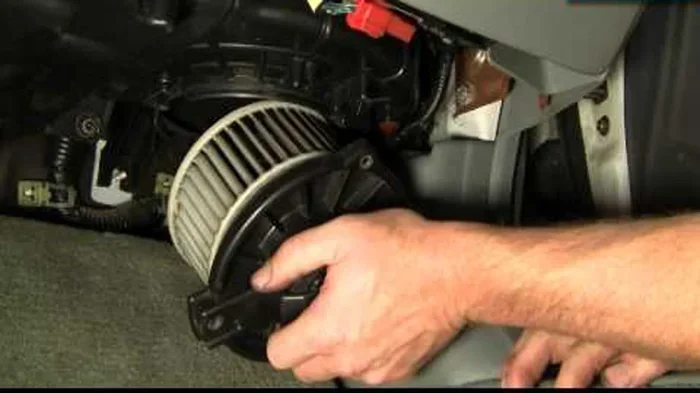
If the motor itself has failed, replacement is the only real fix. Access to the motor varies by vehicle. In most cars, you will need to remove the glove box or a panel under the dashboard to reach the motor housing.
Here is the general process:
- Disconnect the battery negative terminal.
- Remove the cabin air filter if present.
- Take out the screws or bolts holding the motor housing.
- Disconnect the electrical connector and any vacuum lines.
- Pull the old motor out and remove the fan blade if attached separately.
- Install the new motor and reattach the fan blade.
- Reassemble everything in reverse order.
- Reconnect the battery and test the system.
Replacement motors range from $30 to $150 depending on your vehicle. The entire job usually takes about one to two hours for a DIYer with basic tools.
Replacing the Blower Motor Relay
A faulty relay is one of the simplest fixes on this list. Relays are plug-and-play components. Locate the blower motor relay in the fuse box, pull it out, and swap it with a matching relay from another circuit. If the motor starts working after the swap, you have confirmed the relay was bad. Install a new relay and you are done.
Fixing Wiring and Connection Issues
Corroded or damaged wiring can cause all sorts of intermittent ac blower motor car problems. Repairing wiring involves cleaning the corroded ends with a wire brush or electrical contact cleaner, applying dielectric grease to prevent future corrosion, and reconnecting everything securely. If a wire is broken or frayed, splice in a new section using soldered connectors and heat-shrink tubing.
Always make sure to reconnect the battery negative terminal before testing your repairs. And never work on electrical components with the battery connected if you are not confident in your approach.
AC Blower Motor Replacement: DIY vs. Professional
One of the biggest decisions car owners face is whether to tackle a repair themselves or pay a mechanic. Here is a simple comparison to help you decide.
| Factor | DIY Repair | Professional Repair |
|---|---|---|
| Cost | Parts only ($30-$150 for motor, $10-$30 for resistor) | Parts plus labor ($150-$400 total) |
| Time | 1-3 hours depending on experience | 1-2 hours at the shop |
| Skill Level | Basic mechanical skills needed | None required |
| Tools | Screwdriver set, multimeter, pliers | Shop provides all tools |
| Risk | Mistakes can cause additional damage | Warranty on parts and labor |
| Best For | Simple repairs like resistor or fuse replacement | Complex electrical issues or repeated failures |
For straightforward repairs like replacing a blower motor resistor or a fuse, DIY is almost always the better choice. These jobs require minimal tools and come with clear instructions. Replacing the entire blower motor is a bit more involved but still well within reach for most home mechanics. The hardest part is usually accessing the motor behind the dashboard.
If you are uncomfortable working with electrical components or if the problem keeps coming back despite your repairs, take your vehicle to a qualified mechanic. Repeated failures can indicate a deeper electrical issue that requires professional diagnostic equipment to find.
When to Call a Professional
There are times when calling a pro is the smart move. If you have checked the fuse, resistor, relay, and wiring and the motor still does not work, the problem may be in the ac blower motor control module or the vehicle’s computer system. These require specialized diagnostic tools and software to properly troubleshoot.
Also call a professional if you smell burning insulation or see smoke. These are signs of serious electrical issues that can be dangerous if not handled correctly. A mechanic can safely diagnose and repair the problem without risking further damage to your vehicle.
Preventive Maintenance Tips for Your AC Blower Motor
The best way to deal with ac blower motor car problems is to prevent them from happening in the first place. A little regular maintenance can extend the life of your blower motor and keep your AC system running strong for years.
Replace Your Cabin Air Filter Regularly
A clogged cabin air filter restricts airflow and forces the blower motor to work harder than it should. Most manufacturers recommend replacing the cabin filter every 12,000 to 15,000 miles, or once a year. In dusty or high-pollution areas, you may need to replace it more frequently. This is one of the easiest and most cost-effective maintenance tasks you can do for your HVAC system.
Keep the Blower Motor Housing Clean
Debris like leaves, dirt, and dust can accumulate around the blower motor intake over time. Periodically check the area around the motor housing and clean out any debris. A can of compressed air works great for blowing out dust and dirt from hard-to-reach areas. Keeping the housing clean helps the motor breathe and operate efficiently.
Check Electrical Connections Annually
Corrosion on electrical connectors is a silent killer of automotive blower motor components. Once a year, inspect the connectors at the motor and resistor for any signs of green or white buildup. Clean them with electrical contact cleaner and apply a thin coat of dielectric grease. This simple step can prevent intermittent electrical issues and extend the life of your connections.
Run Your AC Regularly
Even in winter, it is a good idea to run your AC for a few minutes every couple of weeks. This keeps the seals and internal components lubricated and prevents them from drying out or seizing up. Running the AC also helps remove moisture from the system, which prevents mold and mildew buildup in the blower motor housing.
Address Strange Noises Early
If you notice any unusual sounds coming from your dashboard vents, do not ignore them. Early intervention can prevent a minor bearing issue from turning into a complete motor failure. A small repair today can save you the cost of a full motor replacement tomorrow.
Common Mistakes People Make When Fixing AC Blower Motor Problems
Even with good intentions, car owners sometimes make mistakes when troubleshooting ac blower motor car issues. Here are the most common ones to avoid.
- Replacing the motor when the resistor is the real problem: Many people assume the motor is dead when it is actually the resistor causing the issue. Always test the resistor first before buying a new motor.
- Ignoring the cabin air filter: A dirty filter mimics many blower motor symptoms, including weak airflow. Check the filter before assuming the motor has failed.
- Using the wrong fuse amperage: Installing a fuse with too high an amperage can damage the motor wiring or create a fire hazard. Always match the fuse to the specifications in your owner’s manual.
- Forgetting to disconnect the battery: Working on electrical components without disconnecting the battery is a safety risk. Always remove the negative terminal first before beginning any electrical repair.
- Over-tightening screws during reassembly: The plastic housing around the blower motor can crack easily if you overtighten the screws. Hand-tighten and snug, but do not force it.
Expert Insights on AC Blower Motor Longevity
Experienced auto technicians agree that the ac blower motor car system is one of the most neglected components in a vehicle’s HVAC setup. Most people only think about their blower motor when it stops working.
According to seasoned mechanics, the biggest factor in blower motor longevity is airflow. When the intake is clear and the cabin filter is clean, the motor does not have to work as hard and lasts significantly longer. Another pro tip is to avoid running the AC at full blast constantly. Varying the speed and using recirculate mode wisely reduces the strain on the motor over time.
Technicians also recommend keeping a spare resistor and fuse in your glove box. These inexpensive parts can get you through a long trip if your blower motor acts up unexpectedly. It is a small investment that pays off in convenience and peace of mind.
Key Takeaways
- Know the symptoms: Weak airflow, strange noises, intermittent operation, and burning smells all point to ac blower motor car problems that need attention.
- Diagnose before you replace: Use a multimeter to test the fuse, resistor, relay, and wiring before assuming the motor itself is faulty.
- Most repairs are affordable and DIY-friendly: Replacing a resistor or fuse costs under $50 and takes less than an hour for most vehicles.
- Know your limits: Simple repairs are great for DIYers, but complex electrical issues are best left to a professional mechanic.
- Preventive maintenance pays off: Regular cabin filter changes, clean motor housings, and annual connection checks keep your car ac blower motor running strong.
- Do not ignore warning signs: Addressing minor issues early prevents costly motor replacements down the road.
Conclusion
Dealing with an ac blower motor car problem can be frustrating, especially on a hot day when you need cool air the most. But the truth is, most blower motor issues are straightforward to diagnose and fix. Whether it is a blown fuse, a worn resistor, or a motor that has reached the end of its life, the fix is almost always within reach — and usually affordable.
The key is to pay attention to the early warning signs. Weak airflow, strange noises, and intermittent operation are your car’s way of telling you something needs attention. The sooner you address these symptoms, the simpler and cheaper the repair will be.
Use the diagnostic steps and repair guides in this article to tackle the problem with confidence. Even if you are not a seasoned mechanic, the information here gives you everything you need to get your car ac blower motor working again. And if the problem turns out to be beyond a simple fix, you will at least know what is going on before you walk into a shop.
Take care of your automotive blower motor today, and it will keep you cool and comfortable for many miles to come. Your future self — on that next hot summer day — will thank you for it.
Frequently Asked Questions
What causes an ac blower motor to stop working in a car?
The most common causes include a blown fuse, a failed blower motor resistor, a bad relay, corroded wiring, or a worn-out motor itself. In some cases, debris blocking the motor housing or a seized fan blade can also prevent the motor from working. Start by checking the fuse and work your way through the electrical components before assuming the motor is dead.
How much does it cost to replace a car ac blower motor?
The parts for a car ac blower motor replacement typically cost between $30 and $150 for the motor itself. If you take it to a shop, labor charges will add $100 to $250 depending on your vehicle and location. Doing it yourself saves the labor cost entirely and is a manageable weekend project for most car owners.
Can I drive my car with a bad blower motor?
Yes, you can drive with a failed ac blower motor car system, but you will lose the ability to cool or heat your cabin. In winter, this can be a serious safety concern if your windshield fogs up and you cannot clear it. In summer, it is simply uncomfortable and potentially dangerous in extreme heat. It is best to address the issue promptly.
How do I know if my blower motor resistor is bad?
The clearest sign of a bad blower motor resistor is when the motor only works on one speed setting, usually high. You may also notice that the motor does not work at lower speeds at all. Testing the resistor with a multimeter for continuity will confirm whether it has failed. Replacement is inexpensive and takes about 15 minutes.
Why does my ac blower motor make a grinding noise?
A grinding noise usually indicates worn motor bearings or debris caught in the fan assembly. Over time, the bearings inside the motor dry out and create friction against the rotating shaft. This causes the grinding sound you hear. Left unaddressed, the motor can seize completely and require full replacement. Addressing the noise early can sometimes save the motor.
How often should I replace my ac blower motor?
A well-maintained automotive blower motor should last between 100,000 and 150,000 miles. However, this varies based on driving conditions, climate, and how frequently you use your AC. Cars in dusty or coastal environments may see earlier wear. Regular maintenance like cleaning the motor housing and replacing cabin filters can help extend the motor’s lifespan significantly.