How Fast Was the Old Toyota Supra Really Back in the Day
The old Toyota Supra was a force to be reckoned with, packing serious horsepower and reaching speeds that stunned the automotive world. From the legendary MK4 to the earlier MK3, the Supra delivered jaw-dropping acceleration and top speeds that rivaled many supercars of its era. Whether you are a car enthusiast or just curious about Toyota’s iconic sports car, this guide breaks down exactly how fast the old Toyota Supra really was.
Key Takeaways
- Blazing Speed: The Toyota Supra MK4 could reach top speeds of over 155 mph with its twin-turbo engine.
- Impressive Acceleration: The Supra could go from 0 to 60 mph in as little as 4.6 seconds in stock form.
- Legendary Engine: The 2JZ engine in the Supra became one of the most famous and tunable engines in automotive history.
- Multiple Generations: Each Supra generation brought improvements in speed, handling, and technology.
- Racing Heritage: The Supra made a name for itself on tracks and drag strips around the world.
- Enduring Legacy: Even today, the old Toyota Supra remains one of the most sought-after Japanese sports cars ever built.
📑 Table of Contents
- How Fast Was the Old Toyota Supra Really Back in the Day
- The Supra Generations and Their Speeds
- The Legendary 2JZ Engine
- Acceleration and Quarter-Mile Performance
- How the Supra Compares to Modern Sports Cars
- The Supra’s Racing and Pop Culture Legacy
- What It Was Like to Own and Drive an Old Supra
- Why the Old Supra Still Matters Today
- Final Thoughts on the Old Supra’s Speed
How Fast Was the Old Toyota Supra Really Back in the Day
The Toyota Supra has always held a special place in the hearts of car lovers. When people talk about old Toyota Supra speed, they are usually referring to the MK4 generation that rolled out from 1993 to 2002. This was the Supra that turned heads on streets and dominated tracks around the globe. But just how fast was the old Toyota Supra really? The answer might surprise you.
Back in the 1990s, the Supra was not just another sports car. It was a statement. With its sleek design and thunderous engine, the Supra stood toe-to-toe with some of the best sports cars money could buy. The Toyota Supra top speed figures were enough to make any car enthusiast’s heart race. And the acceleration? Even by today’s standards, the old Supra holds its own.
What made the Supra so special was not just raw speed. It was the combination of speed, reliability, and tunability that made it a legend. The old Toyota Supra performance was backed by engineering that Toyota had been perfecting for years. The Supra was born from a racing lineage, and that DNA showed in every model.
The Supra Generations and Their Speeds
To truly understand how fast the old Toyota Supra was, you need to look at each generation. Toyota built several versions of the Supra over the years, and each one brought something new to the table. Let us break down the key generations and their performance numbers.
The Supra MK3 (A70) – 1986 to 1992
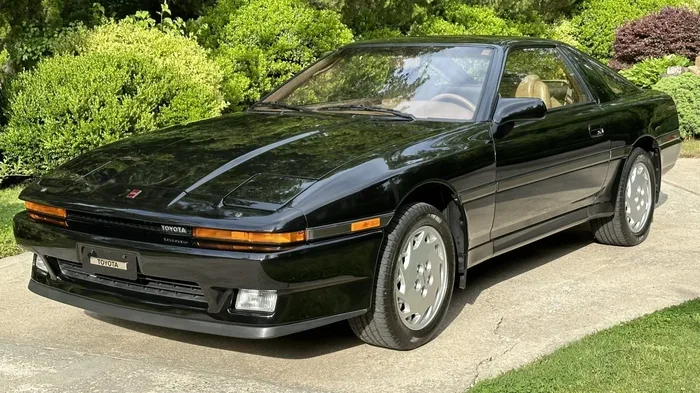
The MK3 Supra was the car that put Toyota on the map as a serious sports car maker. The first Supra models came with a naturally aspirated inline-six engine that produced around 145 horsepower. That might not sound like much today, but back then, it was respectable for a Japanese sports car.
As the MK3 evolved, Toyota introduced the turbocharged version. The turbo MK3 Supra pushed out about 190 horsepower and could hit a top speed of around 145 mph. The acceleration from 0 to 60 mph took roughly 5.7 seconds. For the mid-1980s, those numbers were impressive.
The MK3 also gave us the famous Supra Turbo that appeared in the Fast and Furious franchise. That movie appearance skyrocketed the Supra’s popularity and made the old Toyota Supra a household name. People around the world wanted a piece of that speed.
The Supra MK4 (A80) – 1993 to 2002
The MK4 is the Supra that everyone remembers. This was the golden era of the Supra, and the numbers speak for themselves. The twin-turbo 2JZ engine in the MK4 Supra produced 320 horsepower in its stock form. That is serious power for a car that weighed around 3,400 pounds.
The Toyota Supra MK4 top speed was officially rated at 155 mph. In real-world conditions, many owners reported hitting speeds closer to 160 mph. The 0 to 60 mph sprint took about 4.6 seconds in stock trim. Those numbers put the MK4 Supra in the same league as many expensive European sports cars.
Are Old Toyota Supras Rare? The MK4 was produced in decent numbers, but demand has always been high. Today, clean examples of the MK4 Supra can be hard to find, and their value continues to climb. The Supra’s reputation for speed and reliability made it a collector’s dream.
The Legendary 2JZ Engine
You cannot talk about the old Toyota Supra without talking about the 2JZ engine. The Toyota Supra 2JZ engine is one of the most famous engines ever built. It was a 3.0-liter inline-six that came in naturally aspirated and twin-turbo versions. But it was the twin-turbo variant that made the Supra a speed demon.
What made the 2JZ engine so special was its sturdy internals. The engine block was cast from high-quality iron, and the internals were built to handle serious stress. This meant that the engine could take a lot of abuse and still keep running. Many enthusiasts pushed the 2JZ engine well beyond its stock horsepower limits through simple upgrades.
The 2JZ engine became the backbone of the Toyota Supra tuning community. People all over the world modified their Supras to extract hundreds of extra horsepower. Some builds pushed the engine past 1,000 horsepower while still using the stock block. That kind of tunability is rare, and it is a big part of why the old Supra remains so popular today.
Toyota built the 2JZ engine with a factory boost limit of around 11 to 12 psi. But the engine could handle much more. This over-engineering is exactly what made the Supra such a legend in the Japanese sports car world.
Engine Specs at a Glance
- Engine Type: 3.0-liter inline-six (2JZ-GE naturally aspirated, 2JZ-GTE twin-turbo)
- Horsepower (Stock): 220 to 320 hp depending on the version
- Torque: Up to 315 lb-ft in the twin-turbo version
- Redline: Around 6,800 to 7,000 RPM
- Compression Ratio: 8.5:1 (turbo) to 10.5:1 (naturally aspirated)
Acceleration and Quarter-Mile Performance
Top speed is one thing, but acceleration tells the real story of a car’s performance. The old Toyota Supra was blisteringly quick off the line. The MK4 Supra could launch from a standstill and reach 60 mph in just over 4.5 seconds. That is faster than many modern family sedans.
In the quarter mile, the Supra posted times in the low 13-second range in stock form. With a few modifications, dedicated owners could push the quarter-mile time into the 11-second range. The Toyota Supra quarter mile times became a point of pride among Supra owners and a benchmark for the car’s raw performance.
What made the Supra’s acceleration so impressive was the combination of power and weight. The car was not overly heavy, and the twin-turbo engine delivered torque in a wide, usable range. This meant that the Supra could pull hard from low RPMs all the way up to the redline. The result was a car that felt quick in every gear and at every speed.
For comparison, let us look at how the Supra stacked up against some of its rivals from the same era.
Supra vs. Rivals Comparison
| Car | Horsepower | 0 to 60 mph | Top Speed |
|---|---|---|---|
| Toyota Supra MK4 (1993) | 320 hp | 4.6 seconds | 155 mph |
| Nissan 300ZX Twin Turbo | 300 hp | 5.0 seconds | 155 mph |
| Mazda RX-7 Turbo | 255 hp | 5.3 seconds | 155 mph |
| Ferrari 348 (1993) | 300 hp | 4.8 seconds | 176 mph |
As you can see, the Supra held its own against much more expensive cars. The old Toyota Supra performance was genuinely competitive with European exotics that cost several times more. This value proposition is a big reason why the Supra remains so beloved today.
How the Supra Compares to Modern Sports Cars
It is easy to look back at the old Supra and wonder how it measures up against today’s sports cars. Modern technology has come a long way, and today’s cars are faster, safer, and more efficient. But the Supra still has a lot to offer, even by modern standards.
A brand-new Toyota GR Supra starts at around 382 horsepower. That is more than the old Supra, but the old Supra had a certain raw character that modern cars sometimes lack. The old Supra felt analog and connected to the road in a way that many modern cars do not. The steering feedback, the exhaust note, the surge of boost from the twin turbos, these were experiences that modern drivers still crave.
The Toyota Supra generations each brought their own character. The MK3 was more accessible and affordable, making it a great entry point into the Supra world. The MK4 was the peak, the car that defined a generation of sports cars. And even the newer Supra models carry the torch that the old Supra lit decades ago.
The Supra’s Racing and Pop Culture Legacy
The Supra did not just look fast. It was fast. Toyota entered the Supra in various racing series, and the car proved itself on the track. The Supra competed in everything from grassroots autocross events to professional endurance races. Its combination of speed, durability, and handling made it a favorite among privateer racers and factory teams alike.
In the world of pop culture, the Supra became iconic. The car featured prominently in movies, video games, and television shows. The most famous appearance was in the Fast and Furious franchise, where the MK4 Supra became the hero car for the character Brian O’Conner. That single movie appearance did more for the Supra’s reputation than any advertising campaign ever could.
The Supra also became a staple in the Japanese sports car tuning scene. Shows like Initial D and countless car magazines featured the Supra in a glowing light. Young enthusiasts grew up dreaming of owning a Supra, and for many, that dream became a reality years later when they saved up enough money.
Beyond movies and magazines, the Supra earned respect in the Toyota Supra racing community. Tuned Supras have set impressive lap times on some of the most demanding tracks in the world. The combination of a powerful engine and a well-balanced chassis made the Supra a formidable competitor on any course.
What It Was Like to Own and Drive an Old Supra
Owning an old Toyota Supra was a unique experience that few modern cars can replicate. The Supra was not just about speed. It was about the entire driving experience. The way the car felt when you turned the key, the sound of the engine as boost kicked in, the way the car gripped the road through corners, all of it came together to create something special.
Daily driving a Supra in the 1990s was a mixed bag. The car was comfortable enough for long road trips, with decent seats and a reasonable amount of cargo space. But the firm suspension and responsive steering meant that every drive felt engaging. You were never just going from point A to point B. You were always driving.
Maintenance on an old Supra was straightforward for the most part. Toyota built the car with reliability in mind, and the 2JZ engine was famously durable. However, finding a knowledgeable mechanic for a Supra could sometimes be a challenge. The Toyota Supra maintenance cost was generally reasonable, but specialized work like turbo rebuilds or engine swaps required someone with the right expertise.
Today, finding a good mechanic for a classic Supra is easier thanks to the growing enthusiast community. Many Toyota dealerships now have technicians who are familiar with older Supra models. But if you want the best care for your Supra, you might want to seek out a specialist who has experience with Japanese sports cars of that era.
The cost of keeping an old Supra on the road has gone up over the years. Parts for the MK4 Supra can be expensive, especially for body panels and interior components that are no longer in production. But for most owners, the joy of driving a Supra far outweighs the costs. There is something irreplaceable about the experience of behind the wheel of one of these cars.
Why the Old Supra Still Matters Today
More than 25 years after the last MK4 Supra rolled off the assembly line, the car still commands respect. The old Toyota Supra speed and performance numbers still impress, even when compared to modern sports cars. But what keeps the Supra relevant today is more than just numbers on a spec sheet.
The Supra represents a moment in automotive history when Japanese manufacturers were proving that they could build world-class sports cars. Before the Supra, many people did not take Japanese sports cars seriously. The Supra changed that perception forever. It showed that a Japanese car could go head-to-head with the best sports cars from Europe and America.
The Toyota Supra legacy lives on in every generation of Supra that followed. The current GR Supra may have a different character, but it carries the spirit of the old Supra. And for those who want the real deal, the old MK4 Supra remains the pinnacle of Supra performance.
If you are considering buying an old Supra, there are a few things to keep in mind. First, check the car’s history carefully. The Supra was a popular target for thieves in the 1990s, and many cars were involved in accidents. Second, look for maintenance records. A well-documented Supra with regular service is worth more than one with a mysterious past. Third, get a pre-purchase inspection from someone who knows Supras.
The price of old Supras has risen significantly in recent years. Clean MK4 examples can command prices well above their original MSRP. But for enthusiasts, the investment is worth it. Owning a Supra is not just about transportation. It is about being part of a community, a legacy, and a shared love of one of the greatest sports cars ever built.
The old Toyota Supra was fast, fun, and unforgettable. Its speed, style, and engineering excellence earned it a permanent spot in automotive history. Whether you are a longtime Supra fan or someone discovering the car for the first time, the Supra’s story is one that deserves to be told and celebrated.
The Supra proved that speed does not have to come at the cost of reliability. It showed that a sports car could be practical enough for daily use and exciting enough to satisfy the need for speed. That balance is something that few cars have ever achieved, and it is why the old Supra continues to be admired by car lovers around the world.
Final Thoughts on the Old Supra’s Speed
So, how fast was the old Toyota Supra really? The answer is clear. The Supra was fast enough to compete with the best sports cars of its era, tunable enough to become even faster, and reliable enough to be driven every day. The combination of speed, engineering, and cultural impact makes the Supra one of the most important sports cars ever made.
Whether you remember the Supra from the 1990s or you are discovering it now, the car’s speed and performance are undeniable. The old Supra was a true sports car in every sense of the word. And its legacy continues to inspire new generations of car enthusiasts who dream of the day they can get behind the wheel of one of these incredible machines.
The next time you see a Supra on the road, take a moment to appreciate what that car represents. It is not just a car. It is a piece of automotive history that proved Japanese engineering could go just as fast as anything else on the planet. And that is a legacy that will never fade.
Frequently Asked Questions
How fast could the Toyota Supra MK4 go in stock form?
The Toyota Supra MK4 had a stock top speed of 155 mph and could accelerate from 0 to 60 mph in about 4.6 seconds. These numbers were impressive for a car in its class and competitive with many European sports cars of the same era.
What engine was in the old Toyota Supra?
The old Toyota Supra was powered by the legendary 2JZ engine. The twin-turbo version, known as the 2JZ-GTE, produced 320 horsepower in stock form. The naturally aspirated version, the 2JZ-GE, produced around 220 horsepower and was known for its smooth power delivery.
Was the old Supra faster than the Nissan 300ZX?
Yes, the old Supra MK4 was generally faster than the Nissan 300ZX Twin Turbo in stock form. The Supra’s 320 horsepower gave it a slight edge in acceleration and overall performance. Both cars were excellent performers, but the Supra had the advantage of more power and a lighter curb weight.
Can you still buy an old Toyota Supra today?
Yes, you can still buy old Toyota Supras, especially the MK3 and MK4 generations. However, prices have risen significantly over the years due to high demand and limited supply. Clean, low-mileage examples can be quite expensive, but the investment is well worth it for enthusiasts who appreciate the car’s history and performance.
How much did the old Toyota Supra cost when it was new?
When the MK4 Supra was new in the early 1990s, it started at around $30,000 to $35,000 depending on the trim and options. Adjusted for inflation, that is roughly $65,000 to $75,000 in today’s dollars. Considering the car’s performance and features, it was a competitive price for a sports car of that caliber.
Is the old Toyota Supra a good daily driver?
The old Toyota Supra can make a great daily driver for those who appreciate sports cars. The car is reliable, comfortable enough for long trips, and exciting to drive every day. However, older models may require more maintenance and care than modern cars, so be prepared for occasional repairs and upkeep.
=== CONCLUSION ===
The old Toyota Supra was a remarkable car that delivered speed, style, and reliability in one package. From the MK3 to the legendary MK4, the Supra gave enthusiasts a Toyota Supra speed experience that few cars could match. The old Toyota Supra performance was backed by the incredible 2JZ engine, a twin-turbo powerhouse that became the stuff of automotive legend.
Whether you are looking at the Supra for its historical significance, its racing pedigree, or its place in pop culture, one thing is certain. The old Supra was fast, and it left a mark on the automotive world that will never be forgotten. The Toyota Supra legacy continues to inspire car lovers of all ages, and the Supra’s reputation as one of the fastest Japanese sports cars ever built is well deserved.
If you are thinking about buying an old Supra or simply want to learn more about its history, the story of the Supra is one worth exploring. The car represents an era when Toyota dared to build a sports car that could go toe-to-toe with the best in the world. And it won. The old Toyota Supra was fast, and it was just getting started.