How Do You Check Tire Pressure on a Toyota Dashboard
Checking tire pressure on a Toyota dashboard is simple and essential for safe driving. The Toyota tire pressure monitoring system (TPMS) alerts you when pressure drops below safe levels. This guide walks you through reading dashboard symbols, resetting the tire pressure light, and maintaining proper tire pressure on any Toyota vehicle.
Your Toyota dashboard speaks to you. It uses lights, symbols, and messages to tell you what is going on under the hood. One of the most important signals it sends is about your tire pressure. When that little horseshoe-shaped light pops up on your dash, it means something needs your attention. In this guide, we will walk you through exactly how to check tire pressure on a Toyota dashboard, step by step. You will learn what the symbols mean, how to reset the warning, and how to keep your tires in great shape all year long.
Keeping your tire pressure at the right level is not just about avoiding a dashboard warning. It is about safety, fuel savings, and making your tires last longer. A tire pressure monitoring system, or TPMS, does the heavy lifting for you. It watches your tire air levels and alerts you when something is off. But knowing how to read and respond to that alert makes all the difference. Let us dive in and make sure you are fully prepared.
Key Takeaways
- TPMS Warning Light: The dashboard symbol looks like a horseshoe with an exclamation mark and tells you when tire pressure is low.
- Proper Pressure Matters: Keeping tires at the recommended PSI improves fuel economy, handling, and tire life.
- Reset Is Easy: Most Toyota models let you reset the tire pressure light in just a few minutes.
- Manual Check Helps: Using a tire pressure gauge at a gas station gives you exact readings beyond what the dashboard shows.
- Safety First: Ignoring low tire pressure warnings can lead to blowouts, poor braking, and uneven tire wear.
- Toyota-Specific Steps: Different Toyota models may have slightly different reset procedures for the TPMS system.
📑 Table of Contents
- Understanding the Toyota Tire Pressure Dashboard Light
- How to Check Tire Pressure on a Toyota Dashboard
- How to Reset the Tire Pressure Light on a Toyota
- Manual Tire Pressure Checks: Why They Still Matter
- Common Mistakes People Make With Tire Pressure
- Toyota Dashboard Symbols You Should Know
- Final Thoughts on Checking Tire Pressure on Your Toyota Dashboard
Understanding the Toyota Tire Pressure Dashboard Light
What Does the TPMS Warning Light Look Like?
The Toyota tire pressure warning light is easy to spot. It looks like a horseshoe or a U-shape with an exclamation mark in the middle. On some Toyota models, the light may also show the letters TPMS. When you start your car, this light should briefly turn on and then go off. If it stays lit, that means one or more tires have low pressure. If it flashes, there may be a problem with the TPMS sensor itself.
Different Toyota models display this light slightly differently. The Toyota Camry shows a clear dashboard symbol on the instrument cluster. The Toyota RAV4 may show the same symbol but also include a message on the multi-information display. The Toyota Corolla and Toyota Highlander follow similar patterns. No matter the model, the message is the same: check your tire pressure soon.
Why Does the Tire Pressure Light Come On?
Several things can trigger the tire pressure light on your Toyota dashboard:
- Low air pressure: One or more tires have lost air below the recommended PSI level.
- Temperature changes: Cold weather can cause air inside tires to contract, lowering pressure temporarily.
- Puncture or leak: A nail, screw, or damaged valve stem can cause slow air loss over time.
- Sensor malfunction: The TPMS sensor battery may be dying or the sensor may need replacement.
- Seasonal pressure shifts: Air pressure inside tires drops about 1 PSI for every 10-degree drop in temperature.
Sometimes the light comes on after you rotate your tires or change them out for seasonal ones. This happens because the system needs recalibration. In that case, a simple reset usually solves the problem.
How to Check Tire Pressure on a Toyota Dashboard
Step-by-Step Dashboard Check
Checking your tire pressure through the Toyota dashboard is straightforward. Here is exactly what to do:
- Start the engine: Turn the key or press the start button. Let the car idle for a few seconds.
- Look at the instrument cluster: Find the tire pressure warning light on the dashboard.
- Check for a message: Many newer Toyota models display a text message below the gauge cluster. It may say “Check Tire Pressure” or show which specific tire is low.
- Use the steering wheel controls: On models with a multi-information display, press the up or down buttons on the steering wheel to scroll through vehicle status screens.
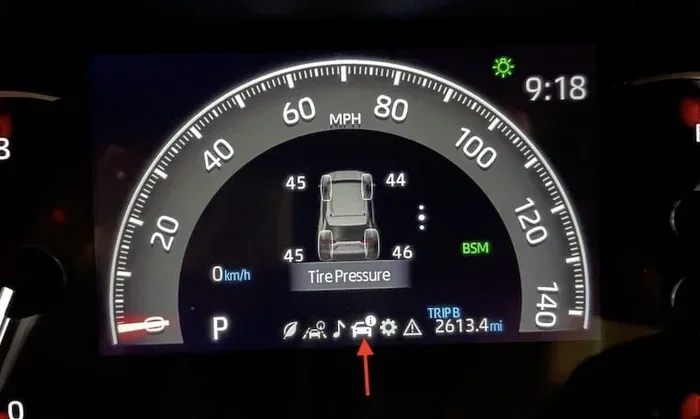
- Find the tire pressure screen: Navigate to the tire pressure menu. It will show the PSI reading for each tire individually.
- Compare to recommended levels: Check the readings against the recommended tire pressure for your Toyota model.
Most Toyota vehicles display pressure readings in PSI (pounds per square inch). The recommended pressure for your specific Toyota can be found on a sticker inside the driver’s door frame. It is also listed in the owner’s manual under the Toyota service manual section.
Using the Multi-Information Display
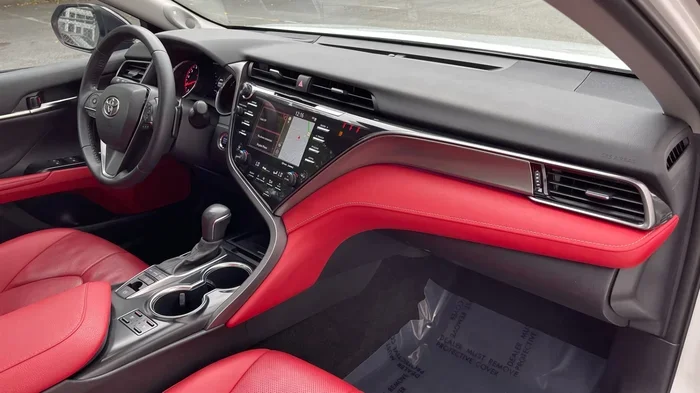
Toyota’s multi-information display is a powerful tool for monitoring tire pressure. On models like the Toyota Camry and Toyota RAV4, this screen sits behind the steering wheel. You can scroll through different vehicle readings including speed, fuel economy, and tire pressure.
To access the tire pressure screen:
- Press the MENU or DISP button on the steering wheel.
- Scroll to the Vehicle Status section.
- Select Tire Pressure Monitoring.
- Read the PSI values for each tire.
This built-in feature removes the guesswork. You do not need to physically check each tire with a gauge to get a general idea of pressure levels. The dashboard gives you real-time data from the TPMS sensors mounted inside each wheel.
Recommended Tire Pressure for Toyota Models
Every Toyota model has a specific recommended tire pressure level. Here is a quick comparison table for popular Toyota models:
- Toyota Camry: 32 PSI (front and rear)
- Toyota RAV4: 32 PSI (front and rear)
- Toyota Corolla: 32 PSI (front and rear)
- Toyota Highlander: 35 PSI (front), 35 PSI (rear)
- Toyota Tacoma: 32 PSI (front), 32 PSI (rear)
- Toyota 4Runner: 32 PSI (front), 32 PSI (rear)
These numbers are general guidelines. Always check the sticker on your driver’s door frame for the exact specification for your trim level and tire size. Proper tire inflation affects ride comfort, handling, and even your fuel economy. Under-inflated tires create more rolling resistance, which means your engine works harder and uses more gas.
How to Reset the Tire Pressure Light on a Toyota
Reset Using the Dashboard Controls
Once you have checked and inflated your tires to the correct level, you need to reset the tire pressure light. Most Toyota models make this process simple:
- Turn the ignition to ON: Do not start the engine. Just press the start button once or turn the key to the ON position.
- Press and hold the TPMS reset button: This button is usually located below the steering wheel on the left side of the dash.
- Hold for about three seconds: The tire pressure warning light should start blinking three times.
- Release the button: Start the engine and let the car idle for about 20 minutes.
- Check the dashboard: The light should turn off after the system recalibrates.
If the light does not go off after resetting, it could mean one of the tires is still below the recommended pressure. Double-check each tire with a manual tire pressure gauge to be sure.
Reset on Models Without a TPMS Button
Some newer Toyota models do not have a physical TPMS reset button. On these vehicles, you can reset the system through the infotainment screen:
- Go to the Settings menu on the touchscreen.
- Navigate to Vehicle Settings.
- Select Tire Pressure Monitoring.
- Choose the Reset option.
- Confirm the reset and drive the vehicle for 10 to 15 minutes.
This method works on many Toyota dashboard systems from 2018 and newer. If you are unsure, the Toyota owner’s manual will have model-specific reset instructions.
When to See a Toyota Service Center
Sometimes resetting the light does not solve the problem. If the tire pressure warning light keeps coming back, you may have a deeper issue. A faulty TPMS sensor could be sending incorrect readings. Or one of your tires may have a slow leak that you cannot see. In these cases, it is best to visit a Toyota service center. They have professional diagnostic tools that can read each sensor individually and pinpoint the exact problem.
Regular Toyota vehicle maintenance includes checking your tire pressure at every service interval. A certified Toyota technician can also inspect the TPMS sensors for battery life and proper function. Most Toyota sensors have a battery life of 5 to 10 years before they need replacement.
Manual Tire Pressure Checks: Why They Still Matter
Using a Tire Pressure Gauge
Even though your Toyota dashboard gives you readings, a manual check is still valuable. A tire pressure gauge is a small, inexpensive tool that gives you an exact PSI reading. You can find one at any auto parts store or gas station for just a few dollars.
Here is how to use one:
- Check tires when cold: Always measure pressure before driving or at least three hours after the car has been parked.
- Remove the valve cap: Twist the small cap off the tire valve stem.
- Press the gauge firmly: Push the gauge onto the valve stem until you hear no more air escaping.
- Read the number: The gauge will show the current PSI. Compare it to the recommended level.
- Add air if needed: Use an air pump at a gas station to bring the pressure up to the correct level.
- Replace the valve cap: Put the cap back on to keep dirt and moisture out of the valve.
Manual checks are especially important before long road trips. They give you peace of mind that every tire is properly inflated. You can also catch slow leaks early before they trigger the dashboard warning light.
Quick Tips for Maintaining Proper Tire Pressure
Here are some expert tips to keep your tire pressure in great shape:
- Check pressure monthly: Air naturally escapes from tires over time. A monthly check keeps you ahead of any problems.
- Check before long trips: A quick check before a road trip can prevent issues on the highway.
- Do not trust the visual check: Tires can lose up to 50% of their air and still look normal. Always use a gauge.
- Check the spare tire too: Your spare tire also needs proper pressure. You do not want to find out it is flat when you need it most.
- Keep a gauge in your trunk: Having your own gauge means you can check anytime, anywhere.
- Rotate your tires regularly: Tire rotation helps ensure even wear and accurate TPMS sensor readings.
Proper tire maintenance is one of the easiest ways to extend the life of your tires and improve your Toyota’s fuel efficiency. It also keeps you and your passengers safe on the road.
Common Mistakes People Make With Tire Pressure
Ignoring the Warning Light
The biggest mistake drivers make is ignoring the tire pressure light on the dashboard. Some people see it and keep driving, hoping it will go away. This is risky. Low tire pressure causes uneven tire wear, reduced fuel economy, and in severe cases, a blowout. If the light comes on, check your tires as soon as possible.
Ignoring the warning can also affect your ability to drive my Toyota Camry with the check engine light on or other dashboard alerts. Multiple warning lights at once can indicate a broader vehicle health issue that needs attention.
Over-Inflating the Tires
Some people think more air is better. That is not true. Over-inflated tires have a smaller contact patch with the road. This leads to a harsher ride, reduced traction, and faster wear in the center of the tread. Always inflate to the manufacturer’s recommended PSI, not the maximum PSI printed on the tire sidewall.
Forgetting to Reset After Inflation
After you fix low pressure and add air, the dashboard light will not turn off on its own. You must reset the TPMS system. Forgetting this step means the warning light stays on, which can confuse you and mask real future problems. Always reset after correcting the pressure.
Relying Only on the Dashboard
The TPMS system is a helpful tool, but it is not perfect. It only alerts you when pressure drops significantly below the recommended level. By the time the light comes on, your tire may already be under-inflated by 25% or more. Regular manual checks with a tire pressure gauge catch problems before they trigger the dashboard warning.
Toyota Dashboard Symbols You Should Know
Your Toyota dashboard is packed with useful information. Beyond the tire pressure warning light, there are other symbols worth knowing. Understanding these dashboard indicators helps you stay on top of your vehicle’s health.
For example, if you ever notice the check engine light on your Toyota Camry, you can learn more about what it means and whether it is safe to drive. The Toyota dashboard uses a consistent design language across models, so once you learn one symbol, you can recognize it on any Toyota.
Other common Toyota dashboard symbols include the oil pressure warning, battery alert, and brake system warning. Each one serves as an early alert system for potential problems. Staying informed about these symbols helps you address issues before they become costly repairs.
Regularly reviewing your Toyota dashboard and understanding what each symbol means is a great habit. It keeps you informed, safe, and confident behind the wheel. And it helps you get the most out of your Toyota ownership experience.
Final Thoughts on Checking Tire Pressure on Your Toyota Dashboard
Checking tire pressure on a Toyota dashboard is one of the simplest and most important things you can do as a Toyota owner. The TPMS system gives you real-time alerts, and the dashboard display shows you exact pressure readings for each tire. Combined with regular manual checks using a tire pressure gauge, this approach keeps your tires safe, your fuel economy optimized, and your ride smooth.
Remember to reset the tire pressure light after every inflation fix. Keep your tires at the recommended PSI levels for your specific Toyota model. And do not ignore warning signs on your dashboard. Your Toyota communicates with you for a reason. Listening to it keeps you safe and saves you money in the long run.
If you ever find yourself unsure about a dashboard symbol or vehicle warning, consult your Toyota owner’s manual or visit a certified Toyota service center. Taking care of your tires today means fewer surprises tomorrow. Drive safe, stay informed, and keep those tires properly inflated.
Frequently Asked Questions
How do I know if my Toyota tire pressure is low?
The tire pressure warning light on your Toyota dashboard will illuminate. It looks like a horseshoe with an exclamation mark in the center. Some Toyota models also display a text message saying “Check Tire Pressure.” You can also use a manual tire pressure gauge to get an exact PSI reading for each tire.
Can I drive my Toyota with the tire pressure light on?
It is not recommended. Low tire pressure affects handling, braking, and fuel economy. If you must drive a short distance, reduce your speed and avoid sharp turns. Visit a gas station or tire shop as soon as possible to check and inflate your tires to the recommended level.
How often should I check my Toyota tire pressure?
You should check your tire pressure at least once a month. It is also a good idea to check before long road trips and during seasonal temperature changes. Cold weather can cause air inside tires to contract, triggering the dashboard warning even when no leak is present.
Where is the TPMS reset button on a Toyota?
On most Toyota models, the TPMS reset button is located below the steering wheel on the left side of the dashboard. Press and hold it for about three seconds while the ignition is in the ON position. The tire pressure warning light will blink three times to confirm the reset. Some newer models use the infotainment screen instead of a physical button.
How long does a Toyota TPMS sensor battery last?
Toyota TPMS sensor batteries typically last between 5 and 10 years. When the battery dies, the sensor cannot send accurate pressure readings. If your tire pressure light stays on even after you have inflated your tires correctly, a dead sensor battery may be the cause. A Toyota service center can replace the sensor for you.
What PSI should my Toyota tires be at?
The recommended tire pressure varies by Toyota model and trim. Most Toyota cars and SUVs require between 32 and 35 PSI. You can find the exact number on the sticker inside your driver’s door frame or in the Toyota owner’s manual. Always follow the manufacturer’s recommendation rather than the maximum PSI printed on the tire sidewall.
=== CONCLUSION ===
Checking tire pressure on a Toyota dashboard is a quick, easy habit that keeps you safe and saves money. The TPMS system does the monitoring for you, but a manual check with a gauge adds an extra layer of confidence. Reset the warning light after every fix, stay on top of monthly checks, and never ignore dashboard warnings. Your Toyota will reward you with better fuel economy, longer tire life, and a smoother, safer ride every time you hit the road.