How to Pass Your Vehicle Inspection With Tinted Windows
Passing your vehicle inspection with tinted windows is easier than most drivers think. You just need to know your local tint laws, check your tint percentage, and carry the right paperwork. This guide covers everything from legal visible light transmission limits to quick fixes that solve common tint-related inspection failures.
You just got your car back from the tint shop. It looks amazing. The sleek, dark finish gives your vehicle that polished, custom look you have been dreaming about. But then you remember your vehicle inspection is coming up. And suddenly, a question pops into your head. Will your tinted windows pass inspection? You are not alone. Thousands of drivers face this exact concern every year. The good news is that with the right knowledge, you can absolutely pass inspection with tinted windows. This guide walks you through everything you need to know.
Whether you live in a state with strict tint laws or a more lenient one, understanding the rules puts you ahead. You will learn how to measure your tint percentage, what paperwork to bring, and how to fix common problems before inspection day. Let us dive in and make sure your car is ready to go.
Key Takeaways
- Know Your Local Laws: Every state has different tint percentage limits. Check your state’s specific rules before the inspection.
- Measure Your Tint: Use a tint meter to verify your window tint percentage meets legal requirements.
- Keep Documentation Ready: Carry your tint certification sticker, medical exemption letter, or manufacturer’s certificate if applicable.
- Fix Common Issues First: Bubbles, peeling, and cracked tint are the top reasons tinted windows fail inspection.
- Factory Tint Counts: Many newer vehicles come with factory tint that already complies with inspection standards.
- Medical Exemptions Exist: Some states allow darker tints with a doctor’s prescription or exemption form.
- Act Early: If your tint needs adjustment, give yourself time before the inspection date.
📑 Table of Contents
- Understanding Tinted Window Inspection Rules
- Check Your Tint Percentage Before the Inspection
- Documentation and Paperwork That Helps
- Common Reasons Tinted Windows Fail Inspection
- Quick Fixes to Get Your Tinted Windows Inspection-Ready
- Expert Tips for Long-Term Tint Compliance
- Comparison: Tint Darkness by State
- Conclusion
Understanding Tinted Window Inspection Rules
Before you schedule your inspection, you need to understand the basic rules. Every state sets its own regulations for window tint percentage. These rules exist for safety reasons. Tinted windows can reduce visibility, especially at night or in bad weather. Law enforcement officers also need to see inside your vehicle during traffic stops. So the rules balance personal preference with public safety.
What Is Visible Light Transmission (VLT)?
The key term you will hear everywhere is visible light transmission, or VLT. VLT measures how much light passes through your window tint. The lower the number, the darker the tint. For example, a 5% VLT tint lets in only 5% of light. That is very dark. A 70% VLT tint is nearly clear. Most states require a minimum VLT for different windows on your vehicle.
Here is how VLT typically breaks down by window:
- Windshield: Most states allow a non-reflective tint strip at the top only.
- Front Side Windows: Often require 70% or higher VLT.
- Rear Side Windows: Usually allow darker tint than front windows.
- Rear Window: Often the most lenient window for dark tint.
Why Do Inspection Stations Check Tint?
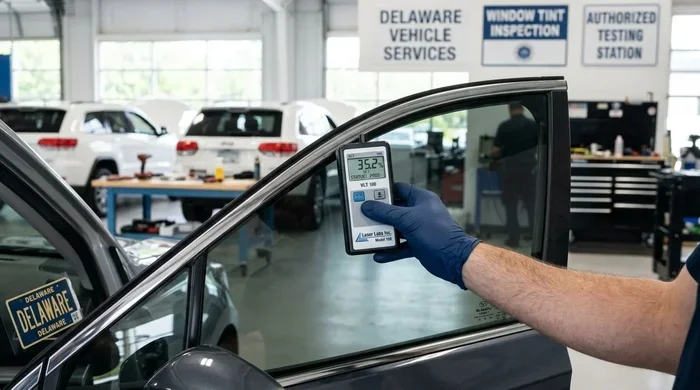
Inspection stations check tinted windows because they are part of the safety evaluation. During a state inspection, the inspector looks at your entire vehicle. They check lights, brakes, tires, and yes, your window tint. If your tint is too dark, your vehicle will not pass. It is that simple. The inspector uses a tint meter to measure the actual VLT of each window. This device gives an accurate reading in seconds.
Understanding this process helps you prepare. You know exactly what they are looking for. There are no surprises. You can walk into the inspection station confident and ready.
Check Your Tint Percentage Before the Inspection
The single most important step you can take is measuring your tint percentage yourself. Do not guess. Do not assume your tint shop told you the right number. Get an accurate reading.
How to Measure Your Tint at Home
You can buy a tint meter online for under $50. These small devices slide against your window and give you an instant VLT reading. Some inspectors even let you use their meter before the official test. It never hurts to ask.
Here is what to do step by step:
- Find a shaded area to test your windows. Direct sunlight can affect readings.
- Place the tint meter flat against the inside of each window.
- Record the VLT percentage for every window.
- Compare your numbers to your state’s legal limits.
If any window falls below the legal limit, you have a problem. But do not panic. There are solutions, and we will cover them shortly.
Factory Tint vs. Aftermarket Tint
Here is something many drivers do not realize. Your vehicle might already have factory tint. Many modern cars come with a light tint baked into the glass from the factory. This factory tint usually has a VLT around 70% to 80%. It often passes inspection without any issues.
Aftermarket tint, on the other hand, is applied after purchase. The quality and darkness vary widely. Some aftermarket tints are very light and fully compliant. Others are dangerously dark. The key difference is that factory tint is usually documented in your vehicle’s specifications. Aftermarket tint may require a tint certification sticker or certificate from the installer.
Quick Tip: Check your vehicle owner’s manual or ask your dealer about factory tint specs. This information can save you time and money at the inspection station.
Documentation and Paperwork That Helps
Walking into an inspection with the right paperwork makes a huge difference. Inspectors appreciate drivers who are prepared. Here is what you should have ready.
Tint Certification Sticker
Many states require a tint certification sticker on the driver’s side window. This sticker proves your tint was installed by a licensed professional and meets state standards. If your state requires this sticker and you do not have it, your vehicle may fail inspection.
Ask your tint installer for this sticker when you get your windows tinted. A reputable shop will always provide it. Keep it in a safe place and make sure it is placed on the correct window.
Medical Exemption Forms
Some drivers need darker tint for medical reasons. Conditions like lupus, photosensitivity, or melanoma require extra protection from UV rays. In many states, you can apply for a medical exemption tint that allows darker windows than the standard limit.
To qualify, you typically need a letter from your doctor. This letter should explain your condition and recommend the specific tint darkness. Carry this letter with you during the inspection. Some states issue a special exemption sticker for vehicles with medical tint waivers.
Manufacturer’s Certificate of Tint
If you purchased aftermarket tint, keep the manufacturer’s certificate. This document lists the VLT rating of your specific tint film. Inspectors sometimes ask for this to verify compliance. Without it, they may assume the worst. Having this paperwork ready eliminates doubt.
State-Specific Tint Laws Reference
Every state publishes its own tint law online. Before your inspection, look up your state’s Department of Motor Vehicles website. Find the exact VLT requirements for each window. Print this information and keep it in your glove box. If the inspector has any questions, you can show them the official reference.
Common Reasons Tinted Windows Fail Inspection
Now let us talk about what goes wrong. Understanding common failure points helps you avoid them. Most tinted window inspection failures fall into a few predictable categories.
Tint That Is Too Dark
This is the number one reason tinted windows fail inspection. Your tint might have looked fine when you got it installed. But laws change, or your installer may have applied a darker film than you requested. Either way, if your VLT is below the legal minimum, you will fail.
This happens more often than you might think. Some tint shops use film that is darker than advertised. Others simply make mistakes during the installation. Always verify your tint percentage with a meter after installation.
Bubbles, Peeling, or Cracking
Even if your tint percentage is legal, damaged tint can still cause a failure. Bubbled tint creates uneven surfaces that interfere with visibility. Peeling tint collects dirt and moisture underneath. Cracked tint blocks light unevenly. All of these issues can raise red flags during inspection.
Inspectors look at the condition of your tint, not just the darkness. If your tint is deteriorating, it may signal that it was applied poorly or that the film is low quality.
Reflective or Metallic Tint
Some tint films have a reflective or metallic finish. These tints look cool, but many states prohibit them. Reflective tint can blind other drivers, especially at night. It also interferes with traffic cameras and law enforcement equipment. If your tint has any reflective properties, check your state’s rules before relying on it to pass inspection.
Tint on the Windshield
The windshield has its own set of rules in most states. A dark or fully tinted windshield is almost universally prohibited. Most states only allow a thin strip of non-reflective tint at the top of the windshield, usually no more than a few inches. If your windshield has any tint beyond this strip, you will likely fail inspection.
Common Mistake: Many drivers apply aftermarket tint to their windshield for glare reduction. This is illegal in most states and will guarantee inspection failure. Use a sunshade instead.
Missing Certification or Sticker
Some states require a visible tint certification sticker on the vehicle. If your inspector cannot find it, your vehicle may fail even if the tint itself is legal. Make sure the sticker is placed where it is clearly visible and has not faded or fallen off.
Quick Fixes to Get Your Tinted Windows Inspection-Ready
If you discover your tinted windows are not inspection-ready, do not despair. There are several quick fixes that can solve the problem.
Remove or Replace the Tint
If your tint is too dark, you have two main options. You can remove it entirely, or you can replace it with a lighter film. Tint removal is straightforward. A professional can strip the old film and apply a new one in a single visit. Expect to pay between $100 and $400 depending on the number of windows and the quality of the film you choose.
If you want to keep some tint, ask your installer for a film that meets your state’s VLT requirements. They can recommend the right shade and film type for your needs.
Repair Bubbles and Peeling
Small bubbles can sometimes be repaired without full replacement. A professional tint shop can use a needle to release trapped air and smooth the surface. However, if the damage is extensive, full replacement is the better option. Trying to patch old, damaged tint rarely looks good and may still fail inspection.
Apply for a Medical Exemption
If you rely on darker tint for medical reasons, apply for an exemption before your inspection. Most states have a process for this, though it takes time. Do not wait until the last minute. Submit your application well in advance of your inspection date. Keep copies of all correspondence and your doctor’s letter.
Remove Tint from the Windshield
If you have unauthorized tint on your windshield, remove it before the inspection. This is non-negotiable in most states. A clean, clear windshield will pass without question. You can always apply a legal shade of tint to your side and rear windows instead.
Expert Tips for Long-Term Tint Compliance
Passing inspection is one thing. Keeping your tinted windows compliant over time is another. Here are expert tips that help you stay on the right side of the law.
Choose Quality Film from the Start
When you first get your windows tinted, invest in quality film. Premium tint films last longer, fade less, and maintain their VLT rating over time. Cheap tint may save you money upfront, but it often degrades quickly and causes inspection problems down the road.
Keep Your Tint in Good Condition
Maintain your tint the same way you maintain the rest of your vehicle. Clean it with a soft cloth and non-ammonia cleaner. Avoid harsh chemicals that can degrade the film. Address bubbles or peeling immediately. Regular maintenance keeps your tint looking good and inspection-ready.
Stay Informed About Law Changes
Tint laws change. States update their regulations regularly. What was legal five years ago might not be legal today. Stay informed by checking your state’s DMV website periodically. This is especially important if you move to a new state, since tint laws vary significantly across the country.
Build a Relationship with a Reputable Tint Shop
A good tint shop does more than apply film. They understand local regulations and can guide you toward compliant options. Build a relationship with a reputable tint shop in your area. They will keep you informed about changes in the law and help you choose the right film the first time.
Keep Records of Everything
Create a simple folder in your glove box with all your tint-related documents. Include the manufacturer’s certificate, tint certification sticker, medical exemption forms if applicable, and your state’s tint law reference. Having everything organized and accessible makes inspection day smooth and stress-free.
Expert Insight: According to automotive inspection professionals, the vast majority of tint-related inspection failures are preventable. Most come down to a lack of preparation. A simple phone call to your local inspection station to confirm current requirements can save you from a failed inspection and the hassle of rescheduling.
Comparison: Tint Darkness by State
Tint laws vary significantly from state to state. Here is a general comparison of common legal tint limits across different regions. Always verify current laws with your state’s DMV before relying on this information.
| Region | Front Side Windows | Rear Side Windows | Windshield | Rear Window |
|---|---|---|---|---|
| California | 70% VLT | Any darkness | Top 4 inches only | Any darkness |
| Texas | 25% VLT | 25% VLT | Top 5 inches only | Any darkness |
| Florida | 28% VLT | 15% VLT | Top 6 inches only | 15% VLT |
| New York | 70% VLT | Any darkness | Non-reflective, top 6 inches | Any darkness |
| Illinois | 35% VLT | Any darkness | Top 6 inches only | Any darkness |
These numbers are approximate and subject to change. Always confirm with your local Department of Motor Vehicles or inspection station for the most current regulations.
Conclusion
Passing inspection with tinted windows is absolutely achievable. The key is preparation and knowledge. Understand your state’s tint laws, measure your tint percentage accurately, and carry the right documentation. Fix any visible damage to your tint before inspection day. And if your tint does not comply, take action early rather than waiting until the last minute.
Remember, inspection with tinted windows does not have to be stressful. Thousands of drivers pass every year with tinted windows. You can be one of them. Follow the steps in this guide, stay informed, and keep your vehicle in good condition. Your tinted windows and your inspection sticker can coexist without any problems.
Take a few minutes today to check your tint percentage and gather your paperwork. A little effort now saves you time, money, and frustration later. Your vehicle will thank you, and so will your wallet.
Frequently Asked Questions
Can I pass inspection if my tinted windows are slightly below the legal VLT limit?
In most cases, no. Inspection stations use precise tint meters that measure the exact visible light transmission. Even a small difference below the legal limit will result in a failure. It is best to ensure your tint meets or exceeds the minimum VLT requirement before you arrive.
Do I need to remove my tint if it fails inspection?
Not necessarily. You can either remove the tint or replace it with a lighter film that meets the legal VLT requirement. Many tint shops offer removal and replacement services the same day. Check with your local tint shop for options that fit your budget and timeline.
Does factory tint count toward the legal tint limit during inspection?
Yes, factory tint is measured the same way as aftermarket tint. However, many vehicles with factory tint already comply with inspection standards because manufacturers design it to meet legal limits. Check your vehicle’s documentation or ask your dealer to confirm your factory tint VLT rating.
Can I get a tint exemption for medical reasons in all states?
No, not all states offer medical exemptions for window tint. However, many states do provide this option for drivers with documented medical conditions. Check with your state’s DMV to see if a medical exemption tint is available and what documentation you need to submit.
How much does it cost to replace tinted windows to pass inspection?
Costs vary depending on the number of windows and the quality of film you choose. Replacing tint on a single window typically costs $50 to $150. A full vehicle tint replacement ranges from $200 to $600. Investing in quality film upfront can save you money on future replacements and inspection visits.
Will a tint bubble cause my vehicle to fail inspection?
Yes, significant bubbling or peeling can cause a failure. Inspectors look at the overall condition of your tint, not just the darkness. Even if your VLT is within legal limits, damaged tint that affects visibility or appears poorly maintained may result in a failed inspection. Address bubbles and peeling before your scheduled appointment.