Georgia Window Tint Law Explained And What You Need To Know
Georgia window tint law sets clear limits on how dark you can tint your car windows based on your vehicle type. Sedans must follow stricter rules than SUVs and vans, especially on front side windows and the rear window. Knowing these limits helps you avoid fines and keeps your ride legal and stylish.
If you live in Georgia or are planning to tint your car windows, understanding the Georgia window tint law is essential. The state has specific rules about how dark your tint can be, which windows you can tint, and what kind of reflection is allowed. Breaking these rules can lead to fines, failed inspections, and even having your tint removed.
This guide breaks down every rule you need to know in simple, easy-to-understand terms. By the end, you will know exactly what is legal and how to stay compliant. Whether you are tinting a brand-new sedan or a trusty SUV, knowing the rules keeps you safe and saves you money.
Let us start with the basics. The Georgia window tint law controls how dark or reflective your window tint can be. These rules are set by the state to ensure driver safety and visibility. They also help law enforcement officers see inside your vehicle during traffic stops. The law applies to all passenger vehicles sold and driven in Georgia.
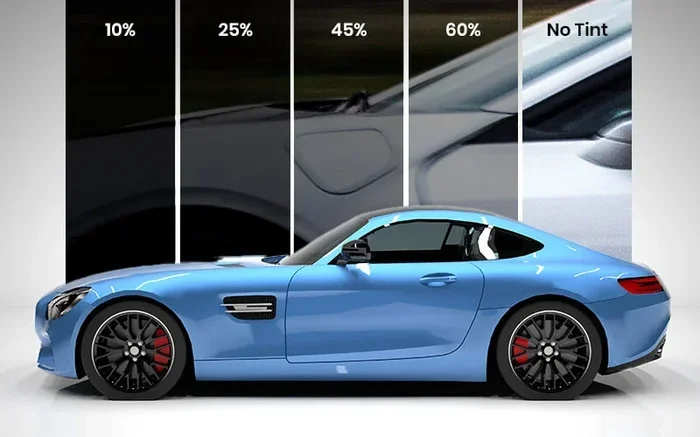
The key measure you need to understand is VLT, which stands for Visible Light Transmission. VLT tells you how much light passes through your window tint. A lower VLT means a darker tint. For example, a 5% VLT tint is very dark, while a 70% VLT tint is almost clear. The state sets minimum VLT levels for each window on your car. Understanding window tint percentage is the first step toward staying legal.
Now, the rules are not the same for every vehicle. Your car type matters a lot when it comes to tint darkness limits. A sedan has different rules than an SUV or van. Let us break this down so it is easy to follow.
Key Takeaways
- 32% VLT Rule For Sedans: Front and rear side windows on sedans must allow more than 32% of light through.
- SUVs Have More Flexibility: Rear side and rear windows on SUVs and vans can be any darkness level.
- Windshield Tint Is Limited: Only the top 6 inches of the windshield can have non-reflective tint.
- Medical Exemptions Exist: People with certain health conditions can get special permission for darker tint.
- Fines Can Be Costly: Illegal tint can result in fines up to $1,000 and mandatory removal.
- Certified Tint Film Is Required: Your tint must come from a certified manufacturer with proper documentation.
- Dual Mirrors Needed: If your rear window is tinted, you must have dual side mirrors.
📑 Table of Contents
Georgia Window Tint Law: What The Rules Actually Say
The Georgia window tint law is found in the Official Code of Georgia Annotated, specifically section 40-8-73.1. This law sets the standard for how much tint you can apply to each window on your vehicle. The goal is simple: keep drivers visible and safe on the road.
When you talk about car window tinting, people often focus on looks. But the law cares about safety first. Dark tint can reduce your ability to see at night or in bad weather. It also makes it harder for police to see inside your car during a stop. That is why Georgia sets clear limits on tint darkness and reflection.
Understanding VLT And Tint Darkness
VLT, or Visible Light Transmission, is the percentage of light that passes through your window film. Think of it like sunglasses for your car. The higher the number, the more light gets through. The lower the number, the darker the tint.
Here is a simple way to think about it:
- 70% VLT – Very light tint. Almost like no tint at all.
- 50% VLT – Medium tint. Good for reducing glare.
- 35% VLT – Noticeably darker. Popular for style and heat relief.
- 20% VLT – Dark tint. Hard to see through from outside.
- 5% VLT – Very dark. Often called “limo tint.”
The Georgia tint law sets minimum VLT levels for each window. You cannot go darker than the legal limit. If you do, you risk getting a tint ticket and paying a fine. Always check the legal tint limits before you buy any film.
Why These Rules Exist
Every state has vehicle window tinting regulations for a reason. In Georgia, the rules exist to protect drivers, passengers, and law enforcement. Here are the main reasons behind the legal tint limits:
- Driver Safety: Dark tint reduces visibility, especially at night or in rain.
- Law Enforcement Safety: Officers need to see inside your vehicle during stops.
- Traffic Safety: Tinted windows can make it hard to see other drivers and pedestrians.
- Consistent Standards: Clear rules prevent confusion and keep everyone on the same page.
Understanding why the rules exist makes it easier to follow them. It is not about making your car look bad. It is about keeping everyone safe on Georgia roads. The tint darkness limits are designed to balance personal style with public safety.
Legal Tint Darkness Limits By Vehicle Type
The Georgia window tint law treats different vehicle types differently. Sedans have stricter rules than SUVs and vans. This section breaks down the legal tint darkness limits for each type of vehicle so you know exactly what applies to you.
Tint Rules For Sedans
If you drive a sedan in Georgia, here are the rules you must follow:
- Windshield: Non-reflective tint is allowed on the top 6 inches only.
- Front Side Windows: Must allow more than 32% of light in (VLT above 32%).
- Rear Side Windows: Must allow more than 32% of light in (VLT above 32%).
- Rear Window: Must allow more than 32% of light in (VLT above 32%).
For sedans, every window except the top strip of the windshield must meet the 32% VLT minimum. This is the strictest set of rules for any vehicle type in Georgia. If you own a sedan, pay close attention to these side window tint and rear window tint requirements.
Tint Rules For SUVs And Vans
SUVs and vans get more flexibility under the Georgia tint law:
- Windshield: Non-reflective tint is allowed on the top 6 inches only.
- Front Side Windows: Must allow more than 32% of light in (VLT above 32%).
- Rear Side Windows: No restriction on darkness. Any VLT is allowed.
- Rear Window: No restriction on darkness. Any VLT is allowed.
The big difference is in the rear windows. SUVs and vans can have very dark rear side and rear windows. But the front side windows still must meet the 32% VLT rule. This gives SUV and van owners more freedom with their window tint percentage choices for the back seats.
Comparison Table: Sedan Vs SUV Tint Rules
| Window | Sedan Rule | SUV/Van Rule |
|---|---|---|
| Windshield | Non-reflective, top 6 inches only | Non-reflective, top 6 inches only |
| Front Side Windows | VLT must be above 32% | VLT must be above 32% |
| Rear Side Windows | VLT must be above 32% | No restriction |
| Rear Window | VLT must be above 32% | No restriction |
| Max Reflection | No more than 20% | No more than 20% |
As you can see, the front windows have the same rule for both vehicle types. The difference is only in the rear. Always double-check your vehicle classification before getting tint installed. Misclassifying your vehicle can lead to an illegal tint citation even if you thought you were following the rules.
Tint Reflection Rules For All Vehicles
No matter what type of vehicle you drive, the Georgia window tint law has a rule about reflection. Your tint must not be more than 20% reflective. This means your windows should not act like a mirror.
Reflective tint can blind other drivers, especially at night or in bright sunlight. It also makes it harder for police to see inside your car. So Georgia keeps the tint reflection limit low. Stick with non-reflective or lightly reflective films to stay legal. If you are shopping for tint, ask your installer about the reflectivity rating of each film option.
Windshield And Side Mirror Tint Rules
The windshield and side mirrors have their own set of rules under the Georgia tint law. These rules are important because they affect your visibility and safety the most. Many people overlook these specifics and end up with a violation they did not expect.
Windshield Tint Restrictions
You cannot tint the entire windshield. The Georgia window tint law only allows non-reflective tint on the top 6 inches of the windshield. This is often called the “sun strip” or “shade band.”
Here is what you need to know about windshield tint:
- The tint must be non-reflective. No mirrored or metallic finish.
- It can only go on the top 6 inches of the glass.
- The rest of the windshield must remain clear.
- This rule is the same for sedans, SUVs, and vans.
The purpose of this rule is to keep your view of the road clear. The windshield is your primary source of visibility. Blocking too much of it creates a serious safety hazard. If you want a sun shade for your dashboard, this 6-inch strip is your only legal option for windshield tint.
Side Mirror Requirements
If you tint your rear window, Georgia law requires you to have dual side mirrors. This means both the left and right side mirrors must be present and fully functional.
Why does this matter? When the rear window is tinted, your view out the back of the car is reduced. Side mirrors help compensate for this loss of visibility. Without dual mirrors, you would have dangerous blind spots that could cause accidents.
Here is a quick tip: before you get your tint installed, check that both side mirrors are in good working condition. If a mirror is broken or missing, fix it first. This will save you from issues during your tint inspection or a traffic stop.
Factory Tint Vs Aftermarket Tint
Many new cars come with factory tint from the manufacturer. This is the tint already on the windows when you buy the car. Factory tint is usually lighter and may already meet Georgia standards.
Aftermarket tint is the film you add later. The Georgia tint law applies to aftermarket tint. You need to make sure your aftermarket film meets the VLT requirements. If your car already has factory tint, you still need to check that the combined tint (factory plus aftermarket) meets the legal limits.
A simple way to check is to use a VLT meter. This device measures how much light passes through your window. You can ask your tint installer to test each window before you leave the shop. This ensures you are fully compliant from day one and avoids any surprises later.
Medical Exemptions And Special Permits
Not everyone can tolerate normal levels of sunlight. Some people have medical conditions that make them very sensitive to UV light. The Georgia window tint law recognizes this and offers a medical exemption option for those who qualify.
Who Qualifies For A Medical Exemption
People with certain health conditions may qualify for a darker tint than the standard legal limit. Conditions that often qualify include:
- Lupus – an autoimmune disease that makes skin extremely sensitive to sunlight.
- Albinism – a condition that reduces pigmentation and increases sun sensitivity.
- Photosensitivity disorders – conditions that cause severe reactions to sunlight exposure.
- Skin cancer history – people recovering from skin cancer may need extra protection.
- Other immune disorders – conditions that increase vulnerability to UV rays.
If you have one of these conditions or a similar issue, you may be eligible for a medical exemption that allows darker tint on your vehicle windows. This exemption lets you go below the standard 32% VLT requirement for safety and health reasons.
How To Apply For An Exemption
Getting a medical exemption for window tint in Georgia involves a few clear steps:
- Get a doctor’s statement: Your physician must provide a written statement explaining your condition and why darker tint is medically necessary.
- Submit the application: Take the statement to your local Department of Revenue or DMV office.
- Receive your exemption sticker: Once approved, you will receive a sticker to place on your vehicle.
- Keep documentation in your car: Carry the exemption paperwork with you at all times while driving.
The exemption allows darker tint than the standard 32% VLT rule. However, you still must follow reflection limits and other safety rules. The exemption does not give you unlimited freedom to tint as dark as you want. Always keep your exemption documentation updated and renewed as needed.
Expert Insight: Always work with your doctor to get a thorough and detailed medical statement. The more specific the documentation, the smoother your exemption process will be. Vague statements are more likely to be rejected. Do not try to fake a condition for darker tint. The penalties for fraud are serious and can result in fines and legal trouble.
Getting Pulled Over: Tint Tickets And Fines
Nobody wants to get pulled over for illegal tint. But it happens more often than you might think. Understanding what happens during a tint stop can help you stay calm and handle the situation properly. Knowledge is your best defense.
Common Reasons For Tint Stops
Police officers in Georgia can stop your vehicle if they suspect your tint is too dark. Here are the most common reasons for a tint ticket:
- Visible darkness: The officer can clearly see that your tint is darker than the legal limit.
- Tint inspection failure: Your vehicle failed a state inspection due to illegal tint.
- Complaint from another driver: Someone reported your vehicle for having suspiciously dark windows.
- Routine traffic stop: The officer noticed the tint during a stop for another reason.
Officers often use a VLT meter during a tint stop. This handheld device measures the light transmission through your windows. If the reading is below the legal limit, you will receive a citation. The officer will also check for the required certification sticker on your driver’s side window.
What Happens During A Tint Stop
If you get pulled over for tint, here is what typically happens:
- The officer will ask you to step out of the vehicle.
- They will measure your window tint with a VLT meter.
- If the tint is illegal, you will receive a citation.
- You may be given the option to fix the issue and return for a re-inspection.
The fine for a tint violation in Georgia can range from $100 to $1,000 depending on the severity and your local jurisdiction. In some cases, you may also be required to remove the illegal tint before your vehicle can pass inspection. Repeated violations can lead to higher fines and additional penalties.
Common Mistakes That Lead To Tint Tickets
Many drivers get tint tickets because of simple mistakes. Here are the most common ones to avoid:
- Buying tint without checking the VLT: Always verify the window tint percentage before you buy.
- Ignoring factory tint: If your car already has factory tint, adding aftermarket tint can push you over the legal limit.
- Skipping the certification sticker: Georgia law requires a sticker on the driver’s side window. Without it, you can be cited.
- Using an uncertified installer: Only use shops that follow tint film certification requirements.
- Assuming all windows are the same: Each window has its own legal limit. Do not assume they are all the same.
Avoiding these mistakes is the easiest way to stay legal and avoid tint violation fines. A little research before you visit a tint shop can save you hundreds of dollars and a lot of hassle.
Choosing Compliant Tint Films For Your Vehicle
Now that you know the rules, the next step is choosing the right tint film. Not all tint products are created equal, and some are better suited for Georgia’s climate and legal requirements. Making the right choice means you get great results without breaking any laws.
Best Tint Films That Meet Georgia Standards
When shopping for car window tinting products, look for films that meet these criteria:
- Certified by the manufacturer: Georgia law requires tint film to be certified. Ask your installer for proof of certification.
- Correct VLT level: Choose a film that meets or exceeds the 32% VLT requirement for your vehicle type.
- Non-reflective finish: Make sure the film has less than 20% reflectivity.
- UV protection: Look for films that block UV rays. This protects your skin and your car interior from fading.
- Heat rejection: Good tint films reduce heat inside your car, which is especially helpful in Georgia summers.
Ceramic tint is a popular choice for Georgia drivers. It offers excellent heat rejection and UV protection without the metallic look. Ceramic tint also does not interfere with electronic signals, which is important if you use GPS, Bluetooth, or cell phone connectivity. It is a premium option that stays within legal limits and performs well in hot weather.
Quick Tips For Staying Legal With Your Window Tint
Here are some practical tips to keep your tint legal and your conscience clear:
- Ask for a written warranty: A reputable shop will provide a warranty for their tint work. Get it in writing.
- Get a receipt that states the VLT: Keep documentation of the exact tint percentage installed on each window.
- Check your state ID and registration: Make sure your vehicle information is up to date and accurate.
- Re-check your tint yearly: Over time, some tints can fade or bubble, changing the VLT. Test annually.
- Talk to your installer about Georgia law: A good tint shop knows the local regulations and will guide you.
Quick Tip: Before you commit to a tint job, ask the installer to show you the tint film’s certification documentation. This proves the film meets Georgia standards and protects you from future issues. A trustworthy shop will have no problem showing you this paperwork.
What To Do If Your Tint Is Already Illegal
If you already have tint that is too dark, do not panic. Here is what you can do to fix the situation:
- Get it tested: Visit a tint shop or inspection station to measure your current VLT.
- Remove or replace the tint: If it is illegal, you will need to remove it or replace it with compliant film.
- Keep your receipt: Save all documentation showing you have fixed the issue.
- Appeal if needed: If you received a ticket, you can contest it in court with proof of compliance.
Taking action quickly shows the court and law enforcement that you are taking the law seriously. It can also reduce or eliminate fines in some cases. The longer you drive with illegal tint, the higher your risk of getting stopped and fined. Fix the problem as soon as you discover it.
Common Mistake: Some drivers try to peel off old tint and install new film themselves. While DIY tint kits are available, improper installation often leads to bubbles, peeling, and uneven VLT levels. These issues can cause you to fail an inspection. Professional installation is always the safer choice for staying compliant.
Key Takeaways
- 32% VLT Rule For Sedans: Front and rear side windows on sedans must allow more than 32% of light through.
- SUVs Have More Flexibility: Rear side and rear windows on SUVs and vans can be any darkness level.
- Windshield Tint Is Limited: Only the top 6 inches of the windshield can have non-reflective tint.
- Medical Exemptions Exist: People with certain health conditions can get special permission for darker tint.
- Fines Can Be Costly: Illegal tint can result in fines up to $1,000 and mandatory removal.
- Certified Tint Film Is Required: Your tint must come from a certified manufacturer with proper documentation.
- Dual Mirrors Needed: If your rear window is tinted, you must have dual side mirrors.
Conclusion
The Georgia window tint law is designed to keep everyone safe on the road. By understanding the rules around tint darkness, VLT limits, reflection, and medical exemptions, you can make informed decisions about your vehicle. Whether you drive a sedan or an SUV, knowing what is legal helps you avoid fines and keeps your car looking great.
Remember, the key to staying compliant is simple: know the rules, choose certified film, and keep your documentation handy. If you ever feel unsure about your tint, consult a local professional or check with your county’s Department of Revenue. Staying informed is the best way to enjoy your tinted windows without any worries.
Take the time to learn the Georgia tint law before you tint your windows. A little research now can save you time, money, and headaches later. Your car, your safety, and your wallet will all thank you. Follow the rules, choose quality film, and enjoy the benefits of properly tinted windows for years to come.
Frequently Asked Questions
Can I tint my windshield in Georgia?
Yes, but only the top 6 inches of the windshield can have non-reflective tint. The rest of the windshield must remain completely clear. This rule applies to all vehicle types in Georgia, including sedans, SUVs, and vans.
What is the legal tint limit for sedans in Georgia?
For sedans, all windows except the top 6 inches of the windshield must allow more than 32% of light to pass through. This means the VLT must be above 32% for front side, rear side, and rear windows. The windshield can only have a non-reflective tint strip on the top 6 inches.
Do I need a medical exemption for dark tint in Georgia?
If you want tint darker than the legal limit, you need a medical exemption. You must get a written statement from your doctor explaining why darker tint is medically necessary. Submit this to your local DMV or Department of Revenue office for approval.
How much is a tint ticket fine in Georgia?
A tint violation fine in Georgia can range from $100 to $1,000 depending on the severity and your local jurisdiction. You may also be required to remove the illegal tint before your vehicle can pass inspection. Repeated violations can lead to higher penalties.
Can I tint the rear windows of my SUV as dark as I want in Georgia?
Yes. SUVs and vans have no restriction on the darkness of rear side windows and the rear window. However, the front side windows must still allow more than 32% VLT, and the windshield can only have a non-reflective tint on the top 6 inches. Dual side mirrors are also required if the rear window is tinted.
What is VLT and why does it matter for Georgia tint law?
VLT stands for Visible Light Transmission. It measures how much light passes through your window tint. Georgia law sets minimum VLT levels for each window. A higher VLT means more light comes through, while a lower VLT means a darker tint. Staying above the legal VLT limit keeps you compliant and avoids fines.