How to Check Tire Pressure on Your Audi Q5 the Easy Way
Checking your Audi Q5 tire pressure regularly is one of the simplest ways to improve fuel economy, safety, and tire longevity. This guide shows you how to check tire pressure on Audi Q5 the easy way, from finding the recommended PSI to resetting the TPMS light. You’ll learn the tools you need, step-by-step instructions, and how to avoid common mistakes.
Your Audi Q5 is a refined premium SUV, and keeping it in top shape starts with something surprisingly simple: the air inside your tires. How to check tire pressure on Audi Q5 is a skill every owner should master, and it takes less than five minutes once you know the steps. Proper tire pressure improves fuel economy, keeps the ride smooth, and prevents uneven wear that can cost you hundreds of dollars early. Whether you are preparing for a road trip or just want to stay safe on wet roads, this guide covers everything you need. I will walk you through finding the right numbers, using the right tools, and resetting the warning light if needed. By the end, you will feel confident checking your Q5’s tires like a pro.
Many drivers overlook tire pressure until a light flashes on the dashboard. That reactive approach can lead to poor handling, reduced gas mileage, and even a blowout. The good news is that checking Audi Q5 tire pressure is quick, free, and something you can do at home with a basic gauge. You do not need a mechanic or expensive equipment. I will break the process into clear, easy-to-follow sections so you can tackle it right now. Let us dive in and make sure your Q5 rides safely and efficiently.
Key Takeaways
- Check tire pressure when cold: Always measure before driving or after the car has sat for three hours for the most accurate reading.
- Find the correct PSI on the door jamb: The sticker on the driver’s side door frame gives the exact recommended pressure for your Audi Q5.
- Use a digital gauge for precision: A simple digital tire pressure gauge costs under $15 and gives reliable readings every time.
- Reset the TPMS light after adjusting: If the tire pressure warning stays on, you can clear it through the instrument cluster or by manually clearing the car codes.
- Don’t ignore the TPMS light: A flashing or steady light means your system needs attention, and you may need to fix the tire pressure sensor yourself.
- Check all four tires and the spare: Pressure changes affect handling and fuel economy, so inspect every tire including the temporary spare.
- Adjust for load and temperature: Towing or seasonal drops can change your ideal pressure, so recheck the specs when conditions change.
📑 Table of Contents
- Why Tire Pressure Matters for Your Audi Q5
- Finding the Right Tire Pressure for Your Audi Q5
- Tools You Need to Check Tire Pressure on Your Audi Q5
- Step-by-Step Guide to Checking Tire Pressure on Your Audi Q5
- Resetting the Tire Pressure Light on the Audi Q5
- Common Tire Pressure Mistakes and How to Avoid Them
- Expert Tips for Maintaining Optimal Tire Pressure on Your Audi Q5
- Conclusion
Why Tire Pressure Matters for Your Audi Q5
Tire pressure might seem like a minor detail, but it directly affects how your Q5 drives, handles, and burns fuel. When the pressure is off, even by a few PSI, you will notice the difference. Underinflated tires create more rolling resistance, which forces the engine to work harder and use more gas. Overinflated tires ride hard, wear out the center of the tread, and reduce grip on wet roads. Both scenarios compromise safety and shorten tire life.
The Audi Q5 tire pressure specification is carefully engineered by the manufacturer to balance comfort, performance, and efficiency. Staying within the recommended range ensures that your all-wheel-drive system works as intended and that the brakes perform predictably. For a premium vehicle like the Q5, maintaining correct pressure also protects your investment in the tires themselves, which can be a significant expense.
The Impact on Fuel Economy
Underinflated tires are one of the biggest hidden culprits of poor fuel economy. A tire that is 10 PSI low can reduce your miles per gallon by up to 3%. Over time, that adds up at the pump. On the other hand, tires inflated to the correct Audi Q5 recommended tire pressure roll easily and help the engine operate at its peak efficiency. If you have noticed a drop in fuel economy recently, checking the tire pressure is the first simple step you should take.
Safety and Handling
Your Q5 is designed to handle confidently on highways, curves, and wet surfaces. That confidence relies on the tire maintaining its proper shape and contact patch. Incorrect pressure changes how the tire grips the road. Underinflated tires can overheat and fail, especially at higher speeds. Overinflated tires reduce the contact area, leading to longer braking distances and a harsher ride. Keeping the pressure right means your Q5 stops, turns, and rides exactly as Audi intended.
Finding the Right Tire Pressure for Your Audi Q5
Before you grab a gauge, you need to know what number to aim for. The Audi Q5 tire pressure is not a one-size-fits-all number. It varies by model year, trim level, and whether you are running standard or larger wheels. The good news is that Audi makes it easy to find the correct specification.
Checking the Owner Manual
The owner’s manual for your Q5 contains a dedicated section on tire and loading information. Look for the tire pressure chart, which lists the recommended PSI (pounds per square inch) for both the front and rear tires. In many cases, the front and rear pressures are the same, but some trims with heavier rear loads may specify a slightly higher pressure in the back. The manual also explains how to adjust the pressure when you are carrying extra passengers or towing a trailer.
The Tire Pressure Placard on the Door Jamb
If you do not have the manual handy, you can find the tire pressure sticker on the driver’s side door jamb. Open the door and look for a small label or embossed text on the frame. This placard shows the recommended cold tire pressure for the front and rear axles. It also lists the tire size and the maximum pressure the tire can handle. Always use the placard number for normal driving, not the maximum number on the tire sidewall, which is the tire’s limit, not the vehicle’s recommendation.
Understanding PSI, Bar, and kPa
Audi displays tire pressure in different units depending on the market and model year. The most common is PSI, but some Q5s show readings in Bar or kilopascals (kPa). To help you compare, here is a quick reference table for typical Audi Q5 tire pressure values:
| Unit | Typical Front Pressure | Typical Rear Pressure | Notes |
|---|---|---|---|
| PSI | 30–35 PSI | 30–35 PSI | Most common in the US |
| Bar | 2.0–2.4 Bar | 2.0–2.4 Bar | Common in European models |
| kPa | 207–241 kPa | 207–241 kPa | Metric system reading |
Always match the unit on your gauge to the unit on the placard. If your gauge reads in PSI but the sticker shows Bar, you will need to convert. Many digital gauges have a switch that lets you toggle between units, which makes this step easy.
Tools You Need to Check Tire Pressure on Your Audi Q5
Checking tire pressure requires just a few simple tools. You do not need to visit a dealership or a tire shop. With the right equipment, you can do it in your garage or at a gas station in minutes.
Digital Tire Pressure Gauge
A digital tire pressure gauge is the most accurate and easiest tool to use. It costs between $10 and $20 and fits in your glove box. Look for one with a backlit display so you can read it in low light. To use it, simply press the gauge firmly onto the tire valve stem and read the number. Digital gauges are more reliable than the pencil-style analog gauges because they do not lose calibration over time.
The Built-In TPMS
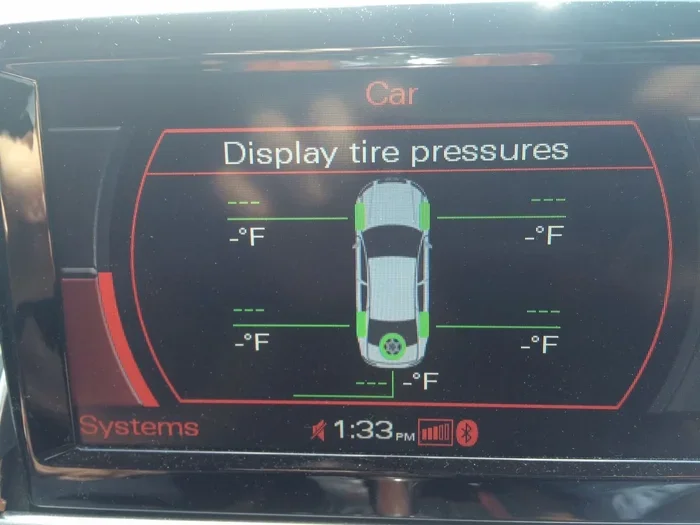
Your Audi Q5 comes equipped with a Tire Pressure Monitoring System (TPMS). This system uses sensors inside each wheel to measure pressure and temperature. When the pressure drops significantly, a warning light illuminates on the dashboard. While the TPMS is helpful for alerts, it is not a replacement for a manual check. The system may not warn you until the pressure is 25% below the recommended level, which is already low enough to affect performance. That is why a manual tire pressure check should be part of your regular maintenance routine.
If you notice the TPMS light is on and you know the pressure is correct, the sensor itself may be faulty. In many cases, you can fix the tire pressure sensor yourself by replacing the valve stem or resetting the system. This saves you a trip to the dealer and keeps your Q5 running safely.
Portable Air Compressor and Bike Pump Adapter
Once you know the pressure is low, you need a way to add air. A small 12-volt portable air compressor plugs into your Q5’s cigarette lighter and works well for topping off tires. If you are in a pinch and do not have a compressor, you can even pump a car tire with a bike pump using a Schrader valve adapter. It takes more effort, but it is a reliable emergency solution that every Q5 owner should know about.
Step-by-Step Guide to Checking Tire Pressure on Your Audi Q5
Now that you have the right tools and the correct pressure number, it is time to check the tires. Follow these steps in order for the most accurate results.
- Park the Q5 on a flat surface. Make sure the car has been sitting for at least three hours. Driving heats up the tires and increases the pressure, giving a false high reading. Checking cold tire pressure is the gold standard.
- Locate the tire valve stem. Remove the dust cap from the valve stem on the first tire. The cap is small and twist-off. Keep it in a safe place so you do not lose it.
- Press the gauge firmly onto the valve stem. Push the digital gauge straight onto the stem until you hear a brief hiss of air escaping. The reading should appear on the display within a second. If you hear air leaking continuously, the gauge is not seated properly. Reposition it and try again.
- Compare the reading to the recommended PSI. Check the number against the door jamb placard. If the pressure is within 1–2 PSI of the target, you are good. If it is low, add air in short bursts and recheck.
- Adjust the pressure if needed. Use your air compressor or bike pump to add air. If you overinflate, press the small pin inside the valve stem to release a little air and recheck.
- Repeat for all four tires. Do not skip the spare tire. A full-size spare should be at the same pressure as the other tires. A temporary compact spare usually requires a higher pressure, often around 60 PSI, which is marked on the tire sidewall.
- Replace the dust caps. Put the caps back on all valve stems. They keep dirt and moisture out, which protects the sensor and prevents slow leaks.
After completing this process, your Audi Q5 tires will be at the correct pressure. You should notice a slightly firmer ride and better responsiveness when you drive. If the TPMS light was on before you started, it may turn off automatically after a few minutes of driving. If it does not, the next section will show you how to reset it.
Resetting the Tire Pressure Light on the Audi Q5
Even after you inflate the tires to the correct pressure, the TPMS warning light may stay illuminated. This happens because the system needs to be told that the pressure has been corrected. Resetting the light is a simple procedure that you can do yourself.
Using the Instrument Cluster
In most Audi Q5 models, you can reset the TPMS light through the instrument cluster menu. Turn the ignition to the “on” position without starting the engine. Use the steering wheel controls to navigate to the Vehicle menu, then select Tire Pressure. Choose the option to reset or calibrate the system. The light should turn off after a few seconds. Start the engine and drive for a few miles; the system will relearn the correct pressure values.
When to Seek Professional Help
If the reset procedure does not work, or if the light flashes instead of staying solid, there may be a deeper issue. A flashing TPMS light often indicates a sensor malfunction or a dead battery in one of the tire sensors. In that case, you may need to manually clear the car codes with an OBD-II scanner, or have a technician diagnose the sensor. Clearing the codes will turn off the light temporarily, but if the sensor is faulty, it will likely return. That is when you know it is time to inspect or replace the sensor.
Common Tire Pressure Mistakes and How to Avoid Them
Even experienced drivers make mistakes when checking tire pressure. Here are the most common errors and how to avoid them so you get accurate results every time.
Checking When the Tires Are Hot
This is the number one mistake. After driving, the tires heat up and the air inside expands, raising the pressure by 2–4 PSI. If you check and adjust to the recommended number right after a drive, you will end up with the pressure slightly low once the tires cool down. Always wait for the tires to cool, or if you must check on the road, add 3–4 PSI to the warm reading and recheck when cold.
Relying Only on the TPMS Light
The TPMS is a late-warning system. It only alerts you when the pressure is already significantly low. By that point, you may have already wasted fuel or caused uneven wear. Make a habit of checking the pressure manually at least once a month. A simple monthly tire pressure check takes just a few minutes and catches slow leaks before they become problems.
Overinflating for a Firmer Ride
Some drivers think that adding extra air will give the Q5 a sportier feel or improve fuel economy. In reality, overinflated tires reduce the contact patch, which hurts braking and cornering grip. The ride becomes harsher, and the center of the tread wears out twice as fast. Stick to the recommended tire pressure on the door jamb for the best balance of comfort and performance.
Ignoring the Spare Tire
A flat spare tire can leave you stranded, especially if you are on a road trip. The compact spare in the Q5’s trunk requires a higher pressure than the regular tires, usually around 60 PSI. Check the spare every time you inspect the other four tires. It takes just a few extra seconds and could save you a lot of hassle.
Expert Tips for Maintaining Optimal Tire Pressure on Your Audi Q5
Beyond the basics, a few extra habits will keep your Q5’s tires in excellent condition and help you get the most out of them.
Seasonal Pressure Adjustments
Air pressure inside a tire drops as the temperature falls. For every 10°F drop in ambient temperature, tire pressure decreases by about 1 PSI. In the fall and winter, you may need to add air more frequently. Conversely, in summer heat, pressure can rise slightly. Keep a tire gauge in your garage and check the pressure at the start of each season. This simple habit prevents the low-pressure issues that often catch drivers off guard during weather changes.
Tire Pressure When Towing
If you use your Q5 for towing a trailer or carrying a heavy load in the roof box, the recommended tire pressure may change. The owner’s manual includes a tire pressure table for different load conditions. When you are fully loaded, the rear tires often require a higher pressure to support the extra weight. Always consult the manual or the door jamb sticker for the correct loaded tire pressure before hitting the road.
Long-Term Storage
If you store your Q5 for an extended period, set the tire pressure to the maximum cold pressure listed on the tire sidewall. This prevents flat spots from forming and reduces the rate of air loss. Before driving again, reduce the pressure back to the normal recommended PSI and inspect the tires for any cracks or uneven wear.
Rotate Tires and Re-Check Pressure
Tire rotation helps the tread wear evenly, and it is a perfect time to recheck the pressure on all five tires. When you move tires from front to rear, the pressure may need slight adjustment because the front and rear axles carry different loads. Use the rotation as a reminder to perform a full tire pressure inspection every 5,000 to 7,500 miles.
Conclusion
Knowing how to check tire pressure on Audi Q5 is one of the most valuable skills you can develop as a Q5 owner. It takes just a few minutes, costs almost nothing, and pays off in better fuel economy, safer handling, and longer tire life. You now know where to find the correct pressure, which tools to use, and how to reset the TPMS light if needed. You also understand the common mistakes to avoid and the expert tips that keep your tires in top shape year-round. Make tire pressure checks a regular part of your routine, and your Audi Q5 will reward you with a smooth, safe, and efficient ride for miles to come.
Frequently Asked Questions
How often should I check the tire pressure on my Audi Q5?
You should check the tire pressure at least once a month and before any long trip. Tires naturally lose about 1 PSI per month, so regular checks catch slow leaks early. Also, check the pressure when the seasons change, as temperature swings can significantly affect the reading.
Can I use the tire pressure gauge at a gas station?
Yes, gas station air pumps work fine, but they are often not as accurate as a digital gauge you own. If you use a public pump, bring your own gauge to verify the pressure after adding air. Gas station gauges can be off by several PSI, leading to over- or underinflation.
What does the TPMS light look like on an Audi Q5?
The TPMS warning light is a horseshoe-shaped symbol with an exclamation point in the center. If it stays solid, one or more tires are significantly underinflated. If it flashes, there is likely a malfunction in the TPMS system itself, such as a dead sensor battery or a faulty sensor.
Is it safe to drive with the TPMS light on?
Driving with the TPMS light on is not recommended. The light indicates that the pressure is low enough to affect handling and tire health. If you must drive a short distance, reduce your speed and avoid hard cornering. However, you should stop and check the pressure as soon as it is safe to do so.
How do I know if my tire pressure sensor needs replacing?
If the TPMS light flashes and stays on even after you inflate the tires to the correct pressure, the sensor battery may be dead or the sensor itself could be damaged. You can often fix the tire pressure sensor yourself by replacing the valve core or the entire sensor assembly, depending on the issue.
What is the correct tire pressure for an Audi Q5 when fully loaded?
The correct pressure for a fully loaded Q5 is higher than the standard recommendation. Check the tire pressure table in your owner’s manual or the sticker on the driver’s door jamb, which includes a section for maximum load conditions. Typically, the rear tires require an additional 2–4 PSI when the vehicle is carrying heavy cargo or towing.