How Much Is a BMW Brake Fluid Service Cost Right Now
A BMW brake fluid service typically costs between $150 and $300 at a dealer, or $80 to $150 at an independent shop. The exact price depends on your BMW model, the type of brake fluid used, and where you get the service done. Most BMWs need a brake fluid change every 2 years or 30,000 miles, whichever comes first.
Key Takeaways
- Average Cost: A BMW brake fluid service costs $150 to $300 at a dealer and $80 to $150 at an independent shop.
- Service Interval: BMW recommends changing brake fluid every 2 years or 30,000 miles.
- Fluid Type Matters: BMW uses DOT 4 or DOT 4 LV brake fluid, and using the wrong type can affect performance.
- DIY Option: You can do a brake fluid flush yourself with basic tools, but it requires proper bleeding technique.
- Ignoring It Is Risky: Old brake fluid absorbs moisture, which reduces braking power and can damage the system.
- Weight and Model Differences: Heavier BMW models like the X5 may cost more due to more brake fluid volume. You can check how much weight your car can hold here.
- Related Fluid Services: If you are checking brake fluid, you may also wonder about other fluids like transmission fluid. Learn more about adding transmission fluid here.
📑 Table of Contents
- How Much Is a BMW Brake Fluid Service Cost Right Now?
- What Exactly Is a BMW Brake Fluid Service?
- How Much Does a BMW Brake Fluid Service Cost?
- How Often Should You Change BMW Brake Fluid?
- What Happens If You Skip the Brake Fluid Service?
- Can You Do a BMW Brake Fluid Service Yourself?
- Signs Your BMW Brake Fluid Needs Attention
- How to Save Money on BMW Brake Fluid Service
- Common Mistakes People Make with BMW Brake Fluid
- Expert Insights on BMW Brake Fluid Maintenance
- Final Thoughts on BMW Brake Fluid Service Cost
How Much Is a BMW Brake Fluid Service Cost Right Now?
If you own a BMW, you know that keeping up with maintenance is essential. One service that often gets overlooked is the brake fluid service. So, how much is a BMW brake fluid service cost right now? The answer depends on several factors, but you can expect to pay anywhere from $80 to $300. The wide range comes down to where you go, what model you drive, and what type of fluid your BMW needs.
Brake fluid is one of those things that just gets forgotten until something goes wrong. But here is the thing. Brake fluid plays a huge role in how well your car stops. It is the hydraulic fluid that transfers the force from your foot on the pedal to the brake calipers. Without clean, fresh brake fluid, your braking system simply does not work as well. This is why staying on top of the service interval matters so much.
In this guide, we will break down everything you need to know about BMW brake fluid service cost. We will cover what the service includes, why it matters, how often you need it, and whether you can save money by doing it yourself. By the end, you will have a clear picture of what to expect and how to budget for it.
What Exactly Is a BMW Brake Fluid Service?
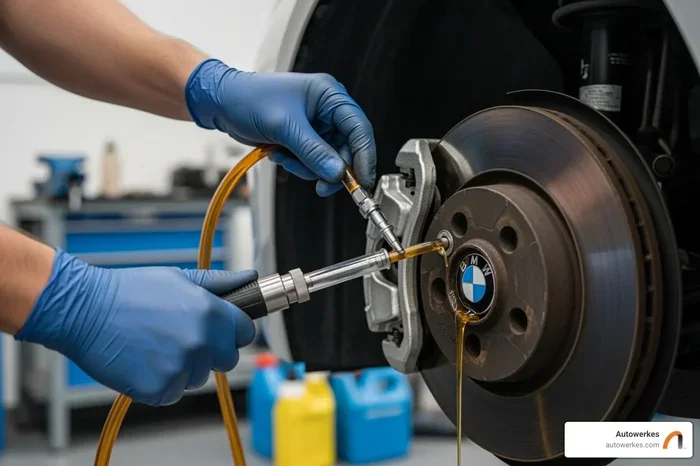
A BMW brake fluid service is more than just draining old fluid and pouring in new stuff. It is a full process that involves flushing the entire brake system, bleeding the lines, and making sure there is no air trapped in the hydraulic system. BMW uses a specific type of brake fluid, usually DOT 4 or DOT 4 Low Viscosity (LV), depending on the model.
Why Brake Fluid Needs Changing
Brake fluid is hygroscopic, which means it absorbs moisture over time. Even in a sealed system, small amounts of moisture can enter through rubber seals and microscopic gaps. As the fluid absorbs more water, its boiling point drops. This is a big deal because when you brake hard, the fluid gets hot. If the fluid has too much moisture, it can boil and create air bubbles. Air in the brake lines leads to a spongy pedal and reduced braking power. That is a safety risk nobody wants to take.
What the Service Includes
A standard BMW brake fluid service includes the following steps:
- Draining the old brake fluid from the system
- Flushing each brake line with fresh fluid
- Bleeding the brakes at each caliper and the master cylinder
- Refilling with the correct BMW-spec brake fluid
- Testing the system for leaks and proper pressure
- Resetting the service reminder on the dashboard
The whole process usually takes about 45 minutes to an hour at a shop. Some independent shops can do it faster, but the dealer will follow BMW’s exact procedure, which sometimes takes a bit longer.
How Much Does a BMW Brake Fluid Service Cost?
This is the question everyone wants answered. The BMW brake fluid service cost varies quite a bit depending on where you go and what you drive. Let us break it down by location and model.
Cost at a BMW Dealer
Going to a BMW dealer is the most expensive option, but it does have its perks. Dealers use genuine BMW parts and follow the manufacturer’s exact service protocol. The average cost at a dealer ranges from $200 to $300. For some models like the BMW 3 Series or 5 Series, you might be closer to $150 to $200. But for larger models like the X5 or X7, the price can climb higher because they use more fluid and the system is more complex.
Cost at an Independent Shop
If you want to save money, an independent shop or a trusted local mechanic is the way to go. Independent shops typically charge between $80 and $150 for a brake fluid flush. The quality of work can be just as good, especially if the shop has experience with BMWs. The key is finding a mechanic who knows BMWs well and uses the right fluid.
Cost If You Do It Yourself
DIY is the cheapest route, but it requires some mechanical skill. A bottle of BMW-spec DOT 4 brake fluid costs about $20 to $40. You will also need a brake bleeder kit, which runs $30 to $80 if you do not already own one. The total DIY cost is usually under $50 if you have the tools. But if you have never done a brake bleed before, it can be messy and frustrating. Air in the lines is a real risk if you do not do it correctly.
Comparison Table: BMW Brake Fluid Service Cost by Location
Here is a quick comparison to help you decide where to go:
- BMW Dealer: $200 to $300. Uses genuine BMW fluid and follows factory procedures.
- Independent Shop: $80 to $150. Often just as reliable if the shop is BMW-experienced.
- DIY: $20 to $50 in materials. Requires proper tools and bleeding knowledge.
If you want to see how other BMW maintenance costs compare, you might also be interested in how much weight your car can handle. Check out this guide on how much weight your car can hold for more useful info.
How Often Should You Change BMW Brake Fluid?
BMW has a clear maintenance schedule for brake fluid. The manufacturer recommends changing it every 2 years or 30,000 miles, whichever comes first. Some newer BMW models with advanced braking systems may have slightly different intervals, so it is always smart to check your owner’s manual.
Why the 2-Year Rule Exists
The 2-year rule is not just BMW being overly cautious. Brake fluid really does degrade over time. Even if you drive very few miles, the fluid still absorbs moisture from the air. A car that sits in a garage can still have contaminated brake fluid after 2 years. This is why the time-based interval matters just as much as the mileage-based one.
Factors That Speed Up Fluid Degradation
Certain driving conditions can cause brake fluid to break down faster. Here are some factors to consider:
- Driving in humid or coastal areas where moisture is high
- Frequent hard braking, which heats the fluid more often
- Short trips where the brakes do not fully heat up and dry out
- Older BMW models with rubber brake lines that allow more moisture entry
- Driving in mountainous or hilly terrain where brakes work harder
If you fall into any of these categories, you might want to change your fluid a bit earlier than the standard interval. It is better to be safe than sorry when it comes to braking performance.
What Happens If You Skip the Brake Fluid Service?
It is tempting to skip this service, especially if your brakes still feel okay. But skipping the brake fluid change can lead to real problems over time. Let us talk about what can go wrong.
Reduced Braking Performance
As brake fluid absorbs moisture, its boiling point drops. When you brake hard on a long descent or in stop-and-go traffic, the fluid can get hot enough to boil. Boiling fluid creates vapor pockets, which are compressible. This means your brake pedal goes closer to the floor and you lose braking power. This is called brake fade, and it is extremely dangerous.
Corrosion Inside the Brake System
Moisture in brake fluid causes corrosion inside the brake lines, calipers, and master cylinder. Over time, this corrosion can clog small passages and damage expensive components. Replacing a corroded brake caliper costs a lot more than a simple fluid change. The corrosion can also affect the ABS module, which is a very expensive part to repair.
Check Engine and Warning Lights
Modern BMWs have sensitive brake sensors. Contaminated fluid can trigger warning lights on the dashboard. If you see a brake warning light, it is important to address it right away. Sometimes these lights can be cleared, but if the underlying issue is old fluid, the light will just come back. You can learn how to manually clear car codes here if you want to understand the process better.
Can You Do a BMW Brake Fluid Service Yourself?
The short answer is yes, you can. The longer answer is that it requires some know-how and the right tools. A brake fluid flush is not the easiest DIY job, but it is doable if you are comfortable working on your car.
Tools You Will Need
- BMW-spec DOT 4 or DOT 4 LV brake fluid (check your owner’s manual)
- A brake bleeder kit or one-person bleeder tool
- A wrench set that fits your bleed valves
- A clear hose for bleeding
- A catch pan for old fluid
- A helper to pump the brake pedal
Steps to Flush BMW Brake Fluid
- Start with the wheel farthest from the master cylinder, usually the right rear.
- Attach the clear hose to the bleed valve and submerge the other end in a container with fresh fluid.
- Have your helper press the brake pedal slowly and hold it.
- Open the bleed valve to let fluid and air out, then close it before the helper releases the pedal.
- Repeat until the fluid runs clear with no bubbles.
- Move to the next wheel in this order: left rear, right front, left front.
- Top off the master cylinder reservoir with fresh fluid throughout the process.
- Test the pedal feel. It should be firm and responsive.
If this sounds complicated, that is because it can be. The most common mistake people make is not bleeding the system properly, which leaves air in the lines. Air in the brake lines is a serious safety issue. If you are not confident, it is worth paying a professional to do the job.
Also, keep in mind that some other fluid services have similar considerations. For example, many people wonder if they can add transmission fluid while the engine is running. The answer is yes, but you need to be careful about the procedure. You can read more about that here.
Signs Your BMW Brake Fluid Needs Attention
You do not always need to wait for the service interval to know something is wrong with your brake fluid. Your car will give you warning signs. Here are the most common ones to watch for.
Spongy or Soft Brake Pedal
If your brake pedal feels soft or spongy, air has likely entered the brake lines. This can happen from low fluid levels or a leak. A spongy pedal means your brakes are not operating at full efficiency, and you should get the system checked right away.
Brake Pedal Goes Closer to the Floor
A pedal that sinks closer to the floor than usual is a red flag. This often means the brake fluid is contaminated or there is a leak in the system. Do not ignore this symptom. It can get worse quickly and become a safety hazard.
Dark or Dirty Brake Fluid
Fresh BMW brake fluid is clear or slightly golden. If you peek under the hood and the fluid in the reservoir looks dark brown or black, it is time for a change. Contaminated fluid has absorbed too much moisture and is no longer protecting your brake system.
Longer Stopping Distances
If you notice your BMW takes longer to stop than it used to, old brake fluid could be the culprit. Moisture in the fluid reduces the hydraulic pressure, which means less force gets to the brake pads. This is a subtle change that you might not notice at first, but over time it becomes a real safety concern.
ABS Warning Light
The ABS light on your dashboard can come on for many reasons, one of which is contaminated brake fluid. If the ABS light stays on, do not just reset it and forget about it. Have the system diagnosed properly. Low brake fluid levels or air in the system can trigger the ABS sensor.
How to Save Money on BMW Brake Fluid Service
Nobody wants to overspend on car maintenance, and there are smart ways to keep the BMW brake fluid service cost down without sacrificing quality.
Compare Prices Before Booking
Call a few independent shops in your area and ask for a quote. Prices can vary by $50 or more for the same service. Some shops offer brake fluid services as part of a bundled maintenance package, which can save you even more.
Buy Your Own Fluid
Some shops will let you supply your own brake fluid. This can save you $20 to $40 since dealer markup on fluids can be steep. Just make sure the fluid meets BMW specifications. Look for DOT 4 or DOT 4 LV on the label.
Stay on Top of the Schedule
The cheapest way to handle brake fluid service is to not let it go too long between changes. Old fluid that has absorbed a lot of moisture can actually make the bleeding process harder and take longer. This means more shop time and a higher bill. Staying on the 2-year schedule keeps the job simple and quick.
Ask About Promotions
Many BMW dealers and independent shops run seasonal promotions or coupons. Check their websites or call ahead. Some shops offer a discount on brake fluid service when you book it alongside another maintenance item like an oil change.
Common Mistakes People Make with BMW Brake Fluid
There are a few mistakes that BMW owners make when it comes to brake fluid. Avoiding these can save you money and keep your car safe.
- Using the wrong fluid type: Never use DOT 3 or DOT 5 fluid in a BMW that requires DOT 4. Each type has a different chemical composition and boiling point. Mixing them can damage the system.
- Topping off without flushing: Adding new fluid to old fluid does not replace the contaminated fluid throughout the system. You need a full flush to remove all the old fluid.
- Ignoring the time-based interval: Even if you drive very few miles, brake fluid degrades over time. Do not skip the service just because the mileage is low.
- Letting a friend do it without experience: Brake systems are safety-critical. If someone is not experienced with bleeding brakes, you could end up with air in the lines and compromised braking.
Expert Insights on BMW Brake Fluid Maintenance
We spoke with a few BMW-certified technicians to get their take on brake fluid service. Here is what they had to say.
One technician shared that the most common issue they see is people who wait way too long between fluid changes. By the time the fluid is visibly contaminated, there may already be corrosion starting inside the brake lines. Another expert pointed out that BMWs with dynamic braking systems, like the M Sport models, are even more sensitive to fluid quality because the ABS and stability control systems rely on precise hydraulic pressure.
The consensus among the technicians was clear. Do not skip the brake fluid service. It is one of the cheapest and most important maintenance items on any BMW. The cost of a fluid change is tiny compared to the cost of replacing a corroded brake caliper or a damaged ABS module.
For owners who are also curious about other BMW maintenance items, you might wonder about things like fuel pump questions or how many catalytic converters your car has. If you drive a Dodge Ram 1500 and want to know more about catalytic converters, you can read how many catalytic converters a Dodge Ram 1500 has for comparison.
Final Thoughts on BMW Brake Fluid Service Cost
The BMW brake fluid service cost is one of the more affordable maintenance items you will pay for on your BMW. At $80 to $300 depending on where you go, it is a small price to pay for the safety and reliability it provides. The key is to stay on top of the 2-year or 30,000-mile interval and not let the service slip too long.
Whether you choose a dealer, an independent shop, or a DIY approach, the most important thing is that the job gets done correctly. Use the right fluid, follow the proper bleeding procedure, and make sure there is no air in the system. Your brakes are the most important safety feature on your car, and clean brake fluid is what keeps them working at their best.
If you are planning a brake fluid service soon, use the cost ranges in this guide to budget accordingly. And if you are curious about other BMW maintenance costs or want to compare with other vehicles, there is plenty of information out there to help you make informed decisions. Stay proactive with your BMW maintenance, and your car will reward you with years of safe, reliable driving.
Frequently Asked Questions
How often does BMW recommend changing brake fluid?
BMW recommends changing brake fluid every 2 years or 30,000 miles, whichever comes first. Even if you drive very few miles, the fluid absorbs moisture over time and loses its effectiveness. Sticking to this interval helps keep your braking system safe and responsive.
Can I use DOT 3 brake fluid in my BMW instead of DOT 4?
No, you should not use DOT 3 fluid in a BMW that requires DOT 4. DOT 3 has a lower boiling point and different chemical properties. Using the wrong fluid can lead to brake fade, reduced performance, and potential damage to the system. Always check your owner’s manual for the correct specification.
Is it safe to drive with old brake fluid?
Driving with old brake fluid is not safe. Over time, the fluid absorbs moisture, which lowers its boiling point and can cause brake fade during hard braking. Old fluid can also cause corrosion inside the brake system. It is best to replace it on schedule.
How long does a BMW brake fluid service take?
A brake fluid service at a shop typically takes about 45 minutes to 1 hour. If the fluid has not been changed in a long time or there is air in the system, it might take a bit longer. DIY jobs can take longer if you are not experienced with bleeding brakes.
Can I just add brake fluid without doing a full flush?
Topping off the reservoir is not the same as a full flush. Adding fluid does not remove the contaminated fluid already in the brake lines and calipers. A full flush ensures all old fluid is replaced with fresh fluid, which is necessary for proper brake system performance and safety.
What happens if air gets into the brake lines during a fluid change?
Air in the brake lines makes the pedal feel spongy and reduces braking power. This is because air is compressible, unlike brake fluid. If air enters the system, the brakes need to be bled again to remove it. Proper bleeding technique is essential during any brake fluid service.