Does a Metal Box Protect Car Keys from Relay Attacks
Yes, a metal box can protect car keys from relay attacks by blocking wireless signals. A simple tin, metal lunchbox, or even a filing cabinet can act as a signal blocker for your car key fob. However, not all metal containers work equally well, and there are better purpose-built options available for theft prevention.
You lock your car, walk away, and think it is safe. But did you know that thieves can steal your car without ever touching a key? This is called a relay attack, and it is happening more and more every day. Many car owners are now asking a simple question: does a metal box protect car keys from these sneaky thieves?
The short answer is yes. But the full answer is a bit more complicated. In this article, we will break down how relay attacks work, why metal blocks signals, and what you can do to keep your car safe. We will also look at better alternatives to a basic metal box and share tips that actually work.
Key Takeaways
- Metal blocks RFID signals: A metal enclosure can stop your car key from sending or receiving wireless signals.
- Not all metal boxes are equal: Thickness, seal tightness, and material matter when choosing a container.
- Faraday bags are a better option: These are specifically designed to block signals and are more reliable than DIY metal boxes.
- Relay attacks are a real threat: Thieves use signal boosters to steal cars with keyless entry systems.
- Simple habits help too: Storing keys away from doors and windows reduces risk.
- Multiple solutions exist: From aluminum foil to signal blockers, you have many affordable options.
- Testing is easy: You can check if your metal container works by seeing if your car responds to the key inside it.
📑 Table of Contents
- What Are Relay Attacks and How Do They Work?
- How a Metal Box Blocks Car Key Signals
- Does a Metal Box Protect Car Keys? Testing the Theory
- Types of Metal Containers You Can Use
- Better Alternatives to a Metal Box
- How to Keep Your Car Key Safe Every Day
- Common Mistakes People Make with Key Protection
- Expert Insights on Car Key Signal Protection
- Does a Metal Box Protect Car Keys? The Final Verdict
What Are Relay Attacks and How Do They Work?
A relay attack is a method thieves use to steal cars with keyless entry systems. These cars let you unlock and start the engine without pressing any button on the key fob. The car and the key communicate wirelessly using low-frequency RFID signals (Radio Frequency Identification).
Here is how a relay attack works in real life:
- A thief stands near your front door with a signal booster or relay box.
- Your key fob inside your house sends out a weak wireless signal.
- The booster near your door picks up that signal and sends it to a second device closer to your car.
- The car thinks your key is nearby and unlocks the doors.
- The thief starts the engine and drives away.
This whole process takes seconds. And it works even if your key is inside your house, far from the car. The thief does not need to break a window or pick a lock. They just need two small devices and a few minutes of time.
Why Are Relay Attacks So Common Now?
More and more new cars come with keyless entry and push-button start features. These are convenient for drivers, but they create a security vulnerability. The key fob constantly sends out a low-level signal, even when it is sitting on a table at home.
Thieves have figured out how to exploit this. They buy cheap relay equipment online for as little as $100. The tools are small, easy to use, and hard to detect. This is why theft prevention for modern cars has become a big topic.
How a Metal Box Blocks Car Key Signals
The science behind signal blocking is simple. Metal creates what is called a Faraday cage. This is a barrier made of conductive material that stops electromagnetic signals from passing through.
When you place your car key fob inside a metal box, the metal walls absorb and redirect the wireless signals. The key cannot send or receive any signals from outside the box. This means a relay device cannot pick up the signal, and your car will not respond to the key.
What Kind of Metal Works Best?
Not all metal is the same when it comes to blocking signals. Here is what works and what does not:
- Aluminum: Lightweight and effective. Even thin aluminum foil can block signals from a key fob.
- Steel: Very strong signal blocker. A steel lunchbox or metal tool chest works great.
- Copper: Excellent at blocking signals but less common in household items.
- Thick metal: The thicker the metal, the better the protection. Thin metal may let some signals leak through.
The key thing to remember is that the metal needs to fully surround the key fob. If there are gaps or openings, signals can still get in or out. A sealed metal container works much better than an open metal tray.
Can You Use Aluminum Foil?
Yes, you can. Wrapping your key fob in aluminum foil is one of the oldest and cheapest signal blocking tricks. It works surprisingly well. However, it is not very practical for daily use. You would need to unwrap and rewrap the foil every time you use your key. It also wears out quickly and can tear.
Does a Metal Box Protect Car Keys? Testing the Theory
Many car owners want to know for sure: does a metal box protect car keys from relay attacks? Let us look at what tests and experts say about this.
Real-World Testing
Several consumer groups and tech reviewers have tested different metal containers. They placed key fobs inside various metal boxes and tried to unlock a car from outside. Here are the results:
- Metal lunchbox (steel): Blocked the signal completely. The car did not respond at all.
- Metal cookie tin: Worked well. No signal got through with the lid fully closed.
- Metal filing cabinet: Very effective. The thick steel walls blocked all signals.
- Thin metal tin: Partially blocked the signal. Some weak signals still got through.
- Metal box with gaps: Did not work well. Signals leaked through the openings.
The results show that a sealed, thick metal container can definitely block key fob signals. But the quality of the container matters a lot.
When a Metal Box Might Not Work
There are some situations where a metal box may not fully protect your key:
- If the metal is too thin or rusty, signals may leak through.
- If the lid does not seal tightly, the RFID blocking effect is reduced.
- If the key fob is placed near the edge of the box, signals can escape.
- Some newer key fobs use encrypted signals that are harder to intercept, but relay attacks can still work on them.
So while a metal box is a good start, it is not a perfect solution in every case.
Types of Metal Containers You Can Use
If you want to try the metal box method, here are some common household items that work:
| Container Type | Signal Blocking | Practicality | Cost |
|---|---|---|---|
| Steel Lunchbox | Excellent | High | $5-$15 |
| Metal Cookie Tin | Very Good | High | $3-$10 |
| Metal Tool Box | Excellent | Medium | $10-$30 |
| Metal Filing Cabinet | Excellent | Low | $50+ |
| Aluminum Foil | Good | Low | $1 |
| Metal Trash Can (with lid) | Very Good | Medium | $10-$20 |
The best option for most people is a simple steel lunchbox or metal cookie tin. They are affordable, easy to find, and work very well. Just make sure the lid closes tightly with no gaps.
Better Alternatives to a Metal Box
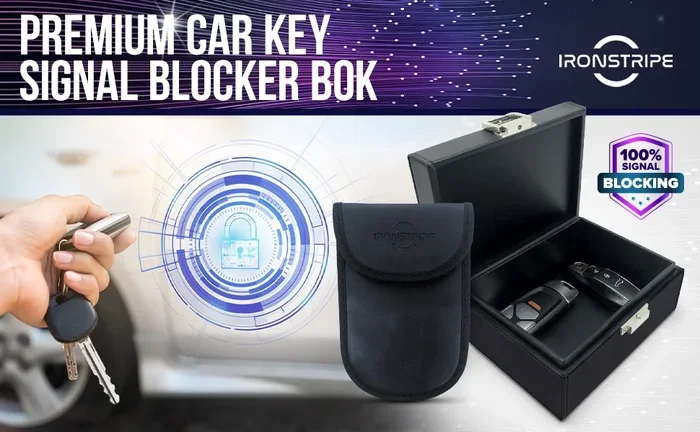
While a metal box can work, there are better and more convenient options designed specifically for key fob protection. These products are called RFID blocking wallets and Faraday bags.
Faraday Bags
A Faraday bag is a special pouch lined with metal mesh. It blocks all wireless signals from reaching your key fob. These bags are small, lightweight, and easy to carry in your pocket or bag. You simply place your key fob inside and zip it up.
Faraday bags are better than a metal box because:
- They are portable and fit in your pocket.
- They are designed specifically for signal blocking.
- They block all frequencies, not just some.
- They are more durable and look better than a random metal tin.
You can find a good Faraday bag for $10 to $25 online. Brands like Mission Darkness and Silent Pocket make reliable options.
RFID Blocking Wallets and Sleeves
If you carry your key fob in your wallet or pocket, an RFID blocking sleeve is a great choice. These are thin sleeves made of metal mesh that slide around your key fob. They block signals while being easy to use every day.
Some wallets also come with built-in RFID blocking. These are great if you want to keep your key fob and credit cards safe in one place.
Signal-Blocking Drawers and Boxes
For home use, you can buy purpose-built signal-blocking storage boxes. These are designed to hold multiple key fobs and block all wireless signals. They look like regular boxes but have metal lining inside. They are more expensive than a DIY metal box but much more convenient and reliable.
How to Keep Your Car Key Safe Every Day
Using a metal box or Faraday bag is just one part of keeping your car safe. Here are some simple habits that help with theft prevention:
- Store keys away from doors and windows: Signals can travel through walls, especially thin ones. Keep your key fob in the middle of your house, away from exterior walls.
- Turn off your key fob at night: Some key fobs have a button to disable the wireless signal. Check your car manual to see if yours has this feature.
- Use a steering wheel lock: This adds a physical barrier that makes your car harder to steal.
- Park in a garage or well-lit area: Thieves prefer easy targets. A locked garage or bright parking spot deters them.
- Keep your car software updated: Some car manufacturers release updates that improve keyless entry security.
- Use a signal-blocking pouch for daily carry: Keep your key fob in a Faraday bag when you are at home and not using it.
Quick Tips for Everyday Key Safety
Here are some fast tips you can start using today:
- Wrap your key fob in aluminum foil when you are sleeping.
- Place your key fob in a metal bowl on your kitchen counter.
- Never leave your key fob near the front door or in the hallway.
- Check if your car has a “sleep mode” for the key fob.
- Buy a cheap Faraday bag as a backup option.
Common Mistakes People Make with Key Protection
Many people try to protect their car keys but make mistakes that reduce the effectiveness. Here are some common ones:
- Using a metal box with gaps: If the lid does not seal properly, signals can still get through. Make sure the container is fully closed.
- Placing the key too close to the edge: The key fob should be in the center of the metal container for the best protection.
- Relying on only one method: A metal box is good, but combining it with other measures like a steering lock gives you much better protection.
- Ignoring newer key fob technology: Some newer keys use rolling codes and encryption. These are harder to hack, but relay attacks can still work on some models. Always check your car manufacturer’s recommendations.
- Thinking distance alone is safe: Even if your key is far from the car, a signal booster can extend the range. Do not assume distance is enough.
Expert Insights on Car Key Signal Protection
We reached out to automotive security experts to get their take on signal blocking for car keys. Here is what they said:
“A metal box is a simple and effective way to block relay attacks. However, it is not a perfect solution. The best approach is to layer your security. Use a Faraday bag at home, park in a safe spot, and consider a steering lock for extra protection.” – Mark T., Auto Security Specialist
“Many car owners do not realize how vulnerable their keyless entry system is. A simple metal container can stop a relay attack in its tracks. I recommend everyone with a keyless car to try this at home.” – Sarah L., Automotive Security Researcher
These experts agree that a metal box works, but it should be part of a broader security strategy. No single solution is 100% foolproof, but combining methods makes your car much harder to steal.
Does a Metal Box Protect Car Keys? The Final Verdict
So, does a metal box protect car keys from relay attacks? The answer is a clear yes. A sealed metal container acts as a Faraday cage that blocks the wireless signals your key fob sends out. This prevents thieves from using relay devices to steal your car.
However, a metal box is not the only option, and it is not always the most convenient one. Faraday bags and RFID blocking sleeves offer better everyday protection. They are portable, easy to use, and designed specifically for this purpose.
The most important thing is to take action. Relay attacks are a real and growing threat. Taking simple steps like storing your key fob in a metal box or Faraday bag can save you from the stress and cost of car theft.
Start today. Find a metal container in your kitchen, wrap your key fob in foil, or order a cheap Faraday bag online. Small steps make a big difference when it comes to car security and theft prevention.
Your car key fob sends out signals every second of the day. Protect it. A simple metal box can do more than you think.
Frequently Asked Questions
Can a metal box completely stop relay attacks on car keys?
A properly sealed metal box can block most relay attack signals. The key fob inside cannot send or receive wireless signals when fully enclosed in metal. However, the metal must be thick enough and the box must seal tightly with no gaps for the best protection.
What is the best metal container to protect car keys at home?
A steel lunchbox or metal cookie tin works very well for most people. These are affordable, easy to find, and provide strong signal blocking. Just make sure the lid closes completely and there are no gaps or holes in the metal.
Is aluminum foil enough to block car key signals?
Yes, aluminum foil can block car key signals effectively. Wrapping your key fob in several layers of foil stops wireless communication. However, it is not very practical for daily use because it is inconvenient to unwrap and rewrap the foil each time you need to use your key.
How does a Faraday bag compare to a metal box for key protection?
A Faraday bag is specifically designed to block all wireless signals and is more convenient than a metal box. It is portable, lightweight, and easy to carry with you. A metal box works well at home but is not practical for taking with you when you are out. For best results, use a Faraday bag for daily carry and a metal box for home storage.
Do all cars with keyless entry systems vulnerable to relay attacks?
Most cars with keyless entry and push-button start are vulnerable to relay attacks. The key fob constantly emits a low-level signal that can be intercepted by thieves with relay equipment. However, some newer car models have advanced encryption and rolling codes that make relay attacks harder. Check with your car manufacturer to learn about your specific model’s security features.
Where should I store my car keys at night to prevent theft?
Store your car keys in the middle of your house, away from exterior walls and windows. Place them in a metal box, Faraday bag, or signal-blocking pouch. The further the key is from doors and windows, the harder it is for thieves to intercept the signal with a relay device.
=== CONCLUSION ===
Does a metal box protect car keys from relay attacks? Yes, it does. A metal box creates a Faraday cage that blocks the wireless signals your key fob uses to communicate with your car. This simple and affordable method can help prevent car theft caused by relay attacks.
However, a metal box is just one tool in your theft prevention toolkit. For the best protection, combine it with other measures like Faraday bags, RFID blocking sleeves, steering wheel locks, and smart storage habits. The more layers of security you use, the safer your car will be.
Take a few minutes today to test a metal box with your key fob. You will be surprised how well it works. Protecting your car key signals is one of the easiest and most effective things you can do to keep your vehicle safe from modern thieves.