10 Common Causes of Car Overheating You Should Know About
Car overheating is a serious problem that can cause expensive engine damage if you ignore it. Understanding the 10 common causes of car overheating helps you spot trouble early and avoid costly repairs. From low coolant to a broken water pump, these issues are fixable when you know what to look for. This guide breaks down every major cause with simple, practical advice you can use right away.
There is nothing more stressful than watching your temperature gauge climb into the red zone while you are driving. Car overheating can happen to anyone, at any time, and it often strikes without warning. Whether you are stuck in traffic on a hot day or cruising down the highway, an overheating engine can turn a normal commute into a nightmare.
The good news is that most causes of car overheating are preventable. With a little knowledge and regular maintenance, you can keep your engine running at the right temperature. In this article, we will walk through the 10 most common causes of car overheating. You will learn what triggers each problem, how to spot the signs, and what you can do about it. By the end, you will feel more confident about handling engine heat issues before they turn into big repairs.
Let us be honest. Most people do not think about their car’s cooling system until something goes wrong. But that system works hard every time you turn the key. It keeps your engine from burning up by circulating coolant through the engine bay and radiator. When one part of that system fails, the whole thing can go downhill fast. That is why understanding the root causes matters so much.
Key Takeaways
- Low coolant is the #1 culprit: Regularly check your coolant level to prevent engine overheating.
- A faulty thermostat can trap heat: This small part controls coolant flow, and when it fails, your engine suffers.
- Radiator problems block heat release: Clogs, leaks, or a broken radiator fan all lead to overheating.
- Water pump failure stops circulation: Without a working pump, coolant cannot move through the engine.
- Head gasket leaks cause serious damage: This is one of the most expensive overheating causes to repair.
- Prevention saves money: Simple maintenance like checking hoses and flushing the system keeps your car running.
- Act fast when you see warning signs: Pull over safely and address car overheating immediately.
📑 Table of Contents
1. Low Coolant Level
The most common reason for car overheating is simply not enough coolant. Coolant, also called antifreeze, is the fluid that absorbs heat from your engine and carries it away. When the level drops too low, there is not enough fluid to do its job. Your engine starts to heat up quickly, and before long, you are dealing with a serious problem.
Why Coolant Levels Drop
Coolant levels can drop for several reasons. A small leak in the radiator hose or water pump can slowly drain the system over time. You might not even notice it until the gauge starts climbing. Evaporation also plays a role, especially in older vehicles. Even a tiny crack in the radiator cap can let coolant escape as steam.
Here are the most common reasons your coolant level drops:
- Leaking radiator hoses: These rubber hoses crack and wear out over time.
- Loose hose clamps: A clamp that is not tight enough can let coolant seep out.
- Radiator leaks: Corrosion can create small holes in the radiator itself.
- Worn radiator cap: The cap seals the system and maintains pressure. When it fails, coolant escapes.
- Internal leaks: A cracked head gasket or engine block can let coolant leak into the oil or combustion chamber.
How to Check and Fix Low Coolant
Checking your coolant level is easy and should be part of your regular car maintenance routine. First, never open the radiator cap when the engine is hot. The system is under pressure, and hot coolant can cause serious burns. Wait until the engine has cooled down completely.
Locate the coolant reservoir tank. It usually has MIN and MAX marks on the side. If the level is below the MIN line, top it off with the right type of coolant for your vehicle. You can find this information in your owner’s manual.
If you find yourself constantly adding coolant, there is likely a leak somewhere. Look for puddles under your car, usually green, orange, or pink in color. You may also notice a sweet smell coming from the engine bay. In that case, take your car to a mechanic for a proper inspection.
Quick Tip: Make it a habit to check your coolant level once a month. It only takes a few minutes and can save you from a major engine repair.
2. Faulty Thermostat
The thermostat is a small valve that controls the flow of coolant through your engine. It opens and closes based on the engine temperature. When the engine is cold, the thermostat stays closed to help it warm up faster. Once the engine reaches the right temperature, the thermostat opens to let coolant circulate.
When a thermostat gets stuck in the closed position, coolant cannot flow to the radiator. Heat builds up fast, and your engine starts to overheat. This is one of the sneaky causes of car overheating because it happens gradually and you might not notice it right away.
Signs of a Bad Thermostat
How do you know if your thermostat is the problem? Watch for these overheating symptoms:
- Temperature gauge spikes suddenly: The needle jumps from normal to hot very quickly.
- Inconsistent temperature readings: The gauge goes up and down unpredictably.
- Heater stops working: If your cabin heater blows cold air, coolant may not be flowing properly.
- Coolant does not warm up: After a long drive, the radiator hoses should be hot. If they stay cold, the thermostat might be stuck closed.
Replacing a Thermostat
The good news is that replacing a thermostat is relatively inexpensive and straightforward. A mechanic can usually do it in under an hour. The part itself costs between $10 and $50, though labor charges will add to the total. If you are handy, you can even replace it yourself with basic tools.
Expert Insight: Thermostats are considered a wear item. They should be checked or replaced every 50,000 to 100,000 miles as part of regular car maintenance. Preventing a thermostat failure is much cheaper than fixing a damaged engine.
3. Radiator Problems
Your radiator is the heart of the cooling system. It releases the heat that the coolant absorbs from the engine into the air. When the radiator is not working properly, heat has nowhere to go. That is when car overheating becomes a real danger.
Clogged Radiator
Over time, rust, sediment, and debris can build up inside the radiator. This buildup blocks the flow of coolant and reduces its ability to release heat. A clogged radiator is especially common in older vehicles or cars that have not had their cooling system flushed regularly.
Signs of a clogged radiator include:
- The engine runs hot even on short trips.
- The upper radiator hose is hot while the lower hose stays cool.
- You notice a green or orange residue on the ground where you park.
Radiator Leaks
Radiator leaks can happen at the seams, seams, or where the hoses connect. A small leak may only drip a little coolant at first, but it will get worse over time. If the coolant level drops too low, the engine overheats.
To spot a radiator leak, look for puddles of colored fluid under your car. You might also see white residue or streaks around the radiator fins. Sometimes, a leak is visible on the radiator itself as a wet spot or crusty buildup.
Quick Tip: Have your radiator inspected as part of your regular car repair schedule. A professional can pressure-test the system to find even tiny leaks before they become big problems.
4. Broken Water Pump
The water pump is responsible for circulating coolant through the engine and radiator. Without it, the coolant just sits in the system and does not move. Heat builds up, and the engine overheats. A failed water pump is one of the most serious causes of car overheating.
What Causes Water Pump Failure?
Water pumps do not last forever. Here are the most common reasons they break down:
- Worn impeller: The impeller is the part that moves the coolant. Over time, it can corrode or become damaged, reducing its effectiveness.
- Leaking seal: The pump has a seal that prevents coolant from leaking out. When this seal wears out, coolant drips from the front of the engine.
- Broken drive belt: Many water pumps are powered by a serpentine belt. If the belt snaps or slips, the pump stops working.
- Bad bearings: A whining or grinding noise from the front of the engine can signal failing pump bearings.
How to Spot Water Pump Trouble Early
Catching a failing water pump early can save you from a catastrophic engine failure. Look out for these signs:
- Coolant puddles under the front of the car: This often indicates a leaking water pump seal.
- Whining or groaning noise: The sound usually gets louder as you accelerate.
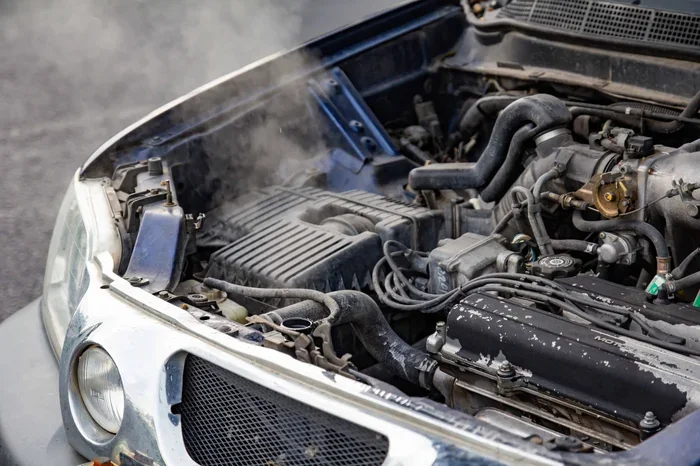
- Steam from the engine bay: This is a clear sign that coolant is not circulating.
- Overheating after idling: The engine overheats when stopped but cools down while driving, which is a classic water pump symptom.
Replacing a water pump can be a significant car repair, but it is far less expensive than replacing a seized engine. Most mechanics recommend replacing the water pump and the timing belt together if they are in the same area of the engine. This saves money on labor since the work is similar.
5. Broken Radiator Fan
The radiator fan pulls air through the radiator to help cool the coolant. When you are driving fast, the movement of the car does this job naturally. But when you are sitting in traffic or idling at a stoplight, the fan becomes essential. If the fan stops working, your engine can overheat quickly, especially in stop-and-go traffic.
Types of Radiator Fans
Most modern cars use electric cooling fans. These are controlled by a temperature sensor that turns the fan on and off as needed. Older vehicles may use a mechanical fan driven by a belt from the engine. Both types can fail, leading to car overheating.
Common Radiator Fan Problems
- Blown fuse: A simple fuse issue can kill the fan. This is the easiest fix and costs almost nothing.
- Bad fan motor: The motor itself can burn out over time. You might hear the fan struggling or not hear it at all.
- Faulty temperature sensor: If the sensor does not detect the rising temperature, it will not signal the fan to turn on.
- Wiring issues: Corroded or damaged wiring can prevent the fan from receiving power.
- Broken fan clutch: In mechanical fan systems, the clutch can wear out and cause the fan to spin freely without pulling enough air.
Quick Tip: On a hot day, turn on your heater to full blast if your engine starts to run warm. This can help pull heat away from the engine temporarily while you pull over safely. It is not a fix, but it can buy you time.
6. Head Gasket Failure
The head gasket sits between the engine block and the cylinder head. It seals the combustion chambers and keeps coolant and oil from mixing. When a head gasket fails, it is one of the most serious causes of car overheating. This type of engine repair is expensive, which is why early detection matters so much.
What Causes a Head Gasket to Fail?
Head gaskets usually fail because the engine has overheated repeatedly. The extreme heat causes the gasket to warp or crack. Once the seal is broken, coolant can leak into the cylinders or oil passages. This creates a dangerous cycle where the loss of coolant leads to more overheating.
Signs of a Blown Head Gasket
Watch for these overheating symptoms that point to a head gasket problem:
- White smoke from the exhaust: This is coolant burning inside the combustion chamber.
- Milky oil on the dipstick: Coolant mixing with oil creates a milky, frothy substance.
- Bubbles in the radiator: Combustion gases leaking into the cooling system cause bubbles.
- Rapid overheating: The engine temperature spikes even with plenty of coolant in the system.
- Loss of coolant with no visible leak: Coolant disappears because it is being burned or leaking internally.
If you suspect a head gasket failure, stop driving the car immediately. Continuing to drive with a blown head gasket can cause catastrophic engine damage. You will need a professional mechanic to diagnose and repair the issue.
7. Cooling System Blockages
Even if your coolant level is full, a blockage in the system can prevent proper circulation. Think of it like a clogged artery. The fluid cannot move freely, and heat builds up in the engine. Blockages are one of the less obvious causes of car overheating, but they can be just as damaging.
Where Blockages Happen
Blockages can form in several places within the cooling system:
- Inside the radiator: Rust and sediment accumulate over time and narrow the passages.
- In the heater core: The small tubes inside the heater core can become clogged, restricting flow.
- In the engine water jackets: These are the channels inside the engine where coolant flows. Scale and deposits can build up here.
- At the thermostat: A stuck thermostat can act as a blockage if it does not open properly.
Preventing Cooling System Blockages
The best way to prevent blockages is to flush your cooling system regularly. Most manufacturers recommend a flush every 30,000 to 50,000 miles. During a flush, old coolant is drained and replaced with fresh fluid. This removes sediment and prevents buildup that can restrict flow.
You should also use the right type of coolant for your vehicle. Mixing different types of antifreeze can create a chemical reaction that causes sludge to form. Always check your owner’s manual for the recommended coolant type.
Expert Insight: If you notice that your heater only works on high but not on low, or the temperature gauge behaves erratically, a blockage might be the cause. A cooling system pressure test can help identify the problem.
8. Leaking Radiator Hose
The radiator hoses are the rubber tubes that carry coolant between the engine and the radiator. They are exposed to extreme heat and pressure every time you drive. Over time, these hoses crack, swell, and eventually leak. A leaking hose is one of the most common and easily preventable causes of car overheating.
How to Inspect Radiator Hoses
You can inspect your radiator hoses yourself with a quick visual check. Look for the following signs of wear:
- Cracks or splits on the surface: Even small cracks can grow into leaks quickly.
- Soft or spongy spots: A hose that feels soft when squeezed may be about to fail.
- Swelling or bulging: This indicates the hose is weakening from the inside.
- Coolant residue: Dried coolant around the hose connections is a clear sign of a slow leak.
- Loose clamps: Make sure the clamps holding the hoses are tight and secure.
Radiator hoses typically last between 50,000 and 100,000 miles, but they should be inspected regularly. Replacing a hose is a simple and affordable car repair that can prevent a major cooling system failure.
Quick Tip: Squeeze your radiator hoses when the engine is cool. If they feel hard and brittle or soft and mushy, it is time to replace them. This is one of the easiest things you can do to prevent car overheating.
9. Low Oil Level
Many people do not realize that engine oil plays a role in cooling the engine. While coolant handles the main cooling job, oil helps reduce friction and carries away some heat from engine components. When your oil level is too low, friction increases, and heat builds up. This can contribute to car overheating, especially under heavy load.
How Oil Helps Cool Your Engine
Engine oil coats all the moving parts inside the engine. This reduces metal-on-metal contact and minimizes heat generation. Without enough oil, parts like pistons, bearings, and camshafts generate more friction, which creates more heat. The engine temperature rises, and the cooling system struggles to keep up.
Signs of Low Oil
- Oil pressure warning light: This dashboard light means your oil level or pressure is too low.
- Engine sounds louder than usual: Increased friction makes the engine noisier.
- Burning oil smell: You might notice a distinct smell coming from the engine bay.
- Overheating during heavy use: Towing, climbing hills, or driving in stop-and-go traffic can trigger overheating when oil is low.
Check your oil level regularly using the dipstick. Most vehicles need an oil change every 5,000 to 7,500 miles. Keeping up with oil changes and top-offs is one of the simplest ways to support your cooling system and prevent engine damage.
10. Extreme Weather and Driving Conditions
Sometimes, car overheating is not caused by a mechanical failure at all. Extreme heat, heavy traffic, and demanding driving conditions can push your cooling system to its limits. While you cannot control the weather, understanding how these factors affect your engine can help you take preventive steps.
How Heat Affects Your Engine
On extremely hot days, the ambient temperature around your engine is already high. The radiator has a harder job releasing heat into air that is already warm. This is why car overheating is more common in summer months and in hot climates. If your cooling system is already weak, hot weather can push it over the edge.
Stop-and-Go Traffic
Driving in heavy traffic or sitting in long traffic jams is tough on your engine. The car is moving slowly or not at all, which means less air is flowing through the radiator. The cooling fan has to work harder, and if it is already weak, it may not be enough. This is one of the most common situations where drivers experience overheating symptoms.
Towing and Heavy Loads
Towing a trailer or carrying a heavy load puts extra strain on your engine. The engine works harder and generates more heat. If your cooling system is not up to the task, the engine temperature will rise. Always check your cooling system before towing, especially during the summer months.
Quick Tip: On hot days, avoid riding your brakes unnecessarily. Braking creates extra heat that transfers to the engine bay. Maintain a steady speed and use cruise control when possible to reduce engine load.
Conclusion
Car overheating is a problem you do not want to ignore. Whether the cause is something simple like low coolant or something serious like a blown head gasket, acting quickly can save you from expensive engine damage. The 10 causes we covered in this article are the most common reasons engines run hot, and most of them are preventable with regular maintenance.
Make it a habit to check your coolant level, inspect your hoses, and pay attention to your temperature gauge. These small actions take just a few minutes but can keep your engine running smoothly for years. If you notice any overheating symptoms, pull over safely and let the engine cool down before investigating further.
Remember, prevention is always better than repair. A well-maintained cooling system is your best defense against car overheating. Stay proactive, stay informed, and your engine will thank you. Do not wait until the temperature gauge hits red. Take action today and keep your car running cool and trouble-free.
Frequently Asked Questions
What are the first signs of car overheating?
The first signs include a rising temperature gauge on your dashboard, steam or smoke coming from the engine bay, a sweet smell from coolant leaking, and your car heater blowing cold air. If you notice any of these overheating symptoms, pull over safely and turn off the engine right away.
Can I keep driving if my car is overheating?
No, you should never keep driving an overheating engine. Continuing to drive can cause severe damage like a warped cylinder head, blown head gasket, or a cracked engine block. Pull over, turn off the engine, and let it cool down before calling for help or checking the coolant level.
How much does it cost to fix car overheating?
The cost varies widely depending on the cause. Simple fixes like topping off coolant or replacing a thermostat cost $50 to $200. More serious repairs like a water pump or head gasket can range from $500 to $2,000 or more. Regular maintenance is the best way to avoid expensive car repair bills.
How often should I check my coolant level?
You should check your coolant level at least once a month and before any long road trips. Make sure the engine is completely cool before opening the radiator cap. Keeping an eye on your coolant level is one of the easiest ways to prevent car overheating.
Can a dirty radiator cause overheating?
Yes, a dirty or clogged radiator can absolutely cause overheating. Debris, rust, and sediment can block coolant flow and reduce the radiator’s ability to release heat. Flushing your cooling system every 30,000 to 50,000 miles helps prevent this problem.
What should I do if my car overheats on the highway?
If your car overheats on the highway, turn on the heater to full blast to help draw heat away from the engine. Pull over safely as soon as possible and turn off the engine. Do not open the radiator cap until the engine has cooled completely. Call for roadside assistance if needed, and do not attempt to drive the car again until the issue is resolved.