What Happens When a Car Overheats and Why It Matters
What happens when a car overheats can range from minor issues to catastrophic engine failure. When your engine runs too hot, it can warp metal parts, blow head gaskets, and even seize the engine entirely. Understanding the causes and warning signs helps you act fast and avoid costly repairs.
You’re driving down the road, and suddenly you notice something strange. Steam is curling up from under the hood. The temperature gauge is climbing past the normal range. Your heart drops as you think, what happens when a car overheats? This is a moment every driver dreads, but knowing what to do can make all the difference.
What happens when a car overheats is more than just a scary moment on the road. It is a serious mechanical problem that can lead to expensive repairs or even a totaled vehicle. The truth is, most drivers don’t think about their car’s cooling system until something goes wrong. By understanding the causes, symptoms, and consequences of an overheating engine, you can protect your vehicle and your wallet.
In this guide, we will walk you through everything you need to know. We will cover the warning signs, the real damage an overheating engine can cause, the most common reasons it happens, and what you should do if your car starts running hot. Let’s dive in.
Key Takeaways
- Overheating can cause severe engine damage: warped cylinder heads, blown head gaskets, and engine seizure are real risks.
- Common causes include coolant leaks, thermostat failure, and water pump breakdowns: these are often easy to spot early.
- Warning signs are hard to miss: steam from the hood, a rising temperature gauge, and strange smells all point to trouble.
- Acting quickly saves money: pulling over and shutting off the engine can prevent thousands of dollars in repairs.
- Prevention is simple: regular coolant checks, hose inspections, and timely servicing keep your cooling system healthy.
- Never ignore an overheating car: even a short drive while overheating can cause permanent damage.
📑 Table of Contents
- What Happens When a Car Overheats: The Real Damage
- Common Causes of an Overheating Engine
- Warning Signs Your Car Is Overheating
- What to Do When Your Car Overheats
- How to Prevent Your Car From Overheating
- Overheating Engine Repair Costs: What to Expect
- Expert Insights: What Mechanics Wish Every Driver Knew
- Key Takeaways
- Conclusion
What Happens When a Car Overheats: The Real Damage
When your engine overheats, the heat inside the combustion chamber rises far beyond what the system was designed to handle. Normal operating temperature for most cars sits between 195 and 220 degrees Fahrenheit. When that number climbs, metal parts expand, fluids break down, and critical components start to fail.
The damage from overheating does not happen all at once. It builds quickly, and the longer you drive with an overheating engine, the worse it gets. Here are the most common types of damage you can expect.
Warped Cylinder Head
The cylinder head sits on top of the engine block and seals the combustion chambers. When it gets too hot, the metal warps and loses its shape. A warped cylinder head means the seal between the head and the block is no longer tight. This leads to compression loss, oil leaks, and coolant mixing with engine oil. Repairing a warped head can cost anywhere from $500 to over $1,500 depending on the vehicle.
Blown Head Gasket
A blown head gasket is one of the most serious results of an overheating engine. The head gasket sits between the cylinder head and the engine block. It keeps coolant and oil in their proper channels while maintaining compression. When extreme heat pushes past the gasket’s limits, it fails. Coolant leaks into the combustion chamber, oil mixes with coolant, and the engine loses power. A head gasket replacement is one of the most expensive repairs, often costing $1,000 to $2,000 or more.
Engine Seizure
In the worst cases, an overheating engine seizes completely. The extreme heat causes metal parts to expand so much that moving components grind against each other. The pistons can weld themselves to the cylinder walls. A seized engine means the vehicle is done until a full engine rebuild or replacement happens. This repair can easily cost $3,000 to $7,000 or more.
Cracked Engine Block
Although less common than a warped head or blown gasket, a cracked engine block is possible. The block is the foundation of the entire engine. When it cracks from heat stress, coolant leaks internally and externally. The engine loses its ability to regulate temperature, and the damage becomes irreversible without a full replacement.
Damaged Cooling Fan and Radiator
Overheating does not only hurt internal engine parts. The radiator and cooling fan can also suffer. A radiator that has been pushed past its limits can develop leaks or become clogged. The cooling fan motor can burn out from overworking. These components are essential for keeping your engine at a safe temperature, and when they fail, the problem snowballs.
Common Causes of an Overheating Engine
Understanding why a car overheats is just as important as knowing what damage it causes. Most overheating problems trace back to a few common culprits within the cooling system. Let’s look at each one.
Coolant Leaks
A coolant leak is the number one cause of engine overheating. Coolant, also called antifreeze, circulates through the engine block, hoses, radiator, and water pump. If there is a leak anywhere in this loop, the system loses its ability to absorb and carry away heat. Leaks can develop from cracked hoses, a loose radiator cap, a damaged water pump seal, or corrosion inside the radiator. Even a small leak can cause big problems if you do not notice it early.
Thermostat Failure
The thermostat is a small valve that controls the flow of coolant through the engine. It opens when the engine gets warm and closes when it needs to warm up. When a thermostat gets stuck in the closed position, coolant cannot flow to the radiator. The engine heats up fast, and you are left with an overheating problem. Thermostat replacement is usually inexpensive, often under $150, but ignoring it leads to serious damage.
Water Pump Breakdown
The water pump is the heart of the cooling system. It pushes coolant through the engine block and hoses. When the water pump fails, coolant stops moving. Heat builds up fast. Water pump failures can happen from age, worn bearings, or a damaged impeller. A new water pump typically costs between $300 and $750 to replace, but the cost jumps dramatically if the pump failure leads to engine overheating and additional damage.
Low Coolant Levels
Sometimes the cause is as simple as running low on coolant. Coolant levels drop over time through normal evaporation or small, unnoticed leaks. Drivers who skip regular fluid checks may not realize the level is dangerously low until the engine starts overheating. Checking your coolant reservoir once a month is a quick habit that can save you from major trouble.
Radiator Problems
The radiator releases heat from the coolant into the air. If the radiator becomes clogged with debris, rust, or old coolant, it cannot do its job properly. A clogged radiator means the coolant stays hot and the engine keeps getting hotter. Flushing the radiator during regular maintenance helps prevent this issue.
Broken Cooling Fan
The cooling fan kicks in when the car is idling or moving slowly at low speeds. It pulls air through the radiator to cool the fluid. If the fan motor or fan relay fails, the engine can overheat in traffic or at stoplights. A broken cooling fan is an easy fix if caught early, but driving without it for long periods can cause overheating damage.
Warning Signs Your Car Is Overheating
Knowing the early warning signs of an overheating engine gives you a chance to pull over and shut things down before permanent damage sets in. Here are the most common overheating engine symptoms to watch for.
Steam or Smoke from the Hood
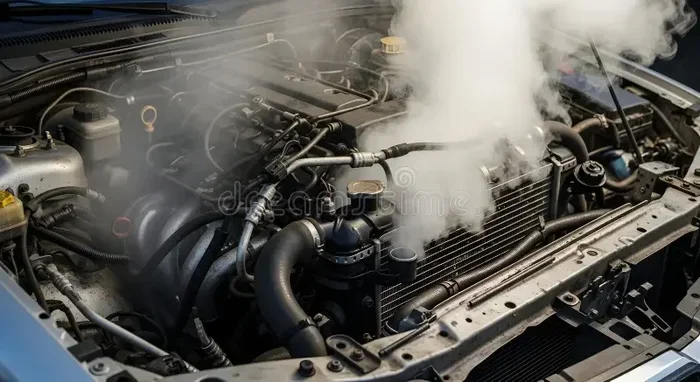
This is the most obvious sign. If you see steam or white smoke billowing from under the hood, your engine is running too hot. Pull over safely and turn off the engine immediately. Do not open the hood right away, as pressurized steam can cause burns.
Temperature Gauge in the Red Zone
Your dashboard temperature gauge shows the current coolant temperature. If the needle climbs into the red zone or starts rising quickly, pay attention. A gauge that stays in the normal range one moment and spikes the next is a clear warning sign.
Unusual Smells
A sweet smell inside or outside the car often means coolant is leaking onto hot engine parts. A burnt or oily smell can indicate that engine oil is overheating. Both smells are red flags that should not be ignored.
Thumping or Ticking Noises
When coolant cannot flow properly, parts that rely on cooling start to make noise. A thumping sound from the engine block often means coolant is hitting hot surfaces. A ticking noise can indicate that the engine oil is too thin from heat and is no longer lubricating properly.
Loss of Power
An overheating engine often loses power or runs rough. This happens because the combustion process is disrupted by excess heat. If your car feels sluggish or struggles to accelerate, check the temperature gauge.
Coolant Puddles Under the Car
If you see a green, orange, or pink puddle under your car after parking, you likely have a coolant leak. Check the level in the reservoir and top it off, but also get the leak inspected before it leads to overheating.
What to Do When Your Car Overheats
Finding yourself in an overheating situation can be stressful, but staying calm and following the right steps can prevent further damage.
Step 1: Pull Over Safely
Turn on your hazard lights and find a safe place to stop. Do not keep driving. Even a few more minutes of driving while overheating can cause serious internal damage.
Step 2: Turn Off the Engine
Once you are safely stopped, turn off the engine. Let it cool down for at least 15 to 20 minutes. Opening the hood or radiator cap while the system is still pressurized and hot can cause burns from boiling coolant.
Step 3: Check the Coolant Level
After the engine has cooled, check the coolant reservoir. If it is empty or very low, you may have a leak. You can add a small amount of coolant or water to get you to a nearby repair shop, but this is only a temporary fix.
Step 4: Call for Help
If the problem is not obvious or if the engine temperature remains high, call a tow truck. Driving an overheating car to a repair shop can turn a simple fix into a major engine replacement. It is not worth the risk.
Quick Tips for Overheating Emergencies
- Keep a bottle of coolant in your trunk for emergencies.
- Never pour cold water directly into a hot radiator, as the sudden temperature change can crack the engine block.
- Turn the heater to maximum if you cannot pull over right away. This helps pull heat away from the engine temporarily.
- Carry a basic emergency kit with water, coolant, and a flashlight.
How to Prevent Your Car From Overheating
The best way to deal with an overheating engine is to prevent it from happening in the first place. Regular maintenance and simple habits go a long way in keeping your cooling system working properly.
Check Coolant Levels Regularly
Make it a habit to check your coolant level once a month. Look at the reservoir when the engine is cold. If the level is low, top it off with the correct type of coolant for your vehicle. Frequent drops in coolant level often signal a hidden leak that needs professional attention.
Inspect Hoses and Belts
The rubber hoses and belts in your cooling system wear out over time. Cracked, swollen, or soft hoses can leak coolant. A loose or worn serpentine belt can prevent the water pump from working properly. A quick visual inspection during oil changes can catch these issues early.
Flush and Replace Coolant on Schedule
Coolant breaks down over time and loses its ability to absorb heat effectively. Most manufacturers recommend flushing the cooling system every 30,000 to 50,000 miles. Check your owner’s manual for the specific interval for your vehicle. Fresh coolant keeps the system running efficiently and protects against corrosion.
Keep the Radiator Clean
Debris like leaves, dirt, and bugs can block airflow through the radiator. This reduces its ability to cool the fluid. Rinsing the radiator fins with a gentle stream of water during car washes helps maintain proper airflow.
Do Not Ignore Small Problems
A small coolant leak or a slightly higher-than-normal temperature reading today can become a major engine failure tomorrow. Address minor cooling system issues promptly. The cost of a small repair now is nothing compared to the cost of replacing a damaged engine.
Overheating Engine Repair Costs: What to Expect
The cost of repairing an overheating engine varies widely depending on the damage. Here is a general breakdown of common repair costs.
| Repair | Estimated Cost Range |
|---|---|
| Thermostat Replacement | $100 – $300 |
| Water Pump Replacement | $300 – $750 |
| Radiator Repair or Replacement | $300 – $900 |
| Head Gasket Replacement | $1,000 – $2,000+ |
| Cylinder Head Resurfacing or Replacement | $500 – $1,500 |
| Engine Rebuild or Replacement | $3,000 – $7,000+ |
As you can see, the cost increases dramatically the longer you wait. A simple thermostat fix costs a few hundred dollars, but a seized engine can cost several thousand. The best financial decision you can make is to address overheating problems the moment they appear.
Expert Insights: What Mechanics Wish Every Driver Knew
Experienced mechanics see the aftermath of ignored overheating problems every day. Here are some insights from the professionals.
Do not rely on the temperature gauge alone. Some gauges are not very accurate until the problem is already serious. Pay attention to how the car feels, sounds, and smells. Any change in performance combined with a rising temperature is a warning sign.
Older cars are more vulnerable. Vehicles over 10 years old often have aging hoses, water pumps, and radiators. If you drive an older car, be extra vigilant about cooling system maintenance. The cost of a cooling system flush and inspection is a fraction of what you would pay for engine damage.
Summer heat makes overheating worse. High outdoor temperatures put extra stress on the cooling system. During summer months, keep an extra eye on your temperature gauge, especially in stop-and-go traffic or when towing a load.
Aftermarket modifications can affect cooling. If you have upgraded your engine for more power, the stock cooling system may not be enough. Consider upgrading the radiator, adding an electric cooling fan, or installing a high-flow water pump to handle the extra heat.
Key Takeaways
- Overheating causes serious damage: warped heads, blown gaskets, and engine seizures are all possible outcomes of driving while hot.
- Common causes include coolant leaks, thermostat failure, and water pump breakdowns: most of these are preventable with regular maintenance.
- Warning signs include steam, a rising temperature gauge, and unusual smells: recognizing these early gives you time to act.
- Pull over and turn off the engine immediately if you suspect overheating: continuing to drive can turn a minor repair into a major expense.
- Prevention is simple and affordable: regular coolant checks, hose inspections, and scheduled maintenance keep your cooling system in top shape.
- Repair costs vary widely: from a few hundred dollars for a thermostat to several thousand for a new engine.
- Never ignore overheating: even a short drive while the engine is hot can cause irreversible damage.
Conclusion
What happens when a car overheats is a question every driver should understand. The answer is straightforward but serious. An overheating engine can suffer from warped cylinder heads and blown head gaskets to complete engine seizure. The damage is expensive, often costing thousands of dollars in repairs.
The good news is that most overheating problems are preventable. Regular maintenance, simple checks, and paying attention to warning signs can keep your engine running at a safe temperature. When you notice steam, a rising gauge, or unusual smells, act quickly. Pull over, turn off the engine, and get help if needed.
Your car’s cooling system works hard every time you drive. Give it the attention it deserves. A few minutes of preventive care today can save you from a major headache tomorrow. Stay cool, stay safe, and keep your engine running strong.
Frequently Asked Questions
Can I keep driving if my car is overheating?
No. Driving while your car is overheating can cause permanent engine damage within minutes. Pull over safely, turn off the engine, and let it cool down. Continuing to drive risks warping the cylinder head, blowing the head gasket, or seizing the engine entirely.
How long can an engine run before overheating causes damage?
Even a few minutes of driving with an overheating engine can cause serious harm. The exact time depends on how hot the engine gets and how long it stays in the red zone. Some damage can occur in as little as 5 to 10 minutes of sustained overheating.
How much does it cost to fix an overheating engine?
The cost varies widely depending on the damage. A thermostat replacement may cost $100 to $300, while a blown head gasket repair can run $1,000 to $2,000 or more. A seized engine requiring replacement can cost $3,000 to $7,000 or higher.
What should I put in my radiator if my car overheats?
If your coolant is low, you can add a 50/50 mix of coolant and distilled water as a temporary measure. Never add plain water to a hot radiator, as the sudden temperature change can crack the engine block. Always let the engine cool down first.
Why does my car overheat in traffic but not on the highway?
This usually points to a cooling fan problem. The fan is responsible for pulling air through the radiator when the car is moving slowly or stopped. If the fan motor, relay, or fuse is failing, the radiator cannot cool the coolant effectively at low speeds, causing overheating in traffic.
Can low oil cause a car to overheat?
Yes. Engine oil helps lubricate and cool internal components. When oil levels are low or the oil is old and degraded, friction increases and heat builds up. This can contribute to overheating, especially under heavy load or in hot weather. Regular oil changes are essential for temperature control.