How Many Quarts Does Your 18L Engine Actually Take
Your 1.8L engine typically takes between 3.7 and 4.2 quarts of oil, but the exact amount depends on your specific vehicle model and whether you include the oil filter. Knowing the correct 1.8L engine oil capacity is essential for keeping your engine healthy and avoiding costly repairs. This guide breaks down everything you need to know about oil capacity, oil type, and the oil change process.
Have you ever wondered, “How many quarts does a 1.8L engine actually take?” You are not alone. Many car owners face this question when changing their oil or checking their engine levels. The answer is not always straightforward because it depends on your specific vehicle, the oil filter, and the engine design. But don’t worry. We are going to break it all down for you in simple terms.
Understanding your 1.8L engine oil capacity is one of the most important things you can do as a car owner. It saves you money. It prevents engine damage. And it gives you confidence when you pop the hood. In this guide, we will cover everything from oil capacity to oil type, viscosity, and step-by-step oil change tips. Let us dive right in.
Key Takeaways
- Standard Capacity: Most 1.8L engines require 3.7 to 4.2 quarts of oil for a full change.
- Check Your Manual: Always refer to your owner’s manual for the exact oil capacity and type.
- Oil Filter Matters: The oil filter holds residual oil, so factor it into your total capacity.
- Viscosity Is Key: Use the recommended viscosity grade like 5W-30 or 0W-20 for best performance.
- Synthetic vs Conventional: Synthetic oil offers better protection but costs more.
- Overfilling Risks: Too much oil can cause engine damage, so measure carefully.
📑 Table of Contents
- Understanding the 1.8L Engine and Oil Capacity
- How Many Quarts Does a 1.8L Engine Take?
- Choosing the Right Oil for Your 1.8L Engine
- Step-by-Step Guide to Changing Oil in a 1.8L Engine
- Common Mistakes to Avoid When Filling Oil
- How Often Should You Change Oil in a 1.8L Engine?
- Expert Tips for Maintaining Your 1.8L Engine
- Key Takeaways
- Conclusion
Understanding the 1.8L Engine and Oil Capacity
The 1.8 liter engine is one of the most common engine sizes found in compact and midsize vehicles. You will find it in cars from Toyota, Honda, Nissan, Chevrolet, and many other brands. These engines are known for being reliable, fuel-efficient, and easy to maintain. But knowing the oil capacity for 1.8L engines is critical before you pour any oil into the crankcase.
What Does 1.8L Mean?
The “1.8L” stands for 1.8 liters of engine displacement. This refers to the total volume of all the cylinders combined. It is a measure of how much air and fuel the engine can move through its combustion chambers. A 1.8 liter engine is considered a small to mid-size engine. It offers a good balance between power and fuel economy.
When we talk about how many quarts a 1.8L engine takes, we are referring to the total volume of oil needed to fill the engine’s lubrication system. This includes the oil passages, the crankcase, and the oil filter. Most engines of this size fall in a similar range, but there can be small differences between models.
Why Oil Capacity Matters
Getting the oil capacity right matters for a few key reasons. First, too little oil means your engine does not get proper lubrication. This leads to increased friction, heat, and wear. Second, too much oil can cause foaming, which reduces the oil’s ability to lubricate. It can also damage the crankshaft and cause leaks. Third, using the wrong amount can trigger your check engine light or oil pressure warning.
Here are the main reasons why knowing your engine oil capacity is so important:
- Engine Protection: The right amount of oil keeps all moving parts properly lubricated.
- Fuel Efficiency: Overfilling or underfilling can hurt your gas mileage.
- Engine Longevity: Proper oil levels extend the life of your engine significantly.
- Performance: The right oil volume ensures smooth engine operation.
- Cost Savings: Avoiding mistakes saves you from expensive repairs down the road.
How Many Quarts Does a 1.8L Engine Take?
The short answer is that most 1.8 liter engines take between 3.7 and 4.2 quarts of oil. But the exact number depends on several factors. Let us look at the details so you know exactly what your vehicle needs.
Typical Oil Capacity by Vehicle
Different vehicles with 1.8L engines have slightly different oil capacities. Here is a general breakdown based on popular models:
- Toyota Corolla (1.8L): Typically takes about 4.0 quarts with the oil filter.
- Honda Civic (1.8L): Usually requires around 3.7 to 3.9 quarts.
- Nissan Sentra (1.8L): Generally holds about 4.1 quarts.
- Chevrolet Cruze (1.8L): Often needs around 3.9 to 4.2 quarts.
These numbers include the oil that remains in the filter after draining. If you are changing the oil filter at the same time, you will need the full capacity. If you are just topping off, the amount will be less.
Does the Oil Filter Affect Capacity?
Yes, it does. The oil filter holds a small amount of oil even after you drain the pan. This residual oil is part of your total oil capacity for 1.8L engines. Most oil filters hold between 0.3 and 0.5 quarts of oil. So when you are doing a full oil change, you need to account for that extra oil in the filter.
Some people wonder if they can skip the oil filter and just add the base amount. The answer is no. Always change the oil filter with the oil. The filter removes contaminants and keeps your engine clean. Skipping it can lead to premature engine wear.
Choosing the Right Oil for Your 1.8L Engine
Now that you know how many quarts your engine needs, the next question is: what type of oil? Not all oils are the same. Using the wrong oil can reduce performance and even damage your engine over time.
Viscosity Grades Explained
Oil viscosity refers to how thick or thin the oil is at different temperatures. You will see numbers like 5W-30 or 0W-20 on the bottle. The first number (with the W) tells you how the oil flows in cold temperatures. The second number tells you how it performs at normal operating temperature.
For most 1.8 liter engines, the recommended viscosity is either 5W-30 or 0W-20. Always check your owner’s manual to confirm. Here is a quick comparison:
- 0W-20: Best for cold climates. Flows easily on startup. Improves fuel economy.
- 5W-30: A versatile option. Works well in most temperatures. Offers good protection.
- 10W-30: Older recommendation for some models. Best for warmer climates.
Synthetic vs Conventional Oil
You will also need to decide between synthetic and conventional oil. Synthetic oil is engineered in a lab for superior performance. It flows better in cold weather and handles higher temperatures. It also lasts longer between changes. Conventional oil is made from refined crude oil and is more affordable.
Here is what you should consider when choosing between synthetic oil and conventional oil:
- Synthetic Oil: Better protection, longer intervals, and improved performance. Costs more upfront.
- Conventional Oil: More affordable and widely available. Needs more frequent changes.
- Synthetic Blend: A middle ground. Offers some synthetic benefits at a lower price.
For a 1.8L engine, synthetic oil is often the best choice if you can afford it. It provides excellent lubrication and helps your engine run smoothly for years.
Step-by-Step Guide to Changing Oil in a 1.8L Engine
Changing your own oil is one of the easiest and most rewarding DIY car maintenance tasks. It saves you money and gives you a better understanding of your vehicle. Here is a simple walkthrough for a 1.8L oil change.
What You Will Need
- Correct amount of oil (check your 1.8L engine oil capacity)
- New oil filter
- Oil drain pan
- Socket wrench and oil filter wrench
- Funnel
- Jack and jack stands or ramps
- Gloves and safety glasses
- Rags or paper towels
Step 1: Warm Up the Engine
Start your engine and let it run for about 5 minutes. Warm oil flows more easily and drains better. Do not let it get too hot. You just want it warm enough to be fluid.
Step 2: Lift the Vehicle
Use a jack to lift the front of the car. Secure it with jack stands for safety. Alternatively, you can use drive-on ramps. Never work under a car supported only by a jack.
Step 3: Drain the Old Oil
Place your drain pan under the oil drain plug. Use the socket wrench to loosen the plug. Let the old oil drain completely into the pan. This usually takes about 10 to 15 minutes.
Step 4: Replace the Oil Filter
Use an oil filter wrench to remove the old filter. Before installing the new one, rub a little fresh oil on the rubber gasket. This creates a good seal and makes future removal easier.
Step 5: Add New Oil
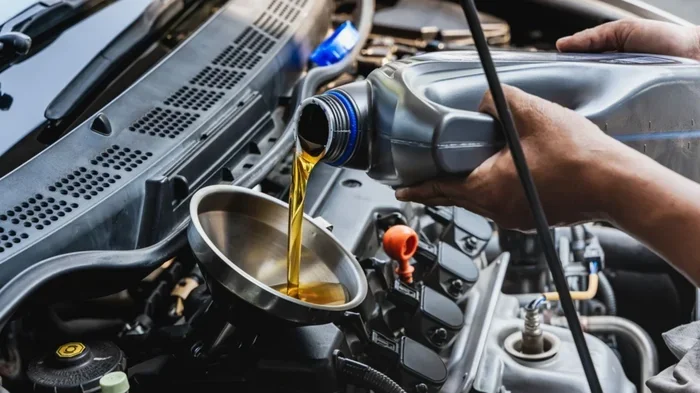
Replace the drain plug and tighten it securely. Then open the oil fill cap on top of the engine. Use a funnel to add the new oil. Add about three-quarters of the total oil capacity for 1.8L engines first. Then check the level with the dipstick before adding more.
Step 6: Check for Leaks
Start the engine and let it run for a minute. Look under the car for any leaks around the drain plug and oil filter. Turn off the engine and wait a few minutes for the oil to settle. Check the dipstick again and top off if needed.
Common Mistakes to Avoid When Filling Oil
Even experienced car owners make mistakes when it comes to oil changes. Here are some common errors you should avoid.
Overfilling the Engine
Adding too much oil is one of the most common mistakes. Overfilling causes the oil to foam, which reduces its lubricating ability. It can also cause oil leaks, damaged seals, and even engine failure in severe cases. Always measure carefully and use the dipstick to verify the level.
Using the Wrong Oil Type
Using the wrong viscosity or oil type can hurt your engine. Thicker oil does not flow as well in cold weather. Thinner oil may not provide enough protection at high temperatures. Always stick with the manufacturer’s recommendation for your 1.8 liter engine.
Forgetting to Change the Oil Filter
Some people reuse their old oil filter to save money. This is a bad idea. A clogged filter cannot properly clean your oil. Dirty oil circulates through the engine and causes wear. Always install a new filter with every oil change.
Not Checking the Oil Level After Filling
After adding oil, always check the dipstick. The level should be between the minimum and maximum marks. Running the engine with too little oil can cause serious damage in a short amount of time.
How Often Should You Change Oil in a 1.8L Engine?
The frequency of your oil changes depends on the type of oil you use and your driving conditions. Most manufacturers recommend changing oil every 5,000 to 7,500 miles for conventional oil. With synthetic oil, you can often go 7,500 to 10,000 miles between changes.
However, these are general guidelines. Your driving habits matter. If you drive in stop-and-go traffic, tow heavy loads, or operate in extreme temperatures, you may need to change your oil more often. Here are some quick tips:
- Check your owner’s manual for the manufacturer’s recommended oil change interval.
- Monitor your oil level regularly, at least once a month.
- Watch for warning signs like dark or dirty oil, engine noise, or the oil pressure light.
- Keep a maintenance log to track your oil changes and stay on schedule.
Sticking to a regular oil change schedule is one of the simplest ways to protect your 1.8L engine. It costs very little compared to the cost of an engine rebuild.
Expert Tips for Maintaining Your 1.8L Engine
Beyond oil changes, there are a few other things you can do to keep your engine running strong. These small habits make a big difference over time.
Check Oil Between Changes
Get in the habit of checking your oil level every time you fill up the gas tank. A quick dipstick check takes only a few seconds. It helps you catch leaks early and ensures your engine always has enough lubrication.
Watch for Oil Leaks
If you notice oil spots under your car, do not ignore them. Even small leaks can lead to low oil levels over time. Common leak points include the oil pan gasket, the oil filter, and the drain plug. Address leaks promptly to prevent engine damage.
Use Quality Parts
When it comes to oil and filters, quality matters. Use reputable brands that meet the API certification standards. Cheap oil may save a few dollars now but can cost you much more in engine repairs later.
Keep Records
Maintain a simple log of your oil changes, including the date, mileage, and type of oil used. This helps you stay organized and provides useful information if you ever sell the vehicle or need to diagnose an issue.
Key Takeaways
- Standard Capacity: Most 1.8L engines take between 3.7 and 4.2 quarts of oil.
- Check Your Manual: Always confirm the exact capacity and oil type for your specific vehicle.
- Oil Filter Included: The oil filter holds residual oil, so factor it into your total capacity.
- Use the Right Viscosity: Stick with the manufacturer’s recommended grade like 5W-30 or 0W-20.
- Synthetic Oil Benefits: Synthetic oil offers better protection and longer intervals between changes.
- Avoid Overfilling: Too much oil can cause foaming, leaks, and engine damage.
- Regular Changes Matter: Change your oil on schedule to keep your engine running smoothly for years.
Conclusion
Knowing how many quarts your 1.8L engine takes is a simple but essential piece of car knowledge. Whether you are doing your first oil change or you are a seasoned DIYer, getting the oil capacity right sets the foundation for a healthy engine. Most 1.8 liter engines need between 3.7 and 4.2 quarts, but always double-check your owner’s manual for the exact number.
Use the right oil type, change your filter regularly, and stick to a consistent maintenance schedule. These small steps add up to big savings and a longer-lasting vehicle. Your engine works hard for you every day. Giving it the right amount of clean oil is the least you can do in return.
Now that you have all the information you need, go ahead and take charge of your car’s maintenance. You will feel more confident, save money, and keep your vehicle running strong for miles to come.
Frequently Asked Questions
How many quarts of oil does a 1.8L engine take?
Most 1.8L engines take between 3.7 and 4.2 quarts of oil. The exact amount depends on your vehicle model and whether you are including the oil filter in the total capacity. Always check your owner’s manual for the specific number.
What type of oil should I use in a 1.8L engine?
The most common recommended oil for 1.8L engines is 5W-30 or 0W-20. Synthetic oil is often the best choice for superior protection and performance. However, you should always confirm the oil type and viscosity with your vehicle’s manufacturer.
Can I overfill my 1.8L engine with oil?
Yes, overfilling is possible and it can be harmful. Too much oil causes foaming, which reduces lubrication. It can also lead to oil leaks, damaged seals, and in severe cases, engine failure. Always use the dipstick to verify the oil level after filling.
How often should I change the oil in a 1.8L engine?
For conventional oil, change every 5,000 to 7,500 miles. With synthetic oil, you can often go 7,500 to 10,000 miles. Your driving conditions and habits also play a role. Check your owner’s manual for the manufacturer’s recommended oil change interval.
Does the oil filter count toward the total oil capacity?
Yes, it does. The oil filter holds a small amount of residual oil, typically between 0.3 and 0.5 quarts. When doing a full oil change with a new filter, make sure to add enough oil to account for both the engine and the filter.
What happens if I put too little oil in my 1.8L engine?
Too little oil means your engine does not get proper lubrication. This leads to increased friction, overheating, and accelerated wear on engine components. In worst cases, running on low oil can cause catastrophic engine failure. Always maintain the correct oil level.