Can I Add Transmission Fluid While the Engine Is Running
Adding transmission fluid while the engine is running depends on your vehicle type and condition. Most experts recommend checking fluid levels with the engine off and warm, but some models require the engine to be running. This guide covers the safe steps, risks, and best practices for transmission fluid maintenance so you keep your car running smoothly.
Every car owner faces this question at some point. You notice your transmission fluid is low, and you grab a bottle. But then you pause. Can I add transmission fluid while the engine is running? It seems like a simple question, but the answer is not always straightforward.
The truth is, the right approach depends on your vehicle, the type of transmission, and even the temperature of the fluid. Getting this wrong can lead to overfilling, spills, or worse, damage to your transmission. In this article, we will walk you through everything you need to know about adding transmission fluid safely. You will learn when to run the engine, when to turn it off, and how to avoid the most common mistakes.
Whether you are a DIY mechanic or someone who just wants to understand their car better, this guide has you covered. We will break down the steps, share expert tips, and answer the questions most people are too afraid to ask. Let us dive in and take the mystery out of transmission fluid maintenance.
Key Takeaways
- Engine state matters: Some vehicles need the engine running to get an accurate fluid reading, while others require it to be off.
- Safety first: Always let the engine cool slightly and park on a level surface before adding any fluid.
- Use the right fluid: Using the wrong type of transmission fluid can cause serious damage to your transmission.
- Check the owner’s manual: Your vehicle’s manual has the exact procedure for checking and adding fluid.
- Overfilling is a risk: Too much fluid can cause foaming, leaks, and transmission problems.
- Watch for warning signs: Slipping gears, delayed shifting, and burning smells all point to low fluid levels.
- Regular maintenance helps: Routine transmission fluid checks extend the life of your vehicle.
📑 Table of Contents
- Can I Add Transmission Fluid While the Engine Is Running?
- How to Check Your Transmission Fluid Level
- What Type of Transmission Fluid Should You Use?
- Common Mistakes When Adding Transmission Fluid
- Signs Your Transmission Fluid Needs Attention
- How Often Should You Change Your Transmission Fluid?
- Expert Insights on Transmission Fluid Maintenance
- Frequently Asked Questions
- Conclusion
Can I Add Transmission Fluid While the Engine Is Running?
The short answer is: it depends. Some vehicles need the engine running to circulate the fluid and give you an accurate reading. Others require the engine to be off. The key is knowing which approach your specific car needs.
Most automatic transmissions work best when you check the fluid with the engine running and warm. The fluid expands when it heats up, so a cold reading can be misleading. On the other hand, some manual transmissions and certain newer vehicles have different procedures entirely. Always refer to your owner’s manual before you start pouring fluid into your engine bay.
Why Engine State Matters
When the engine runs, the transmission pump circulates fluid through the system. This fills the torque converter and hydraulic lines. If you check the fluid with the engine off, you might get a low reading even when the system is properly filled. That is why many mechanics tell you to let the engine idle for a few minutes before checking.
But here is the catch. A running engine has moving parts. The transmission dipstick is often located near hot components. If you are not careful, you risk burns or spills. Safety should always come first.
When You Should Add Fluid with the Engine Running
There are specific situations where adding fluid with the engine running makes sense:
- Automatic transmissions: Most automatic cars need the engine running and warm for a proper fluid check.
- When the vehicle is on a level surface: This ensures the fluid settles evenly in the pan.
- When the fluid is at operating temperature: Typically around 150 to 180 degrees Fahrenheit.
- When you are topping off a slightly low level: Not when the fluid is completely empty.
In these cases, start the engine and let it idle in park. Then locate the transmission dipstick, pull it out, wipe it clean, reinsert it, and pull it out again to read the level. This warm-engine method gives you the most accurate picture of your fluid level.
When You Should Add Fluid with the Engine Off
There are also times when you should turn the engine off before adding fluid:
- Manual transmissions: Many manual gearboxes do not use a dipstick. They have a fill plug on the side of the gearbox.
- When the engine is cold: Some manufacturers recommend a cold check for initial readings.
- When you are doing a full fluid change: Draining and refilling is safer with the engine off.
- When the vehicle is on a lift or jack stands: Safety is critical when the car is elevated.
If you are unsure, turn the engine off and consult your owner’s manual. It is always better to be safe than to cause damage to your transmission system.
How to Check Your Transmission Fluid Level
Checking your transmission fluid level is a simple task that every driver should know. It takes just a few minutes and can save you from expensive repairs down the road. Here is a step-by-step guide that works for most vehicles.
Step-by-Step Process
- Park the car on a level surface. This is essential for an accurate reading. If the car is tilted, the fluid will pool to one side and give you a false level.
- Start the engine and let it idle. For automatic transmissions, warm the engine to operating temperature. This usually takes about 5 to 10 minutes of driving.
- Locate the transmission dipstick. It is usually labeled and has a brightly colored handle, often red or yellow. If you cannot find it, check your owner’s manual.
- Pull the dipstick out and wipe it clean. Use a lint-free cloth or paper towel. This removes old fluid residue so you get a clean reading.
- Reinsert the dipstick fully, then pull it out again. Look at the fluid level against the marks on the dipstick. Most dipsticks have two lines, a “full” line and a “low” or “add” line.
- Check the fluid color and smell. Healthy fluid is reddish and translucent. If it is dark brown or smells burnt, it is time for a transmission fluid change.
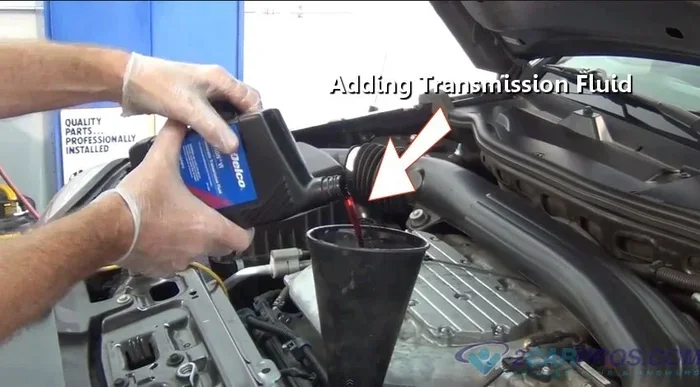
- Add fluid if needed. Use a funnel and pour slowly. Add a little at a time and recheck the level. It is easy to overfill.
Quick Tips for Accurate Readings
- Always check fluid when the engine is at operating temperature for automatic transmissions.
- Keep the engine in park (or neutral for manual transmissions) while checking.
- Do not check fluid right after turning off the engine. Let it settle for a minute or two.
- Repeat the check two or three times to confirm the reading.
- Never use a different type of fluid than what your manufacturer recommends.
What Type of Transmission Fluid Should You Use?
Not all transmission fluid is the same. Using the wrong type can lead to poor shifting, overheating, and even complete transmission failure. This is one of the most important things to get right.
Types of Transmission Fluid
- Dexron VI: The most common fluid for modern automatic transmissions. GM vehicles often use this, but many other brands do too.
- Mercon LV: Used in many Ford vehicles. It is a low-viscosity fluid designed for newer transmissions.
- ATF WS: Toyota’s World Standard fluid. It is designed for Toyota and Lexus automatic transmissions.
- Honda ATF-Z1: Specifically formulated for Honda and Acura vehicles.
- Manual transmission fluid: Manual gearboxes often use gear oil, not ATF. Check your manual to be sure.
Why Using the Wrong Fluid Is Dangerous
Each transmission is designed with specific tolerances and seals. The wrong fluid can cause seals to swell or shrink, leading to leaks. It can also affect the friction properties of the clutch packs inside the transmission. Over time, this causes slipping, rough shifting, and eventually costly repairs.
Always check your owner’s manual for the correct fluid type. When in doubt, ask a trusted mechanic or check the part number on your current fluid container.
Common Mistakes When Adding Transmission Fluid
Even experienced car owners make mistakes when adding transmission fluid. Here are the most common errors and how to avoid them.
Overfilling the Transmission
This is the number one mistake people make. It is easy to keep pouring fluid and think “just a little more.” But overfilling causes the fluid to foam. Foamed fluid loses its lubricating properties, which leads to increased friction and heat inside the transmission.
Signs of overfilling include:
- Fluid leaking from the transmission vent or seals.
- A whining noise coming from the transmission.
- Slipping gears or rough shifting.
- Fluid that looks frothy or bubbly on the dipstick.
If you overfill, do not ignore it. You will need to drain the excess fluid or have a mechanic do it for you.
Adding Fluid to a Cold Engine
Checking or adding fluid to a cold engine can give you a false low reading. The fluid has not yet circulated and expanded. You may add too much fluid thinking the level is low, only to find it is overfilled once the engine warms up.
Always warm the engine to operating temperature before adding fluid to an automatic transmission. For manual transmissions, follow the cold or warm procedure specified by your manufacturer.
Using the Wrong Dipstick Method
Some people pull the dipstick, read it once, and call it done. But the correct method involves wiping the dipstick, reinserting it fully, and pulling it out again for an accurate reading. Skipping the wipe-and-reinsert step can give you a false level.
Ignoring Leaks
If your transmission fluid keeps dropping, you have a leak. Simply topping off the fluid without finding the source is a temporary fix. Common leak points include the transmission pan gasket, the output shaft seal, and the cooler lines.
Have a mechanic inspect your vehicle if you notice fluid on the ground underneath your car or if you need to add fluid frequently.
Signs Your Transmission Fluid Needs Attention
Knowing the warning signs of low or dirty transmission fluid can save you from major repairs. Here are the most common symptoms to watch for.
Delayed Gear Engagement
When you shift from park to drive, does the car hesitate before moving? This delay is often a sign of low transmission fluid. The hydraulic pressure needed to engage gears drops when fluid levels are low.
Slipping Gears
If your transmission feels like it is slipping between gears or if the engine revs without a corresponding increase in speed, your fluid may be low or degraded. Slipping is one of the most serious warning signs and should not be ignored.
Burning Smell
Healthy transmission fluid has a slightly sweet or tart smell. If you notice a burning odor coming from under the hood, the fluid is likely overheating. This can happen when the fluid level is too low or when the fluid is old and dirty.
Unusual Noises
Grinding, whining, or clunking noises when shifting gears are red flags. These sounds often indicate that the internal components of the transmission are not getting enough lubrication due to low fluid levels.
Check Engine Light
While the check engine light can mean many things, a transmission-related code often points to fluid problems. If your check engine light comes on and you notice any of the above symptoms, check your transmission fluid level right away.
How Often Should You Change Your Transmission Fluid?
Regular transmission fluid changes are one of the best ways to extend the life of your transmission. But how often should you do it?
The general recommendation is every 30,000 to 60,000 miles for automatic transmissions. However, this varies widely depending on your vehicle, driving habits, and operating conditions. Some modern vehicles claim to have “lifetime” fluid, but many experts still recommend a change every 50,000 to 60,000 miles.
For manual transmissions, the interval is often longer, around 60,000 miles. Always check your owner’s manual for the manufacturer’s recommended schedule.
Factors That Shorten Fluid Life
- Towing or hauling heavy loads: This puts extra stress on the transmission and breaks down fluid faster.
- Stop-and-go driving: City driving with lots of idling and braking heats up the transmission.
- Extreme temperatures: Both very hot and very cold climates affect fluid performance.
- Racing or spirited driving: High RPMs and frequent hard shifts wear out fluid quickly.
If you fall into any of these categories, consider changing your fluid more frequently. A transmission fluid flush at a reputable shop can also help keep the system clean.
Expert Insights on Transmission Fluid Maintenance
We spoke with several certified mechanics to get their take on transmission fluid maintenance. Here is what they had to say.
“The biggest mistake I see is people checking their transmission fluid with the engine cold,” says Mike Torres, a master ASE-certified technician with over 15 years of experience. “Always warm the car up first. A cold reading can be off by a full quart, and that leads to overfilling.”
“Another thing I see all the time is people using the wrong fluid,” adds Sarah Lin, a transmission specialist. “It is not just about topping off. The fluid has to match the transmission’s specifications. Using the wrong fluid is like putting diesel in a gasoline engine. It might run for a while, but the damage adds up.”
Both experts agree that regular checks and timely fluid changes are the best way to avoid expensive transmission repairs. A little preventive maintenance goes a long way.
Frequently Asked Questions
Can I add transmission fluid with the engine off?
It depends on your vehicle. For manual transmissions and some models, you can add fluid with the engine off. For most automatic transmissions, the engine should be running and warm for an accurate reading. Always check your owner’s manual for the correct procedure.
What happens if I overfill my transmission fluid?
Overfilling causes the fluid to foam, which reduces its ability to lubricate and cool the transmission. This can lead to slipping gears, overheating, seal leaks, and eventually transmission damage. If you overfill, drain the excess fluid immediately.
Can low transmission fluid cause transmission failure?
Yes, absolutely. Low fluid means the internal components are not getting proper lubrication. This causes increased friction, heat, and wear. Over time, running a transmission on low fluid can lead to complete failure, which is very expensive to repair or replace.
How do I know which transmission fluid to use?
Check your owner’s manual for the manufacturer’s recommended fluid type. You can also look at the current fluid container or ask your mechanic. Using the wrong fluid can void your warranty and damage your transmission.
Is it safe to add transmission fluid myself?
Yes, it is safe as long as you follow the correct procedure. Park on a level surface, warm the engine, use the right type of fluid, and add it slowly with a funnel. If you are unsure about any step, consult a professional mechanic.
How long does transmission fluid last?
Most automatic transmission fluids last between 30,000 and 60,000 miles under normal driving conditions. Heavy towing, stop-and-go traffic, and extreme temperatures can shorten this interval. Regular checks and timely changes keep your transmission healthy for years.
Conclusion
So, can you add transmission fluid while the engine is running? The answer is yes, but only when your vehicle requires it and you follow the correct procedure. Always warm the engine first, use the right type of fluid, and check the level carefully with the dipstick. Avoid the common mistakes of overfilling, using the wrong fluid, and ignoring leaks.
Transmission fluid maintenance is one of the simplest things you can do to protect your vehicle. A few minutes of attention today can save you thousands of dollars in transmission repairs tomorrow. Make it a habit to check your fluid levels regularly, and your car will reward you with smooth, reliable shifting for years to come.
Now that you know the right way to handle transmission fluid, you can tackle this task with confidence. Grab the right fluid, follow the steps in this guide, and keep your transmission in top shape. Your car will thank you for it.