How Do I Know If My Mazda Has i-ELOOP Regenerative Braking
i-ELOOP is Mazda’s regenerative braking system that captures energy during deceleration and stores it in a capacitor. You can check for i-ELOOP by looking at your dashboard indicator, checking your owner’s manual, or inspecting the engine bay for the special alternator. Knowing whether your Mazda has i-ELOOP helps you understand your vehicle’s fuel efficiency features and smart brake support capabilities.
Have you ever wondered whether your Mazda comes equipped with i-ELOOP regenerative braking? This clever technology has been a standout feature in many Mazda models for years, and it can make a real difference in how your car performs and how much fuel you use. i-ELOOP stands for Intelligent Energy Loop, and it is Mazda’s smart approach to capturing energy that would otherwise be wasted during braking.
If you have ever seen a strange light on your dashboard or heard about regenerative braking from a friend with a Mazda, you might be curious about whether your own car has it. The good news is that checking for i-ELOOP regenerative braking is straightforward. In this guide, we will walk you through every method to confirm whether your Mazda has this feature. We will also explain how the system works, which models include it, and what benefits you can expect. Let us dive in and help you get to know your Mazda a little better.
Key Takeaways
- i-ELOOP is Mazda’s unique regenerative braking system that recovers energy during braking and stores it for later use.
- You can identify i-ELOOP through your dashboard indicator light, owner’s manual, or by checking the engine bay components.
- Not all Mazda models come with i-ELOOP, so it’s important to verify before assuming your vehicle has this feature.
- The system uses a capacitor instead of a traditional battery to store recovered energy quickly and efficiently.
- i-ELOOP improves fuel economy by reducing the load on the engine during electrical system operation.
- Common issues include a faulty indicator light or capacitor failure, both of which are diagnosable at a Mazda dealership.
- Understanding i-ELOOP helps you drive more efficiently and get the most out of your Mazda’s technology.
📑 Table of Contents
What Is i-ELOOP Regenerative Braking?
i-ELOOP is Mazda’s proprietary regenerative braking system. Unlike traditional vehicles that use a belt-driven alternator to charge the battery, i-ELOOP uses a special alternator to capture energy during deceleration. This energy gets stored in a capacitor rather than a standard battery. The capacitor can charge and discharge rapidly, which makes the system very efficient.
Here is how it works in simple terms. When you take your foot off the accelerator or apply the brakes, the i-ELOOP system kicks in. It converts kinetic energy into electrical energy. That energy then powers your car’s electrical systems, like the audio system, lights, and climate control. By doing this, i-ELOOP reduces the load on the engine, which leads to better Mazda fuel efficiency and improved vehicle efficiency overall.
How Regenerative Braking Differs from Traditional Systems
In a conventional car, the alternator charges the battery whenever the engine is running. This constant load on the engine uses extra fuel. Brake energy recovery systems like i-ELOOP flip this approach. They only generate power when the car is slowing down, which means the engine stays free to focus on propulsion. This is a key reason why Mazda technology stands out in the compact and midsize sedan and SUV segments.
The capacitor in i-ELOOP is also different from a standard car battery. Capacitors can handle rapid charge and discharge cycles without degrading quickly. This means the energy regeneration process is smoother and more reliable over time. You get consistent performance without worrying about the wear and tear that traditional batteries experience.
How to Check If Your Mazda Has i-ELOOP
If you are sitting in your Mazda right now and wondering whether your car has i-ELOOP, do not worry. There are several straightforward ways to find out. Each method is simple and does not require any special tools or mechanical knowledge.
Method 1: Check the Dashboard Indicator
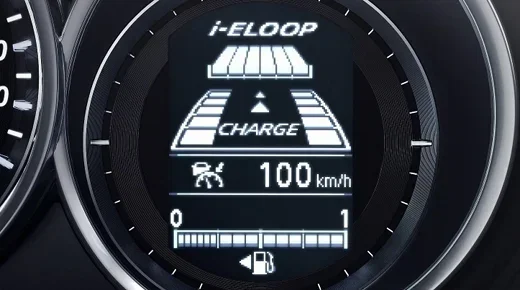
The easiest way to confirm i-ELOOP is by looking at your dashboard. When you start your Mazda, the system performs a self-check. If your car has i-ELOOP, you will see an i-ELOOP indicator light briefly illuminate on the instrument cluster. This light typically looks like a small circular arrow with the letters “i-ELOOP” next to it. If you do not see this light during startup, your vehicle may not have the system.
Keep in mind that the light may also come on during driving when the system is actively recovering energy. If you notice it glowing while you are coasting or braking gently, that is a strong sign your Mazda has i-ELOOP regenerative braking. However, if the light stays on constantly or flashes oddly, it could indicate a problem with the system that needs attention.
Method 2: Consult Your Owner’s Manual
Your owner’s manual is one of the best resources for understanding your specific Mazda model. Open the manual and search for sections on Mazda safety features or electrical systems. Most manuals include a dedicated page or chapter about i-ELOOP if your car has it. The manual will also explain where the i-ELOOP indicator is located and what each dashboard symbol means.
If you have lost your physical manual, you can usually find a digital version on the Mazda website. Simply enter your Mazda model and year, and the PDF should be available for free download. This is a great way to confirm your vehicle’s features without visiting a dealership.
Method 3: Inspect the Engine Bay
For a more hands-on approach, you can pop the hood and look for the i-ELOOP alternator. The i-ELOOP system uses a special high-output alternator that is different from a standard alternator. It is usually mounted near the engine and connected to the capacitor unit, which is typically located in the trunk or under the rear seat.
If you see a capacitor pack in the trunk area, that is a clear sign your Mazda has i-ELOOP. The capacitor looks like a small cylindrical or rectangular unit, often mounted on the side of the trunk wall. However, be careful when inspecting the engine bay. If you are not comfortable working around hot or moving parts, it is best to have a professional take a look.
Method 4: Check Your Mazda Model and Trim Level
Another reliable way to determine if your Mazda has i-ELOOP is by checking the model and trim. i-ELOOP has been available on many Mazda models, but it is not always standard on every trim. For example, Mazda CX-5 models from certain years and trims include i-ELOOP as standard or optional equipment. Similarly, the Mazda6 and Mazda3 have offered i-ELOOP on higher trim levels in some generations.
You can also check the window sticker if you still have it, or look up your vehicle identification number (VIN) on the Mazda website or through a VIN decoder tool. These resources will list all factory-installed features, including whether i-ELOOP was included when your car was built.
How i-ELOOP Works in Your Mazda
Understanding how i-ELOOP regenerative braking works can help you appreciate the system and use it to your advantage. The process is elegant in its simplicity, and it relies on a few key components working together seamlessly.
The Alternator and Capacitor Team-Up
The heart of the i-ELOOP system is the variable voltage alternator. When you decelerate or brake, this alternator generates electricity. Instead of sending that electricity to the battery, it sends it to the capacitor. The capacitor stores the energy almost instantly. When you need that power again, the capacitor releases it to run your car’s electrical systems.
This cycle repeats every time you slow down or coast. Because the capacitor charges and discharges so quickly, the system is always ready to capture energy. Over time, this energy regeneration process adds up to meaningful fuel savings. Drivers who commute in stop-and-go traffic often see the biggest benefits from i-ELOOP.
What i-ELOOP Powers in Your Mazda
The electrical energy captured by i-ELOOP is used to power many of your car’s accessories. This includes the audio system, GPS navigation, climate control blower fan, and interior lighting. By using stored energy instead of drawing directly from the engine, i-ELOOP reduces the parasitic load on the engine. This means more of the engine’s power goes toward moving the car, which improves your overall fuel economy.
It is worth noting that i-ELOOP does not power the electric power steering system in all Mazda models. Some newer Mazdas use electric power steering that draws from the battery separately. But the core electrical loads are covered by the i-ELOOP system, making it a valuable addition to any Mazda that has it.
Benefits of i-ELOOP for Your Driving
Now that you know how to check for i-ELOOP and how it works, let us talk about why it matters. The benefits of i-ELOOP regenerative braking go beyond just fuel savings. They contribute to a better overall driving experience and can even affect the long-term reliability of your Mazda.
Improved Fuel Economy
The most direct benefit of i-ELOOP is better fuel economy. By recovering energy that would otherwise be lost as heat during braking, i-ELOOP reduces the amount of work the engine has to do. Studies and real-world tests have shown that i-ELOOP can improve fuel economy by a measurable margin, especially in city driving where there are frequent stops and starts.
If you are someone who cares about Mazda fuel efficiency, having i-ELOOP is a real advantage. Over time, the fuel savings can add up, which means fewer trips to the gas station and more money in your pocket.
Reduced Engine Load
Because i-ELOOP powers your car’s electrical systems using recovered energy, the engine does not have to work as hard. This reduced engine load means less wear and tear on engine components over time. It also contributes to smoother operation, since the alternator is not constantly drawing power from the engine crankshaft.
Enhanced Eco Driving Experience
For drivers who enjoy eco driving techniques, i-ELOOP provides a tangible feedback loop. When you see the i-ELOOP indicator light up during coasting or gentle braking, you know the system is actively recovering energy. This visual cue can encourage more efficient driving habits, such as lifting off the accelerator earlier before stops and maintaining steady speeds.
Understanding your brake light behavior and how i-ELOOP interacts with your braking system also helps you become a more aware and attentive driver. The system works seamlessly with your traditional brakes, so you never have to worry about one overriding the other.
Which Mazda Models Have i-ELOOP?
i-ELOOP has been offered across a range of Mazda models over the years. However, availability depends on the model year, trim level, and market. Here is a general overview of which Mazda vehicles have historically included i-ELOOP.
Mazda CX-5
The Mazda CX-5 is one of the most popular models to feature i-ELOOP. Starting with the first generation (2013 and later), many CX-5 trims included i-ELOOP as either standard or optional equipment. The Mazda CX-5 with i-ELOOP is particularly popular among drivers who want a compact SUV with strong fuel economy and modern technology.
Mazda6
The Mazda6 sedan has also offered i-ELOOP on several trim levels. If you drive or are considering a used Mazda6, checking for the i-ELOOP indicator is a smart move. The sedan’s larger size and weight make the fuel savings from regenerative braking even more noticeable compared to smaller vehicles.
Mazda3
Some generations of the Mazda3 have included i-ELOOP, particularly on higher trims. If you are looking at a used Mazda3, it is worth verifying whether the specific vehicle has this feature. The hatchback and sedan versions of the Mazda3 have both offered i-ELOOP in certain markets.
Mazda CX-9 and CX-50
Larger Mazda SUVs like the CX-9 and newer models like the CX-50 have also been equipped with i-ELOOP in various years. Always confirm with the vehicle’s documentation or a Mazda dealer to be sure.
Keep in mind that i-ELOOP availability can vary by region and model year. If you are unsure, the dashboard check method described earlier is the most reliable way to confirm.
Common i-ELOOP Issues and How to Troubleshoot
Like any vehicle system, i-ELOOP can occasionally experience issues. Most problems are minor and easy to resolve, but some may require professional attention. Here are the most common issues and what you can do about them.
i-ELOOP Indicator Light Stays On
If the i-ELOOP indicator light stays on constantly instead of turning off after startup, it could signal a problem with the capacitor or the alternator. A faulty i-ELOOP indicator can also trigger this behavior. The first step is to check your Mazda dashboard for any other warning lights. If you see multiple warnings, it is best to visit a Mazda dealership for diagnosis.
Reduced Fuel Economy
If you notice that your fuel economy has dropped and you know your Mazda has i-ELOOP, the system may not be functioning properly. A malfunctioning alternator or a degraded capacitor can cause the system to fail silently. In this case, the engine takes on the full electrical load, which increases fuel consumption.
Capacitor Failure
Although rare, capacitor failure can occur over time. The capacitor is designed to last the life of the vehicle, but extreme temperatures or electrical issues can shorten its lifespan. If the capacitor fails, i-ELOOP will stop working, and your car will rely on the traditional alternator and battery setup. Replacement is typically straightforward but should be handled by a qualified technician.
When to See a Professional
If you have tried the basic checks and still cannot confirm whether your Mazda has i-ELOOP or if the system seems to be malfunctioning, it is time to see a professional. A Mazda dealership can run diagnostic tests on the i-ELOOP system and the capacitor. They can also check whether your vehicle qualifies for any recalls or service bulletins related to i-ELOOP.
If you are also considering enhancements or changes to your vehicle, you might want to explore how do i upgrade my vehicle to get the most out of your Mazda ownership experience.
Conclusion
Knowing whether your Mazda has i-ELOOP regenerative braking is easier than you might think. Whether you check the dashboard indicator, consult your owner’s manual, inspect the engine bay, or verify your model and trim, there are multiple reliable ways to confirm. i-ELOOP is a valuable technology that improves fuel economy, reduces engine load, and enhances your overall driving experience.
If you have confirmed that your Mazda has i-ELOOP, take advantage of it. Pay attention to the indicator light, practice eco driving habits, and enjoy the benefits of Mazda technology that works smart, not hard. And if you ever notice something unusual with the system, do not hesitate to consult a professional. Your Mazda was engineered with precision, and i-ELOOP is just one of the many reasons to appreciate what is under the hood.
Take a moment today to check your dashboard the next time you start your car. You might just discover a feature you have been benefiting from without even realizing it. Understanding your vehicle’s capabilities is the first step toward getting the most out of every drive.
Frequently Asked Questions
How do I know if my Mazda has i-ELOOP regenerative braking?
The easiest way is to look at your dashboard when you start the car. If your Mazda has i-ELOOP, you will see an i-ELOOP indicator light briefly illuminate during the startup self-check. You can also check your owner’s manual or look for the capacitor in the trunk area.
What does the i-ELOOP light mean on a Mazda?
The i-ELOOP light on your Mazda dashboard indicates that the regenerative braking system is active or undergoing a self-check. It should turn off shortly after startup. If it stays on, it may signal a system issue that needs professional diagnosis.
Can I add i-ELOOP to my Mazda if it does not have it?
No, i-ELOOP is a factory-installed system that requires specific components like the variable voltage alternator and capacitor. It cannot be retrofitted easily. If you are considering enhancing your vehicle, you might want to explore options like how do i upgrade my vehicle for compatible improvements.
Does i-ELOOP improve fuel economy significantly?
Yes, i-ELOOP can improve fuel economy by reducing the parasitic load on the engine. The system powers your car’s electrical accessories using recovered energy from braking, which means the engine uses less fuel to generate that electricity. The improvement is most noticeable in city driving with frequent stops.
Which Mazda models come with i-ELOOP?
i-ELOOP has been offered on models like the Mazda CX-5, Mazda6, Mazda3, CX-9, and CX-50, depending on the model year and trim level. Always check your dashboard indicator or owner’s manual to confirm whether your specific Mazda includes i-ELOOP.
How long does the i-ELOOP capacitor last in a Mazda?
The i-ELOOP capacitor is designed to last the lifetime of the vehicle under normal driving conditions. However, extreme temperatures or electrical issues can reduce its lifespan. If you experience i-ELOOP system problems, a Mazda dealership can test the capacitor and recommend replacement if needed.