Can I Use 5W-30 Instead of 0W-20 Oil Without Any Problems
Using 5W-30 instead of 0W-20 oil is possible in some cases, but it depends on your engine, climate, and manufacturer specs. The main difference between these two grades lies in cold-weather flow and viscosity. Switching to a thicker oil can affect fuel economy, engine protection, and long-term performance. Always check your owner manual before making any change. This guide breaks down everything you need to know about the 5W-30 vs 0W-20 debate.
You just popped the hood and noticed your car calls for 0W-20 oil. But the only bottle you have on hand is 5W-30. It happens to all of us. You are in a pinch, and you want to know if it is safe. So, can I use 5W-30 instead of 0W-20? The short answer is maybe. But the full answer is a lot more nuanced. Let us walk through it together.
Choosing the right engine oil viscosity is one of the simplest yet most important things you can do for your car. Oil keeps every moving part inside your engine lubricated. It reduces friction. It prevents overheating. And it keeps grime and deposits from building up over time. Using the wrong grade can lead to poor engine protection, reduced fuel economy, and even long-term engine damage. That is why this topic matters so much.
In this guide, we will break down everything you need to know. We will look at what those numbers actually mean. We will explore the risks and benefits of swapping grades. And we will help you make the best decision for your specific vehicle. Whether you are dealing with an emergency top-off or thinking about a permanent switch, you are in the right place.
Key Takeaways
- Oil viscosity matters: The number before the “W” measures cold-flow performance, and the number after measures hot viscosity.
- Manufacturer specs come first: Always follow what your car maker recommends for the best engine protection.
- 5W-30 is thicker than 0W-20: This affects cold starts, oil pressure, and fuel efficiency.
- Climate plays a big role: In warmer regions, 5W-30 may work fine. In cold climates, 0W-20 flows better.
- Swapping can void warranties: Using the wrong oil grade may void your new car warranty in some cases.
- Mixing oils is not ideal: Combining different grades can reduce overall engine protection.
📑 Table of Contents
What Do 5W-30 and 0W-20 Actually Mean?
Before we talk about swapping, let us understand what these numbers mean. Every motor oil grade has two numbers separated by a “W.” The “W” stands for winter. It tells you how the oil flows in cold temperatures.
The First Number: Cold-Weather Performance
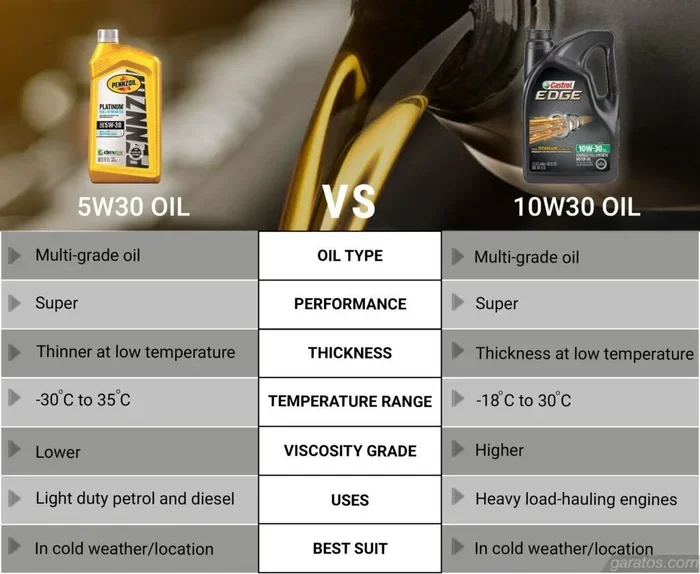
The number before the “W” measures how well the oil flows when it is cold. A lower number means the oil flows faster in winter conditions. So 0W-20 flows easier at low temperatures than 5W-30. This matters a lot during cold starts. When you turn your key on a freezing morning, the oil needs to reach all the engine parts quickly. Thinner oil gets there faster. This reduces wear on critical components like the crankshaft and camshaft.
The Second Number: Hot-Weather Viscosity
The number after the dash tells you the oil thickness at operating temperature. 30 is thicker than 20. So 5W-30 stays thicker when your engine is hot compared to 0W-20. Thicker oil can handle higher temperatures better. It also maintains a stronger film between moving parts. But it can also create more drag inside the engine. More drag means your engine works harder. And that means worse fuel economy.
Why These Numbers Matter for Your Engine
Engine designers build engines around a specific oil weight. They decide on clearances, tolerances, and oil passage sizes based on that grade. When you change the grade, you change how the oil behaves inside the engine. This is why following the manufacturer recommendation is so important. The right grade ensures your engine gets the protection it was designed to receive.
Can You Safely Use 5W-30 Instead of 0W-20?
Now let us get to the big question. Can you actually use 5W-30 instead of 0W-20 without causing problems? The answer depends on several factors. Let us break them down.
When the Swap Might Be Okay
In some situations, using 5W-30 instead of 0W-20 is perfectly fine. Here are a few scenarios where it might work:
- You live in a warm climate: If temperatures rarely drop below freezing, the cold-flow advantage of 0W-20 is less important.
- Your engine is older: Higher-mileage engines sometimes benefit from a slightly thicker oil. It can help reduce oil consumption and minimize leaks.
- You are in a pinch: If you are low on oil and 5W-30 is the only option available, it is better than running on empty.
In these cases, the oil compatibility is generally acceptable. Your engine will still receive adequate lubrication. But it is not the ideal choice for long-term use.
When You Should Avoid the Swap
There are also times when you should not make this switch at all. Here is when it is a bad idea:
- Your owner manual says 0W-20: Modern engines, especially turbocharged ones, are designed for thinner oils. Using a thicker grade can reduce oil flow rate and starve parts of lubrication.
- You live in a cold climate: In freezing temperatures, 5W-30 is too thick to flow quickly. This increases wear during cold starts, which is the most damaging time for any engine.
- Your car is still under warranty: Many manufacturers require specific oil grades. Using the wrong one could void your new car warranty.
The bottom line is that a one-time emergency swap is usually not catastrophic. But making it a habit is a different story.
The Role of Multi-Grade Oil
Both 5W-30 and 0W-20 are multi-grade oils. This means they are formulated to perform well in both cold and hot conditions. The additives in these oils help them thin out when cold and thicken when hot. But the base grade still determines how they behave at temperature extremes. A 0W-20 will always flow better in the cold than a 5W-30. And a 5W-30 will always maintain a thicker film at high temperatures than a 0W-20.
The Risks of Using 5W-30 Instead of 0W-20
Swapping to a thicker oil is not without consequences. Let us look at the real risks involved.
Reduced Fuel Economy
One of the biggest downsides of using 5W-30 instead of 0W-20 is the hit to your fuel economy. Thicker oil creates more resistance inside the engine. Your engine has to work harder to pump it through the oil galleries. Over time, this adds up. You might notice a small drop in miles per gallon. For some drivers, that means spending more at the pump every month.
Poor Cold-Start Performance
Cold starts are the most stressful time for any engine. When you start your car on a cold morning, the oil sits at the bottom of the oil pan. It needs to flow up through the engine fast. 0W-20 does this job beautifully. 5W-30 is slower. During those critical first few seconds, engine parts are running dry or with insufficient lubrication. Over months and years, this adds up to increased engine wear.
Oil Pressure Issues
Thicker oil can also affect your oil pressure readings. In some engines, 5W-30 might trigger a low oil pressure warning. This happens because the oil pump has a harder time pushing the thicker fluid through narrow passages. Low oil pressure means less lubrication. And less lubrication means more friction. More friction means more heat. And more heat means more damage over time.
Reduced Engine Efficiency
Modern engines are built for efficiency. They use tight tolerances and precision-engineered oil passages. When you put a thicker oil into this system, you disrupt the balance. The engine might not reach peak operating temperature as quickly. It might not lubricate all parts as effectively. Over time, this can reduce the overall engine efficiency your car was designed to deliver.
When 5W-30 Might Be the Better Choice
Here is the thing. 5W-30 is not a bad oil. In fact, it is one of the most popular oil grades on the market. There are situations where it actually makes more sense than 0W-20.
Warmer Climates
If you live somewhere that stays warm year-round, 5W-30 might be a great fit. The cold-flow advantage of 0W-20 is less relevant when temperatures rarely drop below 40 degrees Fahrenheit. In hot climates, the thicker 5W-30 can actually provide better thermal stability. It maintains a stronger protective film at high temperatures. This can be especially beneficial for vehicles that tow or carry heavy loads.
High-Mileage Engines
As engines age, they develop more internal clearances. Piston rings wear. Valve seals degrade. Oil passages can become slightly enlarged. In these cases, a slightly thicker oil like 5W-30 can help reduce oil consumption. It fills those wider gaps better and maintains stronger pressure. If your car has over 100,000 miles, you might actually benefit from the switch.
Towing and Heavy-Duty Use
If you use your vehicle for towing or hauling, 5W-30 might offer better protection. Heavy loads generate more heat inside the engine. Thicker oil handles that heat better. It maintains its viscosity under stress. This is one case where the extra thickness works in your favor instead of against you.
Older Vehicles with Known Oil Consumption
Some older engines burn oil. This is a common issue with vehicles that have been driven hard over many years. If your engine burns a little oil between changes, switching to 5W-30 might help. The thicker oil is less likely to seep past worn seals and piston rings. It stays in the crankcase longer and does its job better.
How to Know What Oil Grade Your Car Needs
Figuring out the right oil grade for your car is easier than you might think. Here is how to do it right.
Check Your Owner Manual
Your owner manual is the ultimate authority on this topic. Open it up and look for the section on maintenance or fluid specifications. It will tell you exactly what oil grade your engine needs. It will also specify the oil specification like API SN or SP. This information is there for a reason. The engineers who designed your engine tested it with that specific grade.
Look at the Oil Cap Under Your Hood
Many automakers print the recommended oil grade right on the oil fill cap. Open your hood and look for a sticker or printed text on top of the engine. It might say something like “0W-20” or “5W-30.” This is a quick and easy way to confirm what your engine needs.
Consult Your Dealer or Trusted Mechanic
If you cannot find the information in your manual or on the oil cap, ask a professional. Your dealership service department can look up the exact specification for your vehicle. A trusted mechanic can also advise you based on your driving conditions and climate.
Consider Your Driving Conditions
Your driving environment matters too. If you drive in extreme heat, extreme cold, or stop-and-go traffic, you might need a different grade than what the manual suggests. In severe conditions, consider a synthetic blend or full synthetic oil that matches the recommended viscosity. These oils offer better thermal stability and longer change intervals.
Expert Tips for Choosing the Right Motor Oil
Still not sure what to do? Here are some expert-backed tips to help you make the right call.
Stick With the Manufacturer Grade
The safest choice is always to use the oil grade your manufacturer recommends. It is not worth the risk of deviating from this unless you have a specific reason. Modern engines are precision machines. They are tuned to work with a specific oil flow rate and viscosity index. Deviating from the spec can affect everything from performance to emissions.
Do Not Mix Different Oil Grades
Some people think topping off with a different grade is fine. It is not. Mixing 5W-30 with 0W-20 creates an unpredictable blend. The resulting oil compatibility is compromised. You do not know what viscosity you are actually running. This can lead to inconsistent engine protection and unpredictable performance.
Switch Grads Gradually If Needed
If you have decided to switch from one grade to another, do it gradually. Change the oil completely first. Then monitor your engine for any changes in noise, oil pressure, or performance. If everything looks good after a few hundred miles, you are probably fine. If you notice any issues, switch back to the recommended grade.
Use Quality Oil Regardless of Grade
The grade matters, but so does the quality. Always use oil that meets or exceeds the API specification listed in your owner manual. Full synthetic oils offer the best engine protection and thermal stability. They also last longer between changes. A high-quality 0W-20 will always outperform a cheap 5W-30, regardless of the grade.
Keep Records of Your Oil Changes
Whatever oil grade you choose, keep track of your changes. Write down the date, the mileage, and the oil type. This helps you stay on top of your maintenance schedule. It also gives you a record to show your mechanic if any engine issues arise later.
When in Doubt, Ask a Professional
If you are ever unsure about which oil to use, ask a professional. A qualified mechanic can assess your engine, your driving habits, and your climate. They can recommend the best grade and type of oil for your specific situation. It is always better to ask than to guess.
Key Takeaways
- Oil viscosity matters: The number before the “W” measures cold-flow performance, and the number after measures hot viscosity.
- Manufacturer specs come first: Always follow what your car maker recommends for the best engine protection.
- 5W-30 is thicker than 0W-20: This affects cold starts, oil pressure, and fuel efficiency.
- Climate plays a big role: In warmer regions, 5W-30 may work fine. In cold climates, 0W-20 flows better.
- Swapping can void warranties: Using the wrong oil grade may void your new car warranty in some cases.
- Mixing oils is not ideal: Combining different grades can reduce overall engine protection.
- Quality matters as much as grade: A high-quality oil in the right grade always beats a cheap option.
Conclusion
So, can I use 5W-30 instead of 0W-20? The answer is yes, but with caution. A one-time emergency top-off with 5W-30 will not destroy your engine. However, making it a regular practice when your car calls for 0W-20 is not a good idea. The thicker oil reduces cold-start performance, hurts fuel economy, and can lead to increased engine wear over time.
The best approach is always to follow your manufacturer recommendation. Check your owner manual. Look at your oil cap. And when in doubt, consult a professional. Your engine is the most expensive part of your car. Treating it with the right engine oil viscosity is one of the easiest and most cost-effective ways to protect it for the long haul.
Take the time to get the right oil. Your engine will thank you with years of reliable performance. And you will have peace of mind knowing you made the smart choice for your vehicle and your wallet.
Frequently Asked Questions
What happens if I accidentally put 5W-30 instead of 0W-20 in my car?
In most cases, a one-time mistake will not cause immediate damage. Your engine will still receive lubrication. However, you may notice slightly reduced fuel economy or a minor change in engine noise. If this happens, do not panic. Plan your next oil change and switch back to the correct 0W-20 grade as soon as possible.
Can using 5W-30 instead of 0W-20 void my warranty?
It can. Many vehicle manufacturers specify exact oil grades in their warranty terms. If you use a different grade and experience engine problems, the manufacturer may deny your claim. Always check your warranty documentation and follow the recommended motor oil grade to keep your coverage intact.
Is 5W-30 better than 0W-20 for hot weather?
Yes, in many cases. Thicker oil like 5W-30 maintains a stronger protective film at high temperatures. It can be a better choice for vehicles operating in hot climates or those used for towing. However, always confirm with your manufacturer before making the switch.
Will 5W-30 hurt a modern engine designed for 0W-20?
Modern engines are built with tight tolerances and precision oil passages. Using a thicker oil can reduce oil flow rate and delay lubrication during cold starts. Over time, this can increase engine wear and reduce overall engine efficiency. It is best to stick with the recommended grade for modern engines.
How often should I change my oil if I use 5W-30 instead of 0W-20?
Oil change intervals depend on the oil type and driving conditions, not just the grade. However, thicker oil can break down faster under heavy use. If you are running 5W-30 in an engine designed for 0W-20, consider shortening your oil change interval slightly. This helps ensure the oil maintains its protective properties.
Can I mix 5W-30 and 0W-20 oil together?
It is not recommended. Mixing different oil grades creates an unpredictable blend that may not provide proper engine protection. The resulting viscosity could be too thin or too thick in certain conditions. Always use the same oil grade and change the oil completely if you need to switch grades.