How Far Can a Toyota Corolla Go on Empty Without Stopping
The Toyota Corolla can typically travel between 40 and 60 miles after the fuel light comes on, depending on the model year and driving conditions. Most Corolla models have a fuel tank capacity of around 13 to 16 gallons, giving a total range of roughly 500 to 700 miles on a full tank. Understanding your fuel range helps you avoid getting stranded and keeps your car running smoothly.
Have you ever been driving your Toyota Corolla and suddenly noticed the fuel light blinking on? That moment can feel stressful, especially if you are far from a gas station. The big question is simple: how far can a Toyota Corolla go on empty without stopping?
The answer depends on several factors, including your model year, driving habits, and road conditions. Most owners are surprised to learn their car still has some fuel left even after the warning light appears. In this guide, we will break down everything you need to know about your Toyota Corolla fuel range when the tank is nearly empty.
Whether you are commuting to work or taking a long road trip, understanding your miles to empty can save you from unexpected breakdowns. We will also cover practical tips to help you squeeze out every last mile safely. Let us dive in.
Key Takeaways
- Average Range on Empty: Most Toyota Corolla models can go 40 to 60 miles after the low fuel warning activates.
- Fuel Tank Size Matters: Corolla tanks range from 13 to 16 gallons, which affects total distance possible.
- Driving Style Impacts Range: Highway driving gives more miles than city driving when the tank is low.
- Running on Empty Can Damage Your Car: Repeatedly driving on fumes can harm the fuel pump and engine.
- Maintenance Plays a Role: A well-maintained Corolla will get better fuel economy and more range on a nearly empty tank.
📑 Table of Contents
- Understanding Your Toyota Corolla Fuel System
- How Far Can a Toyota Corolla Go on Empty?
- Factors That Affect Your Range on Empty
- What Happens When You Run on Empty
- Tips to Maximize Your Range on Low Fuel
- Common Mistakes People Make With Low Fuel
- How Often Should You Refuel Your Toyota Corolla?
- Toyota Corolla Fuel Economy Across Model Years
- What to Do If You Run Out of Fuel
- Expert Insights on Driving on Low Fuel
- Key Takeaways
- Conclusion
Understanding Your Toyota Corolla Fuel System
The fuel system in a Toyota Corolla is designed to be reliable and efficient. But many drivers do not fully understand how the fuel gauge and warning systems work. Knowing the basics can help you make better decisions when your tank is running low.
How the Fuel Gauge Works
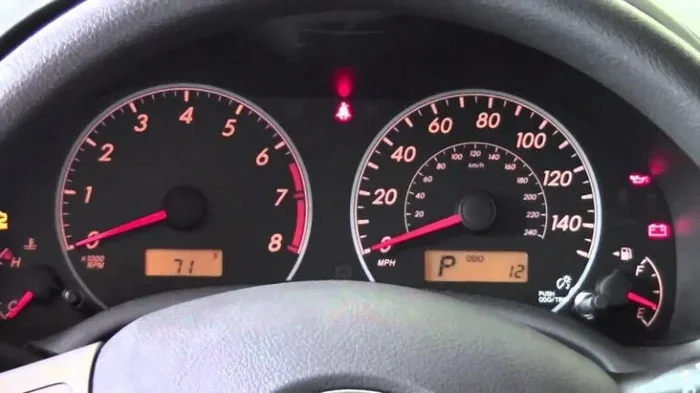
Your fuel gauge uses a sensor inside the tank to measure the fuel level. When the level drops below a certain point, the low fuel warning light activates. This light is not an exact science. It is more of a heads-up that you should refuel soon.
The gauge reading can also vary based on how your car is parked. If you are on a slope, the sensor might give a slightly inaccurate reading. This is normal and happens in most vehicles. Do not panic if the gauge fluctuates a little.
What “Empty” Really Means
Here is something most people do not realize. When your Toyota Corolla shows empty or triggers the warning light, there is still fuel left in the tank. Typically, that reserve is about 2 to 3 gallons. This reserve is built in on purpose to give you enough distance to reach a gas station safely.
However, this reserve should not be treated as a regular fuel source. Constantly running on the reserve can cause long-term damage to your vehicle. It is always best to refuel as soon as you safely can.
How Far Can a Toyota Corolla Go on Empty?
The actual distance varies by model, year, and driving conditions. Let us look at the numbers so you have a clear picture of what to expect when your tank is nearly empty.
City Driving vs Highway Driving
Your driving environment plays a huge role in how far you can go. In city driving, stop-and-go traffic uses more fuel. So your Toyota Corolla will get fewer miles after the fuel light comes on. You might get around 35 to 45 miles in city conditions.
Highway driving is different. Steady speeds and fewer stops mean better fuel efficiency. On the highway, you could push 50 to 60 miles or even slightly more on the reserve fuel. If you need to know how far you can go on a complete driving cycle, check out this guide on how many miles is a complete drive cycle for more insights.
Fuel Tank Capacity and Total Range
Most Toyota Corolla models come with a fuel tank that holds between 13 and 16 gallons. With an average fuel economy of about 30 to 35 miles per gallon, a full tank can take you roughly 500 to 700 miles. To put that in perspective, if you want to understand typical fuel fill-up amounts, you can learn more about how many gallons to fill up a car across different models.
But when the tank is down to the last 2 or 3 gallons, your total remaining range drops to around 60 to 100 miles depending on your MPG. The fuel range estimate on your dashboard can give you a rough idea, but treat it as an approximation, not an exact number.
Quick Tip: Your dashboard’s “miles to empty” display is a helpful tool, but it recalculates based on your recent driving. If you just drove through heavy traffic, the estimate may be lower than your actual potential range on the reserve fuel.
Factors That Affect Your Range on Empty
Not all Toyota Corolla cars will give you the same range when running low. Several factors come into play. Understanding these can help you plan better and avoid getting caught off guard.
Driving Habits
How you drive has a big impact on fuel consumption. Aggressive acceleration and hard braking burn through fuel faster. If you drive smoothly and maintain steady speeds, your car will use less fuel. This means more miles when you are running low.
Here are some driving habits that affect your range:
- Speed: Driving over 60 mph significantly reduces fuel efficiency.
- Acceleration: Smooth and gradual acceleration saves fuel.
- Idling: Sitting with the engine running wastes gas quickly.
- Climate Control: Using AC or heat adds fuel load to the engine.
Vehicle Condition and Maintenance
A well-maintained Toyota Corolla will always perform better than a neglected one. Old spark plugs, dirty air filters, and low tire pressure can all reduce your fuel economy. This means fewer miles when the tank is nearly empty.
Regular maintenance keeps your engine running efficiently. If you notice your fuel economy dropping, it might be time for a service. You can learn more about what happens during a vehicle check-up by reading about how long does a full car diagnostic take.
Road Conditions and Terrain
Hilly or mountainous terrain uses more fuel than flat roads. If you are driving through hilly areas on a nearly empty tank, your range will be shorter. Similarly, rough or unpaved roads create more resistance and burn more fuel.
Wind conditions also matter. Headwinds force your engine to work harder, reducing your range. Tailwinds can give you a slight boost. While you cannot control the weather, knowing these factors helps you set realistic expectations for your remaining distance.
What Happens When You Run on Empty
Driving with a nearly empty tank is risky. While it might seem harmless in the short term, it can cause real problems over time. Let us look at what happens to your car when you repeatedly run on fumes.
Damage to Your Fuel System
Your fuel pump relies on fuel to stay cool. When the tank is very low, the pump can overheat because it is not fully submerged. Over time, this can lead to premature fuel pump failure. Replacing a fuel pump is expensive and completely avoidable.
Running on empty also draws sediment and debris from the bottom of the tank. These particles can clog your fuel filter and injectors. This leads to poor engine performance and reduced fuel economy. Your Toyota Corolla deserves better than that.
Safety Risks
There is also a safety concern. If you run out of fuel on a busy highway or in an unsafe area, you are putting yourself at risk. A stalled car on the side of the road is a hazard. You could face a ticket, a tow, or even a dangerous situation.
If you are wondering whether you can safely drive a car with warning lights on, check out this article on can I drive my Toyota Camry with the check engine light on for related guidance on driving with vehicle warning indicators.
Tips to Maximize Your Range on Low Fuel
If you find yourself with very little fuel and need to stretch your distance, these tips can help. They are simple, practical, and easy to apply right away.
Drive at a Steady Speed
The single best way to save fuel is to maintain a steady speed. Use cruise control on the highway when it is safe to do so. Avoid rapid acceleration and hard braking. Smooth driving can improve your fuel economy by up to 15 percent.
Reduce Extra Weight
Every extra pound your car carries requires more fuel. Remove any unnecessary items from your trunk or back seat. If you carry heavy equipment or cargo only sometimes, leave it at home when the fuel tank is low.
Keep Your Windows Up at High Speeds
At highway speeds, open windows create drag. This drag forces your engine to work harder. Keeping your windows up and using the ventilation system instead can save a surprising amount of fuel over a long drive.
Plan Your Route
Before you head out on low fuel, plan your route. Choose roads with gas stations nearby. Avoid detours or long stretches without fuel options. A few minutes of planning can save you from a lot of trouble.
Common Mistakes People Make With Low Fuel
Many drivers make preventable mistakes when their fuel is running low. These habits can shorten your car’s lifespan and put you in dangerous situations. Let us look at the most common ones.
Ignoring the Low Fuel Light
Some drivers treat the low fuel light as a suggestion rather than a warning. They keep driving for miles, hoping to find a cheaper gas station. This is risky. The longer you wait, the closer you get to running out completely.
When the light comes on, treat it as a signal to refuel within the next 20 to 30 miles. Do not push your luck. The reserve fuel is there for emergencies, not for daily use.
Waiting Too Long to Refuel
Another common mistake is waiting until the tank is completely dry before refueling. This habit can cause air bubbles in the fuel lines. It also starves the fuel pump of lubrication. Over time, this leads to expensive repairs.
A good rule of thumb is to refuel when your tank hits a quarter full. This gives you plenty of buffer and keeps your fuel system healthy.
How Often Should You Refuel Your Toyota Corolla?
There is no set rule for how often you should fill up. It depends on your daily driving distance, fuel economy, and personal preference. However, most Toyota Corolla owners find that refueling every 300 to 400 miles works well for their routine.
If you commute daily, try to keep your tank at least half full. This gives you flexibility and reduces the risk of running low unexpectedly. It also helps your fuel pump stay cool and lubricated.
For those who do not drive often, make sure to start your car and take it for a short drive at least once a week. This keeps the fuel fresh and the battery charged. If you want to understand more about how long a car can sit without issues, check out resources on how long a hybrid can sit without being driven for related guidance on vehicle inactivity.
Toyota Corolla Fuel Economy Across Model Years
The Toyota Corolla has been a popular sedan for decades. Over the years, Toyota has improved its fuel economy with each new generation. Here is a general look at how different model years compare in terms of fuel range and efficiency.
- 2010-2013 Models: These older Corollas typically get around 28 to 32 MPG. With a 13-gallon tank, the total range is about 360 to 420 miles.
- 2014-2019 Models: Newer models improved fuel economy to around 30 to 35 MPG. The 13-gallon tank offers a range of roughly 390 to 455 miles.
- 2020-2024 Models: The latest Corollas feature hybrid options that push fuel economy well above 40 MPG in some trims. Total range on a full tank can exceed 600 miles.
Keep in mind that these numbers are estimates based on combined driving conditions. Your actual range on empty will vary based on how and where you drive.
What to Do If You Run Out of Fuel
Despite your best efforts, there may come a time when your Toyota Corolla runs out of fuel. Here is what to do if that happens.
- Pull over safely: Move to the right shoulder or a safe parking area as soon as possible.
- Turn on your hazard lights: This alerts other drivers that you are stopped.
- Call for help: Use roadside assistance or call a friend to bring you fuel.
- Do not attempt to walk to a gas station: This can be dangerous, especially on highways or in remote areas.
Once you get fuel, your car should start right away. However, if it does not, you may have air in the fuel lines. Try turning the ignition to the “on” position a few times before starting. This primes the fuel pump and helps clear any air bubbles.
After running out of fuel, it is a good idea to have your car checked. A full car diagnostic can identify any issues caused by running dry. You can learn more about diagnostic timelines by reading about how long does a full car diagnostic take.
Expert Insights on Driving on Low Fuel
Automotive experts generally agree that driving on low fuel should be kept to a minimum. The reserve fuel is a safety net, not a fuel source. Mechanics recommend refueling at the first sign of the low fuel warning.
Experts also emphasize the importance of regular maintenance. A clean fuel system, fresh air filters, and properly inflated tires all contribute to better fuel economy. These small investments pay off in the long run by giving you more miles per gallon and more range when your tank is low.
If you are concerned about fuel system health, consider having a professional inspection. The cost of a diagnostic check is small compared to the cost of replacing a damaged fuel pump. Prevention is always cheaper than repair.
Key Takeaways
- Average Range on Empty: A Toyota Corolla can typically travel 40 to 60 miles after the fuel light comes on, depending on driving conditions.
- Fuel Tank Size Matters: Most Corolla models carry 13 to 16 gallons, which affects your total potential range.
- Highway Driving Extends Range: Steady speeds on the highway give you more miles than city driving on the reserve fuel.
- Running on Empty Causes Damage: Repeatedly driving on fumes can harm your fuel pump, injectors, and engine over time.
- Refuel at a Quarter Tank: This simple habit keeps your fuel pump healthy and gives you a reliable buffer.
- Dashboard Estimates Are Approximate: Your miles-to-empty display is helpful but should be treated as a guide, not a guarantee.
Conclusion
So, how far can a Toyota Corolla go on empty without stopping? The answer is typically between 40 and 60 miles on the reserve fuel, but this number can shift based on your driving style, road conditions, and model year. Understanding your fuel range helps you make smarter decisions and avoid getting stranded.
The best approach is simple. Do not wait for the fuel light to come on. Refuel regularly and keep your tank at least a quarter full. This protects your fuel system, improves your fuel economy, and gives you peace of mind on every drive.
Your Toyota Corolla is a reliable and efficient car. Treat it well, and it will reward you with years of dependable service and excellent fuel economy. The next time your fuel light flickers on, you will know exactly what to do and how far you can safely go.
Frequently Asked Questions
How many miles can a Toyota Corolla go on the reserve fuel?
Most Toyota Corolla models can travel between 40 and 60 miles after the low fuel warning light activates. This range depends on your driving speed, road conditions, and whether you are driving in the city or on the highway.
Is it bad to drive a Toyota Corolla with the fuel light on?
Driving occasionally with the fuel light on is not ideal, but it will not immediately damage your car. However, repeatedly running on low fuel can cause the fuel pump to overheat and draw in sediment from the bottom of the tank. It is best to refuel as soon as possible.
What is the fuel tank capacity of a Toyota Corolla?
Most Toyota Corolla models have a fuel tank capacity of 13 to 16 gallons, depending on the model year and trim. This capacity directly affects your total driving range on a full tank and your remaining range when the fuel light comes on.
Can running on empty damage a Toyota Corolla engine?
Yes, running on empty repeatedly can cause damage. The fuel pump may overheat without proper fuel cooling, and debris from the tank bottom can clog fuel filters and injectors. This leads to reduced performance and costly repairs over time.
How can I check my Toyota Corolla’s exact fuel range?
Your dashboard displays a “miles to empty” estimate based on your recent driving patterns. You can also manually calculate your range by multiplying your remaining fuel (shown on the gauge) by your average miles per gallon. Keep in mind this is an estimate and may vary.
What should I do if my Toyota Corolla runs out of fuel on the highway?
Pull over to the right shoulder immediately and turn on your hazard lights. Do not attempt to walk to a gas station on a highway. Call roadside assistance or a friend for help. Once refueled, turn the ignition to “on” a few times to prime the fuel pump before starting the engine.