How to Make a Nissan Altima Faster and More Powerful
Making your Nissan Altima faster is easier than you think. With the right engine upgrades, exhaust changes, and ECU tuning, you can unlock serious horsepower and torque gains. This guide covers everything from simple bolt-ons to advanced modifications that transform your Altima into a true performance machine.
There is something incredibly satisfying about making your car faster. The Nissan Altima has been a favorite sedan for years. It is reliable, comfortable, and surprisingly fun to drive. But if you want more speed and power, there are many ways to get there. Whether you are a weekend hobbyist or a serious gearhead, this guide will show you exactly how to make a Nissan Altima faster and more powerful.
The good news is that you do not need a massive budget to see real gains. Some upgrades cost under a hundred dollars. Others are bigger investments. But every single one of them works. I have put together the most effective methods to help you get the most out of your Altima. Let us dive in.
Key Takeaways
- Cold air intake and exhaust upgrades are the easiest and most affordable ways to gain horsepower on a Nissan Altima.
- ECU remapping and performance chips can unlock hidden power that your factory settings keep hidden.
- Upgrading fuel injectors and the ignition system ensures your engine can handle the extra power safely.
- Suspension and weight reduction improvements make your Altima feel faster in real-world driving.
- Always use the right fuel — check if your Altima can run on unleaded 88 gas before making fuel-related changes.
- Start with simple mods before moving to expensive upgrades like turbochargers or superchargers.
- Monitor your car after each change and manually clear car codes to keep everything running smoothly.
📑 Table of Contents
- Understanding Your Nissan Altima Engine
- Install a Cold Air Intake System
- Upgrade the Exhaust System
- ECU Remapping and Performance Tuning
- Forced Induction: Turbo or Supercharger
- Fuel System and Ignition Upgrades
- Suspension and Weight Reduction
- Common Mistakes to Avoid
- Expert Tips for Maximum Performance
- Conclusion
Understanding Your Nissan Altima Engine
Before you start adding parts, it helps to understand what you are working with. The Nissan Altima comes with different engines depending on the model year. The most common ones are the 2.5-liter four-cylinder and the 3.5-liter V6. Each engine has its own strengths and upgrade potential.
The 2.5-liter engine is a solid daily driver. It produces around 188 horsepower in most years. It is efficient and dependable. But it has room for improvement. The 3.5-liter V6 pushes out closer to 270 horsepower. It is the better starting point for serious performance gains.
Knowing your engine type matters. It determines which upgrades will work best. A 2.5-liter Altima will benefit most from air intake improvements and ECU tuning. The V6 can handle bigger modifications like forced induction and larger exhaust systems.
Factory Limitations
Nissan builds Altimas to meet emissions standards and fuel economy goals. This means the factory settings hold back some performance. The engine control unit, or ECU, limits things like fuel injection timing and air intake. These limits keep the car reliable and legal. But they also keep you from reaching the engine’s true potential.
The good news is that these limits can be adjusted. With the right modifications, you can pull out hidden horsepower. You just need to know where to look. That is exactly what this guide will help you do.
Install a Cold Air Intake System
This is one of the first upgrades any Altima owner should consider. A cold air intake replaces the factory air box and filter. It lets the engine breathe in cooler, denser air. More oxygen in the combustion chamber means a stronger explosion. That equals more power.
Cold air intakes are affordable. Most cost between 150 and 350 dollars. Installation is straightforward. You can usually do it in under an hour with basic tools. The sound change alone is worth it for many owners. The engine sounds more aggressive and responsive.
Why Cold Air Matters
Hot air is less dense than cold air. Less dense air means fewer oxygen molecules per intake stroke. Fewer oxygen molecules mean a weaker combustion. A weaker combustion means less power. By drawing in cooler air from outside the engine bay, you give your Altima a steady supply of oxygen-rich air.
Look for a performance air filter that is washable and reusable. Brands like K&N and AEM make excellent options. These filters also improve airflow over time. They do not need replacing as often as standard paper filters. That saves you money in the long run.
One thing to keep in mind. Some cold air intakes draw air from very low positions. In heavy rain or deep puddles, this can cause problems. Make sure the intake filter is positioned safely away from standing water. A little planning goes a long way.
Upgrade the Exhaust System
A restrictive exhaust system chokes your engine. The factory exhaust is designed to meet noise and emissions regulations. It is not designed for maximum flow. Upgrading your exhaust frees up horsepower that your Altima already has.
Start with the headers or exhaust manifold. Aftermarket headers are made from mandrel-bent tubing. This creates smoother airflow. Less back pressure means the engine can expel gases faster. That allows it to breathe better on the next intake stroke.
Next, consider a high-flow catalytic converter and a performance muffler. The combination reduces restriction throughout the entire exhaust path. Many owners see gains of 5 to 15 horsepower with a full exhaust upgrade. The sound improvement is a bonus that makes every drive more enjoyable.
Cat-Back vs. Axle-Back Systems
When shopping for exhaust upgrades, you will see two main types. A cat-back system replaces everything from the catalytic converter back. An axle-back system only replaces the pipes behind the rear axle. Cat-back systems give bigger gains. Axle-back systems are cheaper and easier to install.
For the most noticeable improvement, go with a cat-back system. It changes both the sound and the performance. Look for stainless steel construction. It resists rust and lasts for years. Brands like Borla and MagnaFlow make great options for the Altima.
Also, think about the AC compressor placement when installing a new exhaust. Some exhaust systems route near the AC lines. Make sure everything fits properly and nothing gets damaged during installation.
ECU Remapping and Performance Tuning
This is where the real magic happens. The ECU controls almost every aspect of your engine. It decides how much fuel to inject, when to fire the spark plugs, and how much boost to allow. By remapping the ECU, you can optimize all of these settings for performance.
A professional ECU tune can add 10 to 25 horsepower depending on your Altima model. It is one of the most cost-effective upgrades available. You do not need to buy any physical parts. The tuner adjusts the software that already controls your engine.
How ECU Remapping Works
During a remap, a technician connects a laptop to your car’s OBD-II port. They read the factory ECU data and modify the calibration. Changes include fuel mapping, ignition timing, and boost pressure. The result is a tune that extracts more power from your existing hardware.
There are two main types of tunes. A street tune keeps your car driveable every day. A race tune pushes the engine harder but may be rough at low speeds. Most Altima owners prefer a street tune. It gives a noticeable power boost without sacrificing comfort.
After a remap, you may see check engine lights pop up. This is normal. You will need to manually clear car codes after the tune. If lights persist, have a professional check the sensors. Sometimes a tune needs minor adjustments to work perfectly.
Performance Chips vs. Flash Tuning
You have probably seen plug-in performance chips advertised online. These small devices intercept sensor signals and alter engine behavior. They are easy to install. But they are also less precise than a proper ECU flash.
Flash tuning modifies the actual ECU software. It is more customized and reliable. A quality flash tune from a reputable tuner will always outperform a generic chip. The difference is especially noticeable in throttle response and mid-range power.
If you want to upgrade your vehicle further down the road, consider a comprehensive vehicle upgrade plan. This helps you plan modifications in the right order for maximum impact.
Forced Induction: Turbo or Supercharger
This is the big leagues. Forced induction forces more air into the engine. More air means you can burn more fuel. More fuel means more power. It is the most effective way to dramatically increase your Altima’s output.
Turbochargers use exhaust gases to spin a compressor. Superchargers are driven by a belt connected to the engine. Both methods work. Both can double or triple your horsepower if done right. But they also require supporting modifications to be safe.
Turbo Kits for the Altima
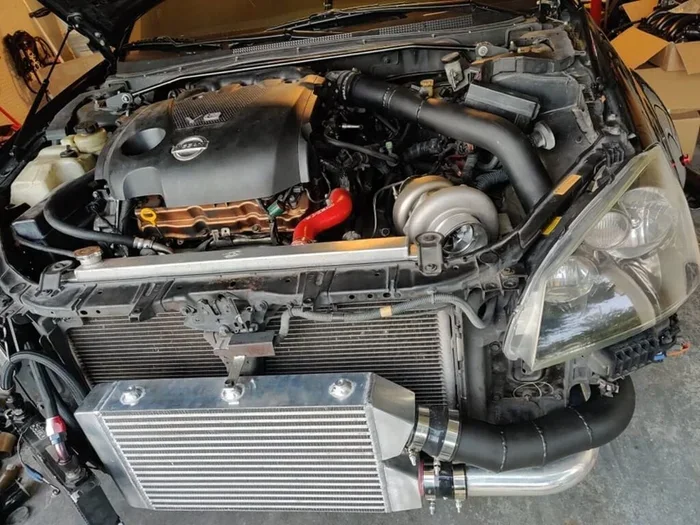
Turbo kits for the Altima typically cost between 2000 and 5000 dollars. They include the turbo unit, intercooler, piping, and mounting hardware. Installation is complex. It usually takes a full weekend or more. You will also need to upgrade the fuel system to keep up with the increased demand.
Forced induction on a 2.5-liter engine can push horsepower to 300 or more. On a 3.5-liter V6, gains can push past 400 horsepower. These numbers are serious. They turn a comfortable sedan into a genuine performance car.
But there are risks. Higher boost pressures stress engine internals. You need stronger connecting rods, upgraded pistons, and a robust oil system. Do not skip these supporting upgrades. They protect your engine from catastrophic failure. The last thing you want is a blown motor after a big power gain.
Supercharger vs. Turbo: Which Is Better?
Superchargers deliver power instantly. There is no lag. The response is immediate and linear. Turbochargers have a slight delay before boost kicks in. But they are generally more efficient because they use waste exhaust energy.
For daily driving, a supercharger is simpler and more predictable. For maximum power potential, a turbo is the better choice. Your decision should depend on how you plan to use the car and your budget.
Fuel System and Ignition Upgrades
When you add more air to the engine, you must also add more fuel. The factory fuel system may not be able to keep up with increased demand. Upgrading fuel components ensures your Altima runs safely at higher power levels.
Performance Fuel Injectors
Upgraded fuel injectors deliver more fuel per pulse. They are sized to match your engine’s increased airflow. If you install a cold air intake or turbo, injectors should be one of your first supporting upgrades. Look for injectors that match your target horsepower.
Brands like Injector Dynamics and Bosch make high-quality options. They flow consistently and atomize fuel finely. This leads to better combustion and smoother power delivery.
Ignition System Improvements
Stronger spark means a more complete combustion. Upgraded ignition coils and spark plugs help the engine burn fuel more efficiently. This is especially important when you have increased compression or boost pressure.
Iridium spark plugs are a great choice. They last longer and produce a more consistent spark than standard plugs. Replace them every 30,000 miles to keep the engine running at its best.
Also, pay attention to the fuel you use. Check if your Altima can run on unleaded 88 gas before switching to higher octane fuel. Using the wrong fuel can cause engine knock and damage over time.
Suspension and Weight Reduction
Making a car faster is not just about the engine. Handling and weight play huge roles in how fast a car feels. A lighter Altima with better suspension will outperform a heavier one every time.
Start with the suspension. Upgraded coilovers lower the center of gravity. They also reduce body roll during cornering. The car feels more planted and responsive. Adjustable dampers let you fine-tune the ride for comfort or sport.
Next, look at weight reduction. Remove the spare tire and replace it with a tire repair kit. Swap heavy factory seats for lightweight alternatives. Remove unnecessary items from the trunk. Every pound you shed improves acceleration and braking.
Brake Upgrades
Faster cars need better stopping power. Upgraded brake pads and rotors give you more confidence when pushing the car hard. drilled or slotted rotors dissipate heat better. This prevents brake fade during repeated hard stops.
Performance brake pads are another affordable upgrade. They grip better than stock pads and last longer under heavy use. Pair them with stainless steel brake lines for a firmer pedal feel.
These upgrades do not add horsepower. But they make the Altima feel significantly faster. Better stopping means you can carry more speed into corners. That translates to faster lap times and a more engaging driving experience.
Common Mistakes to Avoid
Not every modification goes smoothly. Many first-time builders make avoidable mistakes. Here are the most common ones to watch out for.
- Skipping supporting mods. If you add a turbo but do not upgrade the fuel system, you risk engine damage.
- Using cheap parts. Low-quality components fail faster and can cause expensive problems down the road.
- Ignoring maintenance. Performance upgrades put more stress on the engine. Change oil more frequently and monitor temperatures closely.
- Over-tuning the ECU. Too much boost or too lean a fuel mixture can burn pistons. Always leave a safety margin.
- Neglecting the cooling system. More power means more heat. Upgrade the radiator and consider an oil cooler if you are pushing the engine hard.
Take your time with each modification. Research the part compatibility before you buy. Read reviews from other Altima owners. A little patience saves a lot of money and headaches.
Expert Tips for Maximum Performance
Here are some insider tips that experienced builders swear by. These small details can make a big difference in your final results.
First, always dyno test your car before and after each major modification. This gives you real numbers to track your progress. You might not see gains from a single part. But the cumulative effect of multiple upgrades adds up quickly.
Second, invest in a wideband O2 sensor. It monitors your air-fuel ratio in real time. Running too lean can destroy an engine. Running too rich wastes fuel and power. The wideband sensor keeps you in the sweet spot.
Third, consider the driving conditions where you live. Hot climates reduce engine power. Humidity affects air density. Understanding these factors helps you tune your car for the best real-world performance.
Finally, enjoy the process. Building a faster car is a journey. Each upgrade teaches you something new. You get to know your Altima inside and out. That knowledge makes every drive more rewarding.
Conclusion
Making your Nissan Altima faster is a rewarding project that anyone can tackle. Start with simple upgrades like a cold air intake and exhaust system. Move on to ECU tuning for a noticeable power boost. If you are ready for serious gains, forced induction is the way to go.
Do not forget the supporting mods. Fuel system upgrades, ignition improvements, and suspension enhancements all play a role. They make your Altima not just faster, but safer and more enjoyable to drive. Track your progress, avoid common mistakes, and always prioritize engine health.
The journey to a faster Nissan Altima is filled with learning and excitement. Each modification brings you closer to your dream car. Start today, take it one step at a time, and enjoy every moment of the build.
Frequently Asked Questions
How much horsepower can you gain from a cold air intake on a Nissan Altima?
A cold air intake typically adds 5 to 10 horsepower on a Nissan Altima. The exact gain depends on the specific system and your engine type. While the number seems small, the improvement in throttle response is often more noticeable than the raw number. It also improves fuel efficiency slightly by allowing better airflow.
Is ECU remapping safe for a Nissan Altima?
Yes, ECU remapping is safe when done by a professional. A quality tune stays within safe engine limits. It adjusts fuel delivery, timing, and boost to maximize power without risking damage. Always work with a reputable tuner who has experience with Nissan vehicles specifically.
What is the cheapest way to make a Nissan Altima faster?
The cheapest way is to install a performance air filter or cold air intake. These cost under 350 dollars and can be installed at home. Next, consider a cat-back exhaust system for a modest sound and flow improvement. Combining these two simple mods gives you the best bang for your buck.
Can you add a turbo to a Nissan Altima?
Yes, turbo kits are available for both the 2.5-liter and 3.5-liter Altima engines. However, turbo installation requires supporting modifications like upgraded fuel injectors and a reinforced clutch for manual transmissions. Plan for a budget of 2000 to 5000 dollars for a quality turbo kit and professional installation.
How often should you change spark plugs after performance upgrades?
After performance upgrades, change your spark plugs every 20,000 to 30,000 miles instead of the standard 60,000. Performance driving puts more stress on ignition components. Iridium spark plugs are the best choice because they last longer and produce a stronger, more consistent spark under all conditions.
Do weight reduction mods really make a Nissan Altima faster?
Yes, reducing weight has a real impact on acceleration and braking. Every 100 pounds removed can improve 0-60 times by a noticeable margin. Simple changes like removing the spare tire and swapping to lightweight seats make a difference. Weight reduction also improves fuel economy and handling balance.