Everything You Need to Know About Kentucky Window Tint Law
Kentucky window tint law sets specific rules for how dark or reflective your car windows can be. Understanding these regulations helps you avoid fines and keep your vehicle street legal. This guide covers legal tint percentages, medical exemptions, penalties, and practical tips for choosing the right tint film for your vehicle.
Driving a car with tinted windows feels great. It looks sleek, keeps your interior cooler, and adds a layer of privacy. But in Kentucky, window tinting is not just a style choice. It is also a legal matter. The Kentucky Window Tint Law sets clear rules about how dark or reflective your car windows can be. If you do not follow these rules, you could face fines, failed inspections, or even be asked to remove your tint entirely.
This guide breaks down everything you need to know about Kentucky tint regulations. Whether you are tinting a new car, replacing old film, or just curious about the rules, you will find practical answers here. We cover legal limits, medical exemptions, penalties, and tips for choosing the right tint film types. Let us dive in.
Key Takeaways
- Front side windows must allow more than 35% of light in: This is the legal VLT limit for sedans and most passenger vehicles in Kentucky.
- Rear windows can be tinted darker: Kentucky allows darker tint on rear side and rear windshield windows for most vehicle types.
- Reflective tint is restricted: Kentucky law limits the amount of reflectivity allowed on window tint films.
- Medical exemptions exist: You can apply for a special permit if you have a qualifying medical condition that requires darker tint.
- Penalties for violations can be costly: Illegal tint can result in fines and the requirement to remove the tint.
- Certification matters: Always choose a reputable installer who follows Kentucky tint regulations and provides proper documentation.
📑 Table of Contents
What Is Kentucky Window Tint Law?
The Kentucky Window Tint Law is a set of rules that governs how much light can pass through your car windows. These laws are designed to ensure driver safety. They balance the benefits of tinting with the need for clear visibility on the road. The law is enforced by the Kentucky Transportation Cabinet and local law enforcement agencies.
Every state has its own tint darkness limits. Kentucky is no exception. The rules vary depending on the type of vehicle you drive and which window you are tinting. The key measurement used is called Visible Light Transmission, or VLT. This tells you what percentage of light can pass through the window. The lower the VLT percentage, the darker the tint.
Understanding VLT Percentages
VLT stands for Visible Light Transmission. It is the percentage of light that passes through your window and tint film combined. For example, a VLT of 35% means that 35% of light gets through, and 65% is blocked. When you hear people talk about “35% tint,” they are referring to the VLT level.
Here is a simple way to think about it. A higher VLT means a lighter tint. A lower VLT means a darker tint. Kentucky law sets different VLT requirements for different windows and vehicle types. Understanding this basic concept makes the rest of the law much easier to follow.
Legal Tint Limits by Window
Kentucky law specifies different tint limits for different windows on your vehicle. These limits apply to sedans, SUVs, and vans. Let us break it down window by window so you know exactly what is allowed.
Front Side Windows
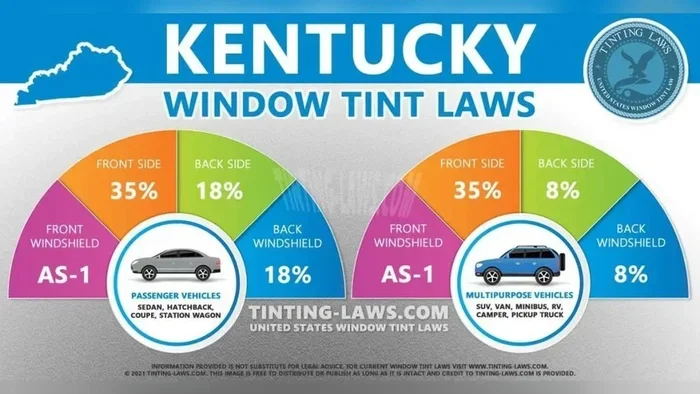
For most passenger vehicles, the front side windows must allow more than 35% of light to pass through. This means your front side window tint VLT must be above 35%. This rule applies to sedans, SUVs, and vans alike. The front side windows are the driver and passenger doors on most cars.
Why is this limit in place? The front side windows are crucial for driver visibility. They help you see other drivers, pedestrians, and road signs clearly. Kentucky law prioritizes safety in these areas. Keeping the front windows lighter ensures the driver has the best possible view of the road ahead.
Rear Side Windows
Kentucky allows darker tint on the rear side windows. There is no specific VLT limit for rear side windows on passenger vehicles. This means you can choose a darker shade for the back doors or rear windows of your SUV or van. Many car owners prefer this because it offers more privacy and better heat rejection in the back seat.
However, keep in mind that if your rear windows are very dark, you may need to install dual side mirrors. Kentucky law requires dual side mirrors when the rear window tint is darker than a certain level. This helps compensate for reduced rear visibility.
Windshield Tint
The front windshield has its own set of rules. Kentucky law allows tinting on the top portion of the windshield, but only above the manufacturer’s AS-1 line. This line is usually found near the top of the windshield. The tint strip cannot extend more than five inches down from the top of the glass.
No tint is allowed below the AS-1 line on the windshield. This ensures the driver’s direct line of sight remains completely clear. The windshield tint strip is popular for reducing glare from the sun without compromising safety. It is a great option if you want some heat rejection tint without breaking any laws.
Rear Windshield
The rear windshield can be tinted darker. There is no specific VLT restriction for the rear windshield on most passenger vehicles in Kentucky. This gives you more flexibility when choosing a tint for the back window of your car or SUV.
Just like with the rear side windows, darker rear windshield tint may require dual side mirrors. Always check with your Kentucky DMV tint rules or a local tint shop to make sure you stay compliant.
Medical Exemptions and Special Permits
Not everyone can tolerate the standard tint limits. Some people have medical conditions that make them sensitive to sunlight or UV rays. Kentucky recognizes this and offers a medical exemption tint option.
Who Qualifies for a Medical Exemption?
You may qualify for a medical exemption if you have a condition that requires you to limit your exposure to sunlight. Common qualifying conditions include:
- Lupus: This autoimmune disease makes skin extremely sensitive to UV light.
- Albinism: People with albinism lack melanin, making them very vulnerable to sun damage.
- Severe Photosensitivity: Certain skin conditions or medications can cause extreme sensitivity to light.
- Prior Skin Cancer: Individuals with a history of skin cancer may need extra protection from UV exposure.
- Other Immune Disorders: Some immune-related conditions increase sensitivity to sunlight.
How to Apply for an Exemption
To get a medical exemption, you need a signed letter from a licensed physician. The letter must explain your condition and why darker window tint is medically necessary. You then submit this letter to the Kentucky Transportation Cabinet for review.
If approved, you will receive a special permit. This permit allows you to tint your windows darker than the standard legal limits. You must keep the permit in your vehicle at all times. If you are pulled over, you can show the permit to prove your tint is legal.
Important Notes on Exemptions
Medical exemptions are not a free pass to tint every window as dark as you want. The exemption is specific to the windows that need protection based on your medical condition. You still need to follow the rules for other windows on your vehicle. Always keep your documentation up to date and renew your permit as required.
Types of Tint Films Available
Not all window tint films are the same. Different materials and technologies offer different levels of darkness, heat rejection, and clarity. Understanding your options helps you choose a tint film that is both legal and effective.
Dyed Window Tint
Dyed tint is the most common and affordable option. It uses layers of dyed film to block light and reduce glare. Dyed tint comes in various shades, making it easy to find one that fits within Kentucky’s legal limits. However, dyed tint tends to fade over time and offers less heat rejection compared to more advanced options.
Metalized Window Tint
Metalized tint contains tiny metallic particles that reflect heat away from your car. It is more durable than dyed tint and offers excellent heat rejection. The downside is that metalized tint can interfere with cell phone signals and GPS reception. It also has a shiny, reflective appearance, which may not be legal in all cases under Kentucky reflective tint rules.
Carbon Window Tint
Carbon tint is a popular middle-ground option. It does not contain metal, so it does not interfere with electronics. Carbon tint offers good heat rejection and a matte finish that looks sleek. It is also fade-resistant, meaning it holds up well over time. Carbon tint is available in various shades that can meet Kentucky’s legal VLT requirements.
Ceramic Window Tint
Ceramic tint is the premium choice. It uses nano-ceramic particles to block heat without adding color or metal to the film. Ceramic tint offers the highest level of heat rejection and UV protection. It does not interfere with electronics, and it maintains excellent clarity. The downside is that ceramic tint is more expensive than other options. But for many car owners, the benefits are well worth the cost.
Crystalline Window Tint
Crystalline tint is a unique option that uses a multi-layer optical film. It blocks a surprising amount of heat while remaining very light in color. This makes it a great choice if you want strong heat rejection tint while staying within legal VLT limits. Crystalline tint is often used by people who want maximum protection without darkening their windows too much.
Penalties for Illegal Tint in Kentucky
Getting caught with illegal window tint in Kentucky can cost you more than just a headache. The state takes tint violation fine enforcement seriously. Here is what you need to know about the consequences of breaking the law.
Fines and Penalties
If you are pulled over and your window tint is found to be illegal, you can expect a fine. The fine amount varies depending on the county and the severity of the violation. In many cases, fines range from $50 to several hundred dollars. Repeat violations can lead to higher fines and more serious consequences.
Required Tint Removal
In addition to fines, you may be required to remove the illegal tint. This means paying for both the removal and any replacement tint that meets legal standards. It is an unnecessary expense that can easily be avoided by following the rules from the start.
Failed Vehicle Inspection
Kentucky requires vehicles to pass safety inspections. Illegal window tint can cause your vehicle to fail inspection. If your car does not pass, you will not be able to register it legally until the tint is brought into compliance. This can be a major inconvenience, especially if you rely on your vehicle daily.
Impact on Insurance
While a tint violation alone may not directly raise your insurance premiums, it can still affect your driving record. Multiple violations or related incidents could lead to higher insurance costs. Staying compliant with Kentucky tint regulations is the safest approach for your wallet and your driving record.
Tips for Choosing the Right Tint
Now that you understand the law, let us talk about how to choose the right tint for your vehicle. A good tint job should be legal, effective, and long-lasting. Here are some practical tips to help you make the best decision.
Choose a Reputable Installer
Not all tint shops are created equal. Look for an installer who knows Kentucky tint regulations inside and out. Ask about their experience, read reviews, and ask to see examples of their work. A professional installer will help you choose a film that meets legal requirements while giving you the results you want.
Ask About Certification
Make sure the tint film you choose is certified. Certified tint films come with documentation that proves they meet state standards. This paperwork can protect you if you are ever questioned by law enforcement. Always ask your installer for a copy of the certification and keep it with your vehicle documents.
Consider Your Climate
Kentucky gets hot, humid summers. If you live in a warmer part of the state, you may want a tint with strong heat rejection. Ceramic and carbon tints are excellent choices for this. If you live in a cooler climate, you might prioritize clarity and UV protection over heat rejection.
Think About Your Needs
Why are you tinting your windows? If it is for privacy, a darker rear tint may be your priority. If it is for heat reduction, focus on films with high heat rejection ratings. If it is for UV protection, look for films that block 99% of UV rays. Knowing your goals helps you and your installer pick the right tint darkness limits for your situation.
Get a Warranty
Quality tint should come with a warranty. A good warranty covers bubbling, peeling, and fading. This gives you peace of mind and protects your investment. Do not settle for a shop that does not offer any warranty on their work.
Common Mistakes to Avoid
Tinting your windows should be a straightforward process. But many people make mistakes that lead to problems. Here are some common errors to avoid when dealing with window tinting regulations in Kentucky.
- Buying tint online without checking local laws: Online tint kits are tempting, but they may not meet Kentucky standards. Always verify the VLT before purchasing.
- Choosing the darkest shade available: Just because a shop offers ultra-dark tint does not mean it is legal for your vehicle in Kentucky.
- Skipping the paperwork: Without proper certification and documentation, you have no proof of compliance if you get pulled over.
- Ignoring the rearview mirror rule: If your rear windows are very dark, you need dual side mirrors. Forgetting this can lead to a citation.
- DIY tinting without experience: Improperly installed tint can bubble, peel, and look terrible. It can also lead to legal issues if the VLT is wrong.
Expert Insights on Kentucky Tint Laws
We spoke with several automotive professionals and legal experts to get their take on Kentucky window tint law. Here is what they had to say.
According to a licensed auto body specialist in Louisville, the most common mistake people make is assuming all tint is the same. “The VLT matters more than the color or brand,” he explains. “A dark-colored film that meets the legal VLT is perfectly fine, while a light-colored film that blocks too much light is not.”
A traffic law attorney in Lexington adds that enforcement can vary by county. “Some officers are more lenient, while others are strict about tint violations,” she notes. “The safest approach is to always stay within the legal limits. It is not worth the risk of a fine or having to remove your tint.”
These expert insights reinforce the importance of understanding and following the law. When in doubt, consult a local professional who knows the current Kentucky tint regulations and can guide you through the process.
Key Takeaways
- Front side windows must allow more than 35% of light in: This is the legal VLT limit for sedans and most passenger vehicles in Kentucky.
- Rear windows can be tinted darker: Kentucky allows darker tint on rear side and rear windshield windows for most vehicle types.
- Reflective tint is restricted: Kentucky law limits the amount of reflectivity allowed on window tint films.
- Medical exemptions exist: You can apply for a special permit if you have a qualifying medical condition that requires darker tint.
- Penalties for violations can be costly: Illegal tint can result in fines and the requirement to remove the tint.
- Certification matters: Always choose a reputable installer who follows Kentucky tint regulations and provides proper documentation.
Conclusion
The Kentucky Window Tint Law is clear and straightforward once you understand the basics. Knowing the legal VLT limits for each window, understanding medical exemptions, and choosing the right tint film types can save you time, money, and frustration. Whether you are tinting your first car or replacing old film, staying informed is the key to staying compliant.
Always work with a reputable installer who understands Kentucky tint regulations. Ask questions, request certification, and keep your documentation handy. If you have a medical condition that requires darker tint, explore the exemption process through the Kentucky Transportation Cabinet.
Following the law is not just about avoiding fines. It is about safety. Clear windows mean better visibility for you and everyone on the road. With the right tint and proper installation, you can enjoy the benefits of window tinting while staying fully compliant with Kentucky window tint law. Take the time to do your research, and you will enjoy a legal, professional-looking tint that lasts for years to come.
Frequently Asked Questions
What is the legal tint percentage for front side windows in Kentucky?
In Kentucky, the front side windows on most passenger vehicles must have a VLT of more than 35%. This means the tint must allow more than 35% of visible light to pass through the glass. Staying above this limit ensures your vehicle remains street legal.
Can I tint my windshield in Kentucky?
Yes, but only the top portion of the windshield. Kentucky law allows a tint strip above the manufacturer’s AS-1 line, which is typically within the top five inches of the glass. No tint is permitted below this line on the windshield.
Do I need dual side mirrors if my rear windows are tinted dark?
Yes, Kentucky law requires dual side mirrors when the rear window tint is darker than the legal limit. This rule helps ensure you have adequate rear visibility. If you are unsure about your specific setup, check with a local tint shop or the Kentucky DMV.
How do I apply for a medical exemption for window tint in Kentucky?
You need a signed letter from a licensed physician explaining your medical condition and why darker tint is necessary. Submit this letter to the Kentucky Transportation Cabinet for review. If approved, you will receive a permit that allows you to tint your windows beyond the standard legal limits.
What happens if I get caught with illegal window tint in Kentucky?
If your tint is found to be illegal, you may face a fine, be required to remove the tint, or fail your vehicle inspection. Fines vary by county and severity of the violation. In some cases, repeat violations can lead to additional penalties.
Is reflective tint allowed on car windows in Kentucky?
Kentucky law restricts the amount of reflectivity allowed on window tint. Highly reflective or mirror-like tints are generally not permitted. If you are considering a reflective tint, check with your installer to ensure it meets the state’s regulations for reflectivity and VLT.
=== URL SLUG ===
/kentucky-window-tint-law