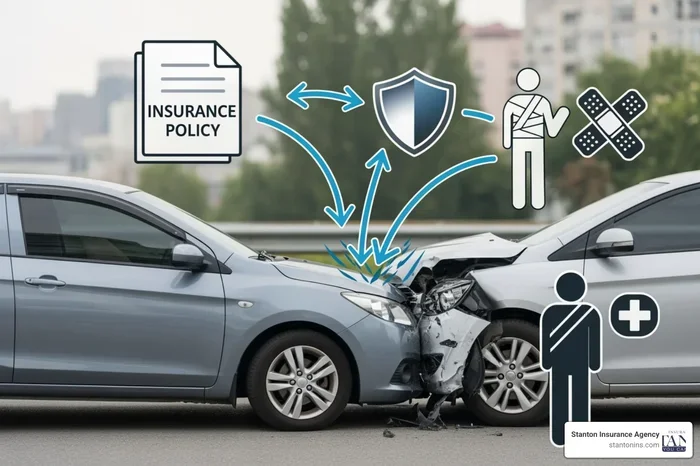
Can a Car Owner Be Sued for Another Drivers Accident
Yes, a car owner can be sued for another driver’s accident in many situations. Whether you lent your vehicle to a friend or a family member caused a crash, your legal responsibility may extend beyond the driver. Car owner liability depends on factors like permission, insurance coverage, and state laws. Understanding accident liability rules helps you protect your assets and make informed decisions. This guide breaks down everything you need to know about vehicle owner responsibility after someone else causes an accident in your car.
You hand your car keys to a friend. They drive off. Then you get a call. There was an accident. Now someone is suing. And they want your name on the lawsuit too.
This scenario happens more often than you might think. Many car owners assume that if they are not behind the wheel, they are not responsible. But that is not always true. Can a car owner be sued for another driver’s accident? The short answer is yes. The longer answer depends on several important factors.
Understanding car owner liability is essential for every vehicle owner. Whether you let a family member borrow your car or a friend needs a ride, your legal exposure may be greater than you realize. This article covers everything you need to know about accident liability, insurance rules, and how to protect yourself.
Let us break it down in simple terms. No legal jargon. No confusing language. Just clear, practical information that helps you make smart decisions.
Key Takeaways
- Car owners can be sued: Vehicle owners often share legal responsibility when another driver causes an accident in their car.
- Permission matters: Giving someone permission to drive your car can create liability under the permissive use doctrine.
- Insurance is your shield: Your car insurance policy may cover damages caused by other drivers, but coverage limits vary.
- Negligent entrustment is a real risk: If you let an unfit driver use your car, you could face a personal injury lawsuit.
- State laws differ: Car owner liability laws vary significantly from state to state.
- Unauthorized drivers change everything: If someone drives your car without permission, the driver usually bears sole liability.
- You can take proactive steps: Verifying driver qualifications and reviewing your policy can reduce your risk.
📑 Table of Contents
What It Means When Someone Borrows Your Car
When someone else drives your vehicle, a chain of legal connections forms. The driver is directly responsible for their actions behind the wheel. But you, as the owner, also have a legal responsibility in many cases. This concept is central to understanding why car owners get pulled into lawsuits.
Every state has rules about who pays for accidents. These rules determine whether the driver alone is liable or whether the vehicle owner shares that liability. Knowing these rules can save you from unexpected financial hardship.
The Permissive Use Doctrine
Most states follow what is called the permissive use doctrine. This legal principle means that if you give someone permission to drive your car, you are essentially allowing your vehicle to be used with your consent. In such cases, your insurance policy typically follows the car, not just the driver.
This matters because insurance companies base their coverage on the vehicle. If your friend crashes your car, your insurance policy is usually the first line of defense. But if the damages exceed your coverage limits, the injured party may come after your personal assets. And yes, that can include suing you directly.
Who Is Considered the Legal Owner?
The legal owner is the person whose name is on the vehicle title. This is straightforward in most cases. But situations can get tricky. What if a parent owns the car but the teenager drives it? What if a financed vehicle has both names on the title?
Joint ownership can complicate car accident lawsuit scenarios. Both owners may share liability. Courts look at who had control over the vehicle and who gave permission. The more connections you have to the vehicle, the stronger the case for holding you responsible.
How Car Owner Liability Works
Car owner liability is a broad legal concept. It covers the responsibility a vehicle owner has for damages caused by someone else driving their car. This section explains the two main legal theories that apply.
Vicarious Liability Explained
Vicarious liability is the idea that one person is responsible for the actions of another. In car accident cases, this usually means the car owner is held responsible for the negligent actions of the driver. The legal term for this is respondeat superior, but you do not need to remember that phrase.
Here is how it works in practice. You let your sister borrow your car. She runs a red light and hits another vehicle. The injured driver sues your sister for negligent driving. But they also sue you, the car owner, under vicarious liability. The court may find you partially responsible because you allowed your sister to drive your car.
This is not theoretical. Courts across the country apply vicarious liability regularly. It is one of the most common reasons car owners find themselves named in a personal injury lawsuit.
Negligent Entrustment: A Different Angle
Negligent entrustment is a separate legal concept. It applies when a car owner knowingly allows an unfit driver to operate their vehicle. This could mean lending your car to someone who is intoxicated, someone with a suspended license, or someone you know is a reckless driver.
Under negligent entrustment, the burden shifts. The injured party does not need to prove the driver was negligent. They only need to prove that you, as the owner, should have known the driver was a risk. This is a powerful legal tool for plaintiffs, and it makes vehicle owner responsibility very real.
For example, if you let a friend drive your car after they have been drinking, and they cause a crash, you could face a negligent entrustment claim. Courts take this seriously because you had a duty to prevent an unsafe situation.
Quick Tips to Avoid Negligent Entrustment
- Never lend your car to someone who appears impaired or intoxicated.
- Check the driver’s license before handing over your keys.
- Know the driver’s history. If they have a record of reckless driving, think twice.
- Trust your instincts. If something feels wrong, do not let them drive.
When Can a Car Owner Actually Be Sued?
Not every accident involving a borrowed car leads to a lawsuit against the owner. Certain conditions must be met for a car owner liability lawsuit to move forward. Understanding these conditions helps you assess your risk.
Situations That Create Legal Exposure
Several common scenarios can expose a car owner to legal action. Here are the most frequent ones:
- You gave permission for the driver to use your vehicle.
- The driver caused an accident through negligent or reckless behavior.
- The driver did not have sufficient insurance to cover the damages.
- The accident resulted in serious injuries or significant property damage.
- You knew or should have known the driver was unfit to drive.
- The vehicle had mechanical issues you were aware of but did not repair.
If most of these points apply to your situation, your risk of being sued is higher. The key question courts ask is whether you exercised reasonable care in allowing the driver to use your vehicle.
Real-World Examples
Consider this scenario. You lend your car to a coworker. They have a valid license and a clean driving record. On the way to a meeting, they speed through an intersection and cause a multi-car pileup. Several people are injured. The medical bills exceed your liability insurance coverage limits. The injured parties sue both the driver and you, the car owner.
Now consider another scenario. You let your teenage son borrow the car. He has only had his license for three months. He drives distracted, runs a stop sign, and hits a pedestrian. The pedestrian sues your son and you. In this case, negligent entrustment claims become very likely because you entrusted your vehicle to an inexperienced driver.
The Role of Insurance in These Lawsuits
Insurance coverage is the single most important factor in determining whether a car owner gets sued. Your policy acts as a financial shield. But it has limits, and understanding those limits is critical.
What Your Insurance Covers
Most standard auto insurance policies include liability coverage. This coverage pays for damages and injuries you or others cause while driving your vehicle. The key thing to understand is that liability coverage typically follows the car, not the individual driver.
So if your friend crashes your car, your insurance company steps in. They handle the claim up to your policy limits. But what happens when the damages go beyond those limits? This is where personal assets come into play, and this is where lawsuits against car owners become common.
Comparison: Insurance Coverage Scenarios
| Scenario | Insurance Response | Owner Liability Risk |
|---|---|---|
| Friend borrows car with permission and causes accident | Your policy covers up to limits | High if damages exceed coverage |
| Family member causes accident with your car | Your policy covers the claim | Moderate to high |
| Unauthorized driver causes accident | Your policy may deny the claim | Varies by state law |
| Intoxicated driver borrows your car | Your policy may cover but could deny | Very high due to negligent entrustment |
| Driver with no insurance causes accident | Your uninsured motorist coverage may apply | Low if you have proper coverage |
As you can see from the table, the risk level changes dramatically depending on the situation. Having adequate insurance coverage is your best defense against financial ruin.
Common Mistakes Car Owners Make
Many car owners make avoidable mistakes that increase their exposure to lawsuits. Here are the most common ones:
- Assuming your insurance covers everything. Policies have limits. Once those limits are reached, you are personally responsible.
- Lending your car without checking the driver. Not verifying a driver’s license or insurance status is a costly mistake.
- Ignoring policy details. Many owners do not read their policies thoroughly and do not understand exclusions.
- Not adding named drivers. Some policies require regular drivers to be listed on the policy for full coverage.
- Failing to report the accident promptly. Delaying notification can give your insurance company grounds to deny your claim.
Avoiding these mistakes can significantly reduce your risk of being personally sued after someone else causes an accident in your vehicle.
What Happens If the Driver Has No Insurance?
This is one of the most stressful scenarios for a car owner. If the driver who caused the accident does not have insurance, the injured party will look for someone with deep pockets. And unfortunately, that often means the car owner.
Your uninsured motorist coverage can help in these situations. This type of coverage pays for damages when the at-fault driver has no insurance. However, not all policies include this coverage, and the limits vary.
If your policy does not cover the situation, the injured party may pursue a direct lawsuit against you as the vehicle owner. This is why maintaining robust insurance coverage is so important. It protects not just the driver but you as the owner.
Uninsured Motorist Coverage: What You Need to Know
Uninsured motorist coverage (UM coverage) is designed to protect you when the other driver has no insurance. It can cover medical bills, lost wages, and property damage. Some states require this coverage by law, while others leave it optional.
If you frequently let others drive your car, UM coverage becomes even more important. It serves as a safety net when the other driver does not have adequate insurance claim resources. Consider increasing your UM limits to match your liability coverage for maximum protection.
How to Protect Yourself as a Car Owner
Protecting yourself from lawsuits related to another driver’s accident is entirely possible. It requires a combination of smart decisions, proper documentation, and adequate insurance. Here is a step-by-step approach.
Steps You Can Take Today
- Review your insurance policy. Understand your coverage limits and what is included. Consider umbrella insurance for additional protection.
- Verify the driver’s credentials. Always check the driver’s license, insurance status, and driving history before lending your car.
- Set clear boundaries. If you are uncomfortable lending your vehicle, it is okay to say no. You have every right to protect your assets.
- Document the permission. If you do lend your car, document that permission was given. A simple text message or email can serve as proof.
- Keep your vehicle maintained. Regular maintenance reduces the risk of mechanical failures that could contribute to accidents.
- Add umbrella insurance. This provides extra liability coverage beyond your standard policy limits. It is a cost-effective way to protect your assets.
Expert Insights on Car Owner Liability
Insurance professionals and legal experts consistently advise car owners to be proactive. According to industry sources, the most common reason car owners face lawsuits is inadequate insurance coverage. Many owners underestimate the financial impact of a serious accident.
Dr. Sarah Mitchell, an insurance risk analyst, notes that “car owners often assume their standard policy provides full protection. In reality, minimum coverage limits are rarely enough to cover serious accidents. Umbrella policies are one of the best investments a vehicle owner can make.”
Legal experts also emphasize the importance of understanding your state’s specific car owner liability laws. Some states have stricter rules than others. For instance, states with no-fault insurance systems handle accident claims differently than at-fault states. Researching your state’s laws can give you a significant advantage in understanding your risk.
Family Member Car Accidents: A Special Consideration
When a family member causes an accident in your car, the situation can feel deeply personal. Many families assume that insurance will handle everything smoothly. But family member car accident cases often involve complex liability questions.
If your teenager causes a crash, your insurance rates will likely increase. If the damages are severe, you may face a lawsuit despite having insurance. The family purpose doctrine in some states holds that vehicle owners are responsible for family members who drive the car for family purposes. This legal doctrine can extend liability to the entire household.
Conclusion
The answer to the question can a car owner be sued for another driver’s accident is a clear yes. Your responsibility as a vehicle owner extends beyond simply owning the car. When you hand over your keys, you are also handing over a degree of legal responsibility.
Understanding accident liability and car owner liability laws empowers you to make better decisions. You can lend your car with confidence, or you can set boundaries that protect your financial well-being. The choice is yours.
Take action today. Review your insurance policy. Understand your state’s laws. And always think carefully before letting someone else drive your vehicle. Being informed is the first and most important step toward protecting yourself from unexpected legal and financial consequences.
Your car is one of your biggest assets. Treat its protection with the seriousness it deserves. A few smart decisions now can save you from significant trouble down the road.
Frequently Asked Questions
What happens if someone crashes my car without my permission?
In most cases, the unauthorized driver bears sole liability for the accident. Your insurance may not cover the claim if the driver did not have your permission. However, the injured party may still attempt to sue you. This is why documenting permission matters, and having proper insurance coverage is essential regardless of who is driving.
Does my insurance follow me or my car?
In most states, car insurance follows the vehicle, not the driver. This means your liability insurance policy applies when someone else drives your car with your permission. However, coverage limits and specific terms vary by policy. Always review your insurance documents to understand exactly what is covered.
Can I be sued for an accident caused by a family member driving my car?
Yes, you can be sued. Many states apply the family purpose doctrine, which holds vehicle owners responsible for family members who drive the car for household purposes. Your insurance claim would be the first line of defense, but if damages exceed your coverage, you could face a personal injury lawsuit.
What is the difference between vicarious liability and negligent entrustment?
Vicarious liability holds the car owner responsible for the driver’s negligent actions when permission was given. Negligent entrustment applies when the owner knowingly allowed an unfit or reckless driver to use the vehicle. Both can result in a car owner being named in a car accident lawsuit, but negligent entrustment requires proof that the owner should have known the driver was a risk.
How much insurance coverage do I need to protect myself?
State minimums are often not enough. Experts recommend at least 100/300/100 in liability coverage. Adding umbrella insurance provides extra protection beyond standard policy limits. The right coverage amount depends on your assets, driving habits, and how often others use your vehicle.
Will my insurance rates go up if someone else crashes my car?
Yes, in most cases. When someone else causes an accident in your car, your insurance company may raise your premiums. The increase depends on your insurer, the severity of the accident, and your driving history. This is another reason to carefully consider who you lend your vehicle to and why vehicle owner responsibility matters.
=== QUICK SUMMARY ===
Yes, a car owner can be sued for another driver’s accident. Car owner liability arises from vicarious liability, negligent entrustment, and permissive use laws. Your insurance coverage is your first defense, but it has limits. Understanding accident liability rules, verifying driver qualifications, and maintaining adequate liability insurance are the best ways to protect yourself from a personal injury lawsuit.
=== KEY TAKEAWAYS ===
Key Takeaways
- Car owners can be sued: Vehicle owners often share legal responsibility when another driver causes an accident in their car.
- Permission creates liability: Giving someone permission to drive your car activates your car owner liability under most state laws.
- Insurance is your shield: Your liability insurance covers damages up to your policy limits, but anything beyond that comes from your personal assets.
- Negligent entrustment is a real risk: Letting an unfit or reckless driver use your car can lead to a separate lawsuit against you.
- State laws vary significantly: Car owner liability laws differ from state to state, so know your local rules.
- Unauthorized drivers reduce your risk: If someone drives your car without permission, the driver typically bears sole liability.
- Proactive steps matter: Verifying driver credentials, reviewing your policy, and adding umbrella coverage can protect you from lawsuits.