Fix Car Door Rubber Seal Noise Easily With These Tips
Car door rubber seal noise is a common problem that can make your drives annoying and loud. In this guide, you will learn the top causes of door seal noise, step-by-step fixes, and simple ways to prevent it from coming back. Whether you handle it yourself or visit a mechanic, these tips will help you restore a quiet and airtight car door seal.
Key Takeaways
- Identify the noise source first: Not all door noise comes from the rubber seal. Check for loose panels, misalignment, or worn gaskets before jumping to fixes.
- Regular maintenance matters: Applying rubber seal conditioner every few months can prevent drying, cracking, and the noise that comes with it.
- DIY fixes are often enough: Most car door rubber seal noise problems can be solved at home with basic tools, adhesive, and replacement seals.
- Weatherstripping quality counts: Cheap or improperly installed weatherstripping leads to wind noise, rattling, and poor cabin insulation.
- Don’t ignore early signs: Squeaking or slight rattling is an early warning. Addressing it early saves you from costly door seal replacement later.
- Professional help is sometimes needed: If the door seal is severely damaged or the door alignment is off, a mechanic can provide a lasting fix.
📑 Table of Contents
- Fix Car Door Rubber Seal Noise Easily With These Tips
- Why Your Car Door Rubber Seal Makes Noise
- How to Diagnose the Source of Door Seal Noise
- Step-by-Step Guide to Fix Car Door Rubber Seal Noise
- Best Products for Car Door Seal Repair and Maintenance
- Preventing Future Door Seal Noise Problems
- When to See a Professional for Door Seal Issues
- Conclusion
Fix Car Door Rubber Seal Noise Easily With These Tips
You are driving down the highway, enjoying your favorite playlist, when a familiar rubber seal noise starts creeping in. It is a squeak, a rattle, or a whistle that makes you want to roll up the windows even more. This is the problem many car owners face with car door rubber seal noise. It can turn a peaceful ride into an annoying ordeal fast.
The good news is that fixing this issue is often simpler than you think. Most causes are easy to spot and even easier to fix. Whether the noise comes from a worn gasket, loose seal, or misaligned door, this guide has you covered. You will learn exactly why your door makes noise, how to diagnose the root cause, and what steps to take next.
We will walk through every fix step by step. You will also discover the best products, helpful prevention tips, and when it makes sense to call a professional. By the end, you will feel confident tackling door seal repair on your own. Let us get into it and bring some peace and quiet back to your ride.
Why Your Car Door Rubber Seal Makes Noise
Understanding why the noise happens is the first big step. Your car door rubber seal, also called a weatherstripping seal, does an important job. It keeps wind, rain, dust, and outside noise from entering your cabin. Over time, this seal can wear out or shift out of place. When that happens, noise sneaks in.
Several factors contribute to seal deterioration and the sounds that follow. Let us break them down so you know exactly what you are dealing with.
Wear and Tear Over Time
Rubber naturally degrades with age. Sun exposure, rain, and temperature changes speed up this process. The seal loses its flexibility and starts to crack or flatten. When a rubber seal no longer compresses properly against the door frame, it creates gaps. These gaps let wind rush through and produce wind noise or whistling sounds.
Dirt and Grime Buildup
Every time you open and close your car door, dust, mud, and debris get pushed into the seal groove. Over weeks and months, this buildup prevents the rubber from seating correctly. The result is a poor seal and more noise. Regular car seal maintenance helps keep this from happening.
Loose or Misaligned Door Panels
Sometimes the noise is not really about the rubber at all. A loose door panel or a slightly misaligned door can rattle against the frame. This door rattling often sounds like a seal problem. It is important to check the door hardware and alignment before replacing the seal.
Improper Seal Installation
If you recently bought a used car or had a door replaced, the seal may have been installed incorrectly. A seal installation that is too tight, too loose, or slightly crooked will almost always lead to noise. Poor placement means the rubber cannot do its job properly.
How to Diagnose the Source of Door Seal Noise
Before you buy any parts or tools, you need to pinpoint the actual cause. Diagnosing the problem correctly saves time, money, and frustration. Here is a simple process you can follow at home.
Step 1: Listen Carefully With the Windows Up
Start your car and drive at various speeds with the windows fully closed. Roll the steering wheel slightly to one side and listen closely. Try the same on the other side. This helps you identify which door is making the cabin noise reduction problem. Note whether the sound is a squeak, whistle, rattle, or whoosh.
Step 2: Inspect the Rubber Seal Visually
Open each door and examine the rubber seal closely. Look for visible cracks, tears, flattening, or gaps. Press your finger along the seal and feel for areas where it has lost its seal compression. A healthy seal feels firm but slightly soft and sits snugly in its channel. If it feels brittle or loose, it likely needs attention.
Step 3: Test With a Flashlight
On a dark day or in a dim garage, shine a flashlight around the edges of each closed door. If you see light coming through, there is a gap. That gap is almost certainly contributing to the noise. This simple trick reveals problems that are invisible during the day.
Step 4: Check Door Alignment
Look at the gaps between the door and the car body. They should be even all the way around. If one side has a noticeably larger gap, your door alignment may be off. Door alignment issues often mimic seal noise and require different fixes.
Step 5: Apply Soapy Water
This trick works great for finding the exact spot where air leaks. Spray a mixture of water and dish soap along the door seal while someone closes the door. Bubbles will form at the leak point. Mark that spot and focus your repair efforts there.
Step-by-Step Guide to Fix Car Door Rubber Seal Noise
Now comes the satisfying part. Here is a detailed walkthrough for fixing most car door rubber seal noise issues. You can handle most of these fixes in your driveway or garage with basic tools.
Fix 1: Clean the Seal Thoroughly
Start with the simplest fix. Mix warm water with a small amount of mild soap. Use a soft brush or cloth to scrub the entire rubber seal. Remove all embedded dirt, sand, and grime. Rinse it clean and dry the seal completely. Sometimes this alone resolves squeaking and minor wind noise.
For stubborn grime, use a rubber-safe cleaner. Avoid harsh chemicals like bleach or solvent-based cleaners, as these accelerate cracking and seal deterioration.
Fix 2: Apply Rubber Seal Conditioner
After cleaning, apply a quality rubber seal conditioner. This product restores flexibility to the rubber and helps it grip the door frame properly. Spray or apply a thin layer along the entire seal. Let it soak in for at least 15 to 20 minutes before wiping off any excess.
Many people underestimate this step. A well-conditioned seal operates more quietly and lasts significantly longer. Apply conditioner every three to four months for the best results in car seal maintenance.
Fix 3: Reattach or Reposition the Seal
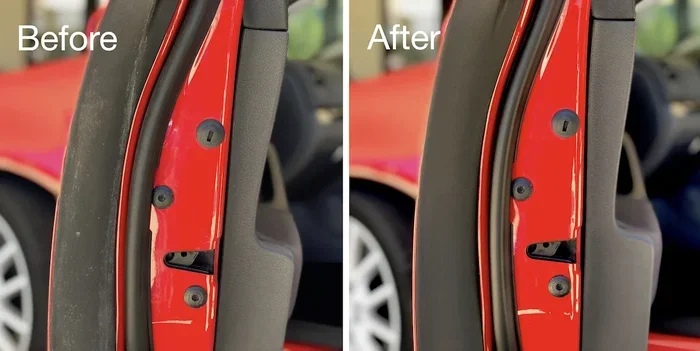
If the seal has come loose or shifted, you can often reattach it yourself. First, peel the seal gently away from the channel. Clean the channel and the back of the seal thoroughly. Use a rubber seal adhesive or weather seal adhesive to secure it back in place. Press firmly along the entire length to ensure strong contact.
Work slowly and make sure the seal sits evenly in its groove. An uneven placement will cause noise again quickly. This door seal repair step requires patience but does not demand professional skills.
Fix 4: Replace the Seal Entirely
When the rubber is severely cracked, torn, or flattened beyond repair, replacement is the best path. Here is how to approach door seal replacement:
- Remove the old seal completely. Scrape off any remaining adhesive from the channel.
- Clean and dry the channel thoroughly. Let it sit for at least an hour.
- Purchase the correct replacement seal for your car make, model, and year. Door seal types vary, so confirm compatibility before buying.
- Apply a thin line of adhesive inside the channel if your new seal does not have a built-in adhesive backing.
- Press the new seal into place, starting at one corner and working your way around. Smooth it out with your fingers as you go.
- Close the door gently and check that the seal compresses evenly all around.
Fix 5: Lubricate Door Hinges and Latches
Sometimes the noise originates from the hinges or latch, not the seal at all. Apply a spray lubricant to the door hinges, latch mechanism, and striker plate. Open and close the door several times to distribute the lubricant. This often eliminates door rattling and clicking sounds that feel like seal noise.
Fix 6: Adjust Door Alignment
For persistent noise caused by misalignment, you may need to adjust the door. This involves loosening the hinge bolts, repositioning the door, and retightening. If you are not comfortable doing this yourself, a mechanic can handle it quickly. Proper door alignment ensures even pressure on the seal and eliminates gaps that cause wind noise.
Best Products for Car Door Seal Repair and Maintenance
Choosing the right products makes a noticeable difference. Here are some categories of products that work well for tackling car door rubber seal noise.
Rubber Seal Conditioners and Protectants
These keep your rubber seal flexible and weather-resistant. Look for products specifically designed for automotive rubber. A good conditioner prevents cracking, reduces friction, and keeps the seal quiet. Apply regularly for ongoing protection.
Weather Seal Adhesive
When you need to reattach or install a seal, a strong adhesive is essential. Choose one that is specifically labeled for automotive rubber and plastic. Weather seal adhesive bonds well and remains flexible in cold and hot temperatures. This ensures the seal stays put through every season.
Replacement Rubber Gasket Kits
For a full seal overhaul, a replacement kit is your best bet. Many kits include all the seals for every door plus adhesive strips. These kits offer great value and make seal installation much easier. Always check that the kit matches your vehicle before purchasing.
Silicone-Based Lubricants
These work perfectly on door mechanisms and rubber seals alike. They reduce friction and quiet squeaks without damaging rubber. A light application goes a long way in cabin noise reduction.
Quick Tip: Always test a small area of your seal with any product before applying it broadly. This prevents discoloration or damage to the rubber. It is a small step that saves big headaches.
Preventing Future Door Seal Noise Problems
Fixing the noise once is satisfying. Preventing it from returning is even better. Here are practical habits that keep your seals in great shape for years.
Regular Cleaning Routine
Make it a habit to wipe down your door seals every two weeks. Remove surface dirt before it works its way into the rubber. This simple act extends the life of your seal and keeps noise at bay. Think of it as part of your regular car seal maintenance.
Seasonal Conditioning
Before winter and summer, give your seals a thorough conditioning. Extreme cold makes rubber brittle. Extreme heat makes it dry and prone to cracking. Seasonal care prevents seal deterioration and keeps the rubber sealing tightly through every season.
Gentle Door Handling
Avoid slamming your car doors. Hard impacts shift seals out of position and accelerate wear. Close doors firmly but gently. This small change makes a surprisingly big difference over time.
Keep Drains Clear
Most car doors have small drain holes at the bottom. These allow water to escape from the door channel. If these holes clog with leaves or dirt, water pools inside and soaks the seal. Clear them regularly to protect the rubber from hidden damage.
Store Your Car Smartly
If possible, park in a shaded area or garage. Direct sunlight breaks down rubber faster than almost anything else. When storing for extended periods, consider using a car cover. This shields the seals from UV rays and extreme temperatures.
When to See a Professional for Door Seal Issues
Most door seal repair tasks are well within DIY range. However, there are situations where professional help is the smarter choice. Knowing when to call in an expert saves you from making things worse.
Severe Seal Damage
If the rubber is shredded, torn away from the frame, or collapsed entirely, a professional replacement ensures a proper fit. A botched DIY replacement can lead to water leaks and more noise down the road.
Complex Door Alignment Problems
Adjusting door alignment involves hinges, latches, and sometimes frame straightening. This work requires specialized tools and experience. If you notice uneven gaps, doors that do not close properly, or persistent noise after DIY fixes, take your car to a trusted mechanic.
Water Leaks Inside the Car
If you find moisture on your seats, floor mats, or dashboard, the seal failure may be serious. Water damage can affect electrical systems and interior materials. Address this promptly with professional help. A compromised waterproof seal is not something to delay.
Acoustic Sealing Concerns
Some modern vehicles use advanced acoustic sealing materials for sound insulation. If your car has this type of acoustic sealing, a professional will know how to handle the specialized materials correctly. Using the wrong replacement seal can compromise both noise control and safety.
Expert Insight: According to experienced automotive technicians, most drivers wait too long before addressing seal noise. They recommend acting at the first sign of squeaking or whistling. Early action almost always means cheaper and easier fixes. Waiting often leads to more extensive door seal replacement and added repair costs.
Conclusion
Car door rubber seal noise is a common but manageable problem. Whether it is caused by worn rubber, dirt buildup, loose panels, or misalignment, you now have a clear action plan. Start with simple fixes like cleaning and conditioning. Move to reattachment or replacement if needed. And always prioritize regular maintenance to keep seals in top shape.
Remember that a well-maintained door seal does more than just reduce noise. It keeps your cabin quiet, protects you from the elements, and maintains your vehicle’s value. Following the tips in this guide gives you the confidence to handle most issues on your own. When the problem goes beyond DIY, do not hesitate to seek professional help.
Take action today, and you will enjoy quieter drives and a tighter seal for years to come. Your car deserves the care, and your ears will thank you for it.
Frequently Asked Questions
Why does my car door rubber seal squeak when I close the door?
A squeaking seal is usually caused by dry or dirty rubber. Dirt trapped in the seal groove creates friction. Applying a rubber seal conditioner or silicone lubricant typically eliminates the squeak within minutes. Cleaning the seal thoroughly before conditioning works best.
Can I use any adhesive to fix a car door seal?
No. You should only use adhesive specifically designed for automotive rubber and weatherstripping. General-purpose glues may crack in cold temperatures or damage the rubber. A quality weather seal adhesive remains flexible and bonds securely for long-lasting results.
How often should I replace my car door seals?
Most car door seals last between 10 and 15 years with proper care. However, seal deterioration can happen faster in extreme climates or with poor maintenance. If you notice cracking, gaps, or persistent noise despite conditioning and cleaning, it is time for a full replacement.
Will a bad door seal affect my car’s heating and cooling?
Yes. A failing seal lets outside air enter through gaps around the door. This reduces your car’s ability to maintain a comfortable temperature. It also increases wind noise and can allow moisture inside. Fixing the seal restores proper insulation and acoustic sealing performance.
Is door seal noise covered under car warranty?
It depends on your warranty terms and the age of your vehicle. Some manufacturers cover rubber components, including seals, under a separate bumper-to-bumper warranty. Check your owner’s manual or contact your dealer. Normal wear-related noise is typically not covered, but defects in materials usually are.
What is the cheapest way to stop door seal noise?
The cheapest fix is a thorough cleaning followed by a rubber seal conditioner. This costs just a few dollars and takes about 30 minutes. Many drivers resolve their car door rubber seal noise completely with just this simple approach. If that does not work, a rubber seal adhesive for reattachment is the next affordable step.