A Toy Car With Charge Q Moves on a Frictionless Track
A toy car with charge q moves on a frictionless track is a classic physics problem that explores how electric forces drive motion without resistance. This guide breaks down the science behind charged particle motion, electric fields, and energy conservation in a simple, easy-to-understand way. Whether you are a student, educator, or curious learner, you will find practical insights and clear explanations that make complex concepts feel approachable and fun.
A toy car with charge q moves on a frictionless track. This simple setup opens up a fascinating world of physics. It connects electric forces to motion in a way that is both elegant and easy to visualize. If you have ever wondered how charged objects behave when nothing holds them back, you are in the right place.
This article breaks down every aspect of this concept. You will learn how electric fields push charged cars, how energy transforms during motion, and why this model matters in real life. We keep things simple and practical. No confusing jargon. Just clear ideas that stick.
The beauty of a frictionless track is that it removes complications. No energy gets lost to heat or sound. Every push from the electric field goes directly into motion. This makes the toy car with charge q an ideal tool for understanding fundamental physics. Let us dive in.
Key Takeaways
- Electric Force Drives Motion: A charged toy car accelerates on a frictionless track due to the electric force acting on it, with no energy lost to friction.
- Energy Conservation Is Key: The total energy of the charged car stays constant, converting between potential energy and kinetic energy as it moves.
- Coulomb’s Law Matters: The force between charges determines how fast and how far the toy car travels on the track.
- Uniform Electric Fields Simplify Problems: When the electric field is uniform, the motion of the charged car becomes predictable and easy to calculate.
- Real-World Applications Exist: This concept connects to electric vehicles, particle accelerators, and electromagnetic systems in everyday life.
- Common Mistakes Are Avoidable: Forgetting to account for direction of force or misapplying energy equations are the most frequent errors students make.
📑 Table of Contents
- What Happens When a Toy Car With Charge Q Moves on a Frictionless Track
- Understanding Electric Fields and Charged Motion
- Energy Transformation in a Charged Toy Car
- Coulomb’s Law and Its Impact on Car Motion
- Real-World Applications and Why This Matters
- Common Mistakes and How to Avoid Them
- Quick Tips for Solving Charged Car Problems
- Expert Insights on Charged Motion Models
- Key Takeaways
- Conclusion
What Happens When a Toy Car With Charge Q Moves on a Frictionless Track
When a toy car with charge q moves on a frictionless track, something interesting happens. The car responds to electric forces around it. There is no friction to slow it down. So even a small push from an electric field can cause noticeable movement.
Think of it like pushing a swing. If there is no air resistance and no friction at the pivot, the swing keeps going forever. A charged car on a frictionless track works similarly. The electric force acts as the push. And once the car starts moving, nothing stops it unless another force steps in.
The Role of Electric Force
Electric force is the engine behind this whole setup. When a car carries a charge q, it interacts with any nearby electric field. The force on the car depends on two things. The size of the charge and the strength of the electric field.
The formula is simple. Force equals charge times electric field strength. So a bigger charge means a bigger push. A stronger electric field also means a bigger push. On a frictionless track, this push translates directly into acceleration. The car speeds up without any loss.
Here is a quick look at what affects the motion:
- Charge magnitude: More charge means more force.
- Electric field strength: A stronger field pushes harder.
- Mass of the car: A lighter car accelerates faster.
- Direction of the field: The car moves along the field lines.
- Distance from other charges: Closer charges create stronger forces.
Why Frictionless Makes Everything Simpler
A frictionless surface is a physicist’s best friend. It removes energy loss from the equation. In real life, friction always steals some energy. A toy car on a rough floor slows down. But on a frictionless track, every bit of electric work becomes kinetic energy.
This ideal setup helps us understand the core physics. Once you grasp motion on a frictionless track, adding friction back in becomes much easier. You just subtract the energy lost to friction. The frictionless case gives you the clean baseline.
Understanding Electric Fields and Charged Motion
An electric field surrounds any charged object. It is an invisible region where electric forces can act. When a toy car with charge q moves on a frictionless track inside this field, it feels a push or pull. The direction depends on the sign of the charge.
Positive charges move along the field lines. Negative charges move against them. This distinction matters a lot. It determines which way the car goes and how its energy changes during motion.
How Electric Field Strength Affects Speed
The stronger the electric field, the faster the car accelerates. A weak field gives a gentle push. The car gains speed slowly. A strong field gives a hard push. The car zooms ahead quickly.
Imagine two identical charged toy cars. One sits in a strong electric field. The other sits in a weak field. Both start from rest. After the same amount of time, the car in the strong field moves much faster. The difference comes down to the force each car experiences.
Here are some practical examples of how field strength changes motion:
- Weak field: The car moves slowly and covers less distance in a given time.
- Moderate field: The car reaches a comfortable speed and travels steadily.
- Strong field: The car accelerates rapidly and covers large distances quickly.
Direction of Motion on the Track
The direction a charged car moves depends on the electric field direction and the sign of the charge. If the field points to the right and the charge is positive, the car moves right. If the charge is negative, the car moves left.
This might seem obvious, but it is easy to mix up. Always check both the field direction and the charge sign. Getting either one wrong leads to incorrect predictions about the car’s path on the frictionless track.
Energy Transformation in a Charged Toy Car
Energy transformation is at the heart of this topic. When a toy car with charge q moves on a frictionless track, energy constantly changes form. Electric potential energy converts into kinetic energy. And if the car moves against the field, kinetic energy converts back into potential energy.
The total energy stays constant. This is the law of conservation of energy. No energy appears from nowhere. No energy disappears. It just changes from one form to another.
Kinetic Energy of the Moving Car
Kinetic energy is the energy of motion. The faster the car goes, the more kinetic energy it has. The formula is one-half mass times velocity squared. On a frictionless track, all the work done by the electric field becomes kinetic energy.
Let us say the car starts from rest. The electric field does work on it. That work equals the change in kinetic energy. So the car gains speed as it moves through the field. The longer it stays in the field, the faster it gets.
Potential Energy and Its Role
Electric potential energy depends on the position of the charge in the field. When the car is close to a like charge, the potential energy is high. When it moves away, the potential energy drops. That lost potential energy becomes kinetic energy.
This is exactly like a ball rolling down a hill. At the top, the ball has high potential energy. At the bottom, it has high kinetic energy. The charged car on a frictionless track follows the same pattern.
Here is a quick comparison of energy at different points:
| Position | Potential Energy | Kinetic Energy | Speed |
|---|---|---|---|
| Near a like charge | High | Low | Slow |
| Midway in the field | Medium | Medium | Moderate |
| Far from the like charge | Low | High | Fast |
Coulomb’s Law and Its Impact on Car Motion
Coulomb’s law is the foundation of electric force calculations. It tells us how strongly two charges attract or repel each other. When a toy car with charge q moves on a frictionless track near another charge, Coulomb’s law determines the force at every point.
The force is proportional to the product of the two charges. It is inversely proportional to the square of the distance between them. So as the car gets closer to another charge, the force grows rapidly. As it moves away, the force drops quickly.
Applying Coulomb’s Law to the Track
Imagine placing a fixed charge near the start of the frictionless track. The toy car with charge q feels a force from this fixed charge. If both charges are positive, the car gets pushed away. If the charges are opposite, the car gets pulled forward.
The car’s acceleration changes as it moves. When it is close to the fixed charge, the force is strong. The acceleration is high. As the car moves away, the force weakens. The acceleration drops. But the car keeps moving because nothing stops it on the frictionless track.
Here are key points to remember about Coulomb’s law in this context:
- Like charges repel: The car moves away from a fixed charge of the same sign.
- Opposite charges attract: The car moves toward a fixed charge of the opposite sign.
- Force decreases with distance: Doubling the distance cuts the force to one quarter.
- Force increases with charge: Doubling either charge doubles the force.
Real-World Applications and Why This Matters
You might wonder why a toy car with charge q on a frictionless track matters outside the classroom. The truth is, the principles at play here show up everywhere. From electric vehicles to particle accelerators, the same physics applies.
Understanding how charged objects move in electric fields helps engineers design better technology. It helps scientists build instruments that measure tiny forces. It even helps us understand how electric motors work.
Electric Vehicles and Charged Motion
Electric cars use forces on charged particles to create motion. The battery pushes electrons through circuits. These moving charges create magnetic fields. Those fields push against other magnets to turn the wheels. The basic idea is similar to our toy car. A force acts on a charge. That force creates motion.
The frictionless track model teaches us the ideal case. Real roads have friction. Real cars have air resistance. But the core idea remains the same. Electric force causes acceleration. Energy converts between potential and kinetic forms.
Particle Accelerators and Research
Particle accelerators do something very similar to our toy car. They push charged particles through electric fields. The particles speed up and gain kinetic energy. Scientists use these fast particles to study matter at the smallest scales.
The frictionless track is a simplified version of what happens inside an accelerator. In reality, there are small amounts of friction and collisions. But the basic physics of charged particle motion stays the same. The toy car model gives us a clear mental picture.
Everyday Electrostatic Devices
Electrostatic devices are all around us. Copy machines use charged particles to create images. Air filters use electric fields to trap dust. Even laser printers rely on charged particles moving in controlled paths. All of these devices share the same basic principle as our toy car on a frictionless track.
Common Mistakes and How to Avoid Them
Students and learners often make mistakes with this topic. Some errors come from misunderstanding the physics. Others come from simple calculation slips. Knowing these mistakes helps you avoid them.
Forgetting the Direction of Force
The most common mistake is ignoring the direction of the electric force. Force is a vector. It has both size and direction. If you only calculate the size and forget the direction, your answer will be wrong.
Always draw a diagram. Show the electric field lines. Mark the direction of the force on the charge. This simple habit prevents many errors. It also makes the problem much easier to solve.
Mixing Up Potential and Kinetic Energy
Another frequent mistake is confusing potential energy with kinetic energy. Remember that potential energy depends on position. Kinetic energy depends on speed. As the car moves on the frictionless track, one goes up while the other goes down.
Use the conservation of energy equation. Total energy equals potential energy plus kinetic energy. Set the initial total equal to the final total. This keeps everything organized and prevents mix-ups.
Ignoring the Mass of the Car
Some people forget that the car has mass. They focus only on the charge and the electric field. But acceleration depends on both force and mass. A heavy car accelerates more slowly than a light car under the same force.
Always write down the mass before solving. Use Newton’s second law. Force equals mass times acceleration. This gives you the correct acceleration for the specific car you are analyzing.
Quick Tips for Solving Charged Car Problems
Solving problems about a toy car with charge q on a frictionless track becomes much easier with a few smart strategies. These tips help you work through any problem with confidence.
- Start with a free body diagram. Draw the car. Show all forces acting on it. Include the electric force and any other relevant forces.
- Identify the known values. Write down the charge, mass, electric field strength, and any distances. Knowing what you have makes the problem much clearer.
- Apply the right formula. Use Coulomb’s law for forces between charges. Use the electric force formula for forces in a field. Use energy conservation for problems involving speed and position.
- Check units carefully. Make sure everything is in standard units. Charge in coulombs, mass in kilograms, field strength in newtons per coulomb.
- Verify your answer makes sense. Does the speed seem reasonable? Does the direction match the force direction? A quick sanity check catches many errors.
Expert Insights on Charged Motion Models
Physics educators often use the charged toy car model to teach core concepts. It is simple enough for beginners. Yet deep enough to illustrate important principles. Many experts recommend starting with this model before moving to more complex scenarios.
The frictionless track removes distractions. Students can focus on the relationship between charge, field, and motion. Once they understand this clean case, they can add complexity step by step. First friction, then gravity, then magnetic fields. Each new layer builds on the last.
Experts also emphasize the importance of visualization. Drawing the electric field lines helps students see where the force points. Watching animations of charged particles in fields makes the invisible forces feel real. These visual tools bridge the gap between theory and understanding.
The model also connects beautifully to the concept of work. When the electric force pushes the car along the track, it does work. That work transfers energy from the field to the car. The frictionless track ensures that all of this work becomes kinetic energy. None is wasted.
Key Takeaways
- Electric Force Drives Motion: A charged toy car accelerates on a frictionless track due to the electric force acting on it, with no energy lost to friction.
- Energy Conservation Is Key: The total energy of the charged car stays constant, converting between potential energy and kinetic energy as it moves.
- Coulomb’s Law Matters: The force between charges determines how fast and how far the toy car travels on the track.
- Uniform Electric Fields Simplify Problems: When the electric field is uniform, the motion of the charged car becomes predictable and easy to calculate.
- Real-World Applications Exist: This concept connects to electric vehicles, particle accelerators, and electromagnetic systems in everyday life.
- Common Mistakes Are Avoidable: Forgetting to account for direction of force or misapplying energy equations are the most frequent errors students make.
Conclusion
A toy car with charge q moves on a frictionless track is more than just a textbook problem. It is a window into how electric forces shape motion in our world. The simplicity of the setup hides the depth of the physics. Every push from the electric field transforms potential energy into kinetic energy. Nothing is wasted. Nothing is hidden.
We covered a lot of ground in this article. We explored electric force and how it accelerates the car. We looked at energy transformation and why conservation laws matter. We applied Coulomb’s law to real track scenarios. We connected the model to electric vehicles and particle accelerators. And we highlighted common mistakes to help you avoid them.
The key is to start simple. Understand the frictionless case deeply. Then build from there. Add complexity one layer at a time. Each new concept connects to the last. Before you know it, you will have a strong grasp of charged motion and electric fields.
Try applying these ideas to practice problems. Draw diagrams. Check your units. Verify your answers. The more you work with the concept of a toy car with charge q moving on a frictionless track, the more natural it becomes. Physics is a skill. And like any skill, it improves with practice.
Now you have the foundation. You know why the car moves. You know how fast it goes. You know where the energy comes from and where it goes. Take this knowledge and explore further. The world of charged motion is vast and full of surprises.
Frequently Asked Questions
What forces act on a toy car with charge Q on a frictionless track?
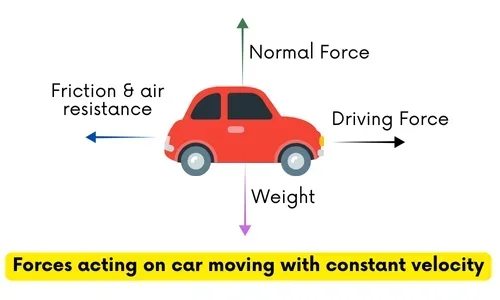
The main force is the electric force from the electric field. This force pushes or pulls the charged car along the track. Since the surface is frictionless, there is no friction force to oppose the motion. Gravity acts downward, but the track supports the car, so it does not affect horizontal motion.
How does the mass of the toy car affect its acceleration?
A heavier car accelerates more slowly than a lighter car under the same electric force. This follows Newton’s second law. Force equals mass times acceleration. So for the same charge and field strength, a lighter car will zoom ahead faster than a heavier one.
Can the toy car move forever on a frictionless track?
In the ideal frictionless model, yes. Once the electric field starts pushing the car, it keeps accelerating as long as the field is present. If the field is uniform, the car gains speed continuously. In real life, friction and air resistance would eventually slow it down.
What is the relationship between electric potential energy and kinetic energy in this setup?
As the car moves through the electric field, potential energy converts into kinetic energy. The total energy stays constant. When the car is at a point of high potential energy, it moves slowly. When it reaches a point of low potential energy, it moves fast. This is the conservation of energy in action.
Why is a frictionless track useful for learning physics?
A frictionless track removes energy loss from the problem. This lets you focus on the core relationship between electric force and motion. It is an idealized model that makes calculations cleaner. Once you understand the frictionless case, adding real-world complications becomes much easier.
How does Coulomb’s law apply to the toy car on the track?
Coulomb’s law determines the force between the charged car and any other nearby charges. The force depends on the size of both charges and the distance between them. On the frictionless track, this Coulomb force causes the car to accelerate. The closer the car gets to another charge, the stronger the force becomes.