Can Low Antifreeze Cause Overheating in Your Car Engine
Can low antifreeze cause overheating? Absolutely yes. When your antifreeze level drops too low, your engine loses its ability to regulate temperature, leading to dangerous overheating. Low antifreeze reduces the cooling system’s efficiency, causing your engine to run hotter than normal and potentially suffer severe damage. In this guide, you will learn exactly how low antifreeze triggers overheating, what warning signs to watch for, and how to fix and prevent the problem.
You are driving down the road, and suddenly your temperature gauge starts climbing. Panic sets in. You pull over, pop the hood, and wonder what went wrong. More often than not, the answer is simple: can low antifreeze cause overheating? The short answer is yes, and it happens more often than most drivers realize. Antifreeze, also known as coolant, plays a critical role in keeping your engine at a safe operating temperature. When the level drops, your engine is left unprotected, and overheating can happen fast.
Many car owners overlook their cooling system until something goes wrong. That is a big mistake. Your engine generates enormous amounts of heat, and without enough antifreeze, that heat has nowhere to go. The result can be anything from a minor inconvenience to a catastrophic engine failure. In this article, we will walk through everything you need to know about can low antifreeze cause overheating, including the warning signs, common causes, how to check your levels, and what to do if your engine is already running hot.
Understanding your cooling system does not require a mechanical degree. With a little basic knowledge, you can spot problems early, save money on repairs, and keep your car running smoothly. Let us dive in and explore how low antifreeze affects your engine and what you can do about it.
Key Takeaways
- Low antifreeze directly causes overheating: Antifreeze is the lifeblood of your engine’s cooling system, and when it runs low, heat builds up fast.
- Warning signs are easy to spot: The temperature gauge rising, steam from the hood, and a sweet smell are all red flags.
- Common causes include leaks and evaporation: Old hoses, a loose radiator cap, or a cracked reservoir can all drain your antifreeze.
- Topping off is simple and cheap: You can check and refill antifreeze at home with basic tools and a few minutes of your time.
- Ignoring low antifreeze leads to costly repairs: A blown head gasket or warped engine block can cost thousands if you delay.
- Prevention is easy: Regular coolant flushes and periodic checks keep your cooling system in top shape year-round.
📑 Table of Contents
- What Happens When Antifreeze Runs Low?
- The Cooling System Explained Simply
- Warning Signs Your Engine Is Overheating
- Common Causes of Low Antifreeze
- How to Check and Top Off Your Antifreeze
- Long-Term Damage from Ignoring Low Antifreeze
- When to See a Mechanic
- Preventing Overheating Through Proper Coolant Care
- Conclusion
What Happens When Antifreeze Runs Low?
Antifreeze does more than just keep your engine from freezing in winter. It also prevents overheating in summer and protects internal components from corrosion. When the antifreeze level drops, the cooling system cannot do its job properly. Here is what happens step by step.
Heat Builds Up Quickly
Your engine produces a tremendous amount of heat during normal operation. The cooling system circulates antifreeze through the engine block and radiator to absorb and dissipate that heat. When there is not enough antifreeze, the system cannot absorb heat efficiently. Temperatures inside the engine rise rapidly, and you may notice the gauge climbing toward the red zone.
Water Pump Strains
The water pump relies on coolant to lubricate and cool its internal components. With low antifreeze, the pump works harder and can overheat itself. This creates a vicious cycle: the pump struggles, circulation slows, and the engine heats up even more.
Thermostat Malfunctions
The thermostat regulates coolant flow based on engine temperature. When antifreeze levels are low, the thermostat may not open and close properly. This can cause uneven heating and inconsistent temperature readings, making it harder to diagnose the real problem.
So, can low antifreeze cause overheating through these mechanisms? Without a doubt. Each component in the cooling system depends on having enough coolant to function. Remove that support, and the entire system starts to fail.
The Cooling System Explained Simply
To understand can low antifreeze cause overheating, it helps to know how the cooling system works. Think of it like your body’s circulatory system. Just as blood carries heat away from your organs, coolant carries heat away from your engine.
Key Components of the Cooling System
- Radiator: The radiator releases heat from the coolant into the air. It is the main heat exchanger in your car.
- Water Pump: This pump pushes coolant through the engine and radiator, keeping it moving at all times.
- Thermostat: The thermostat opens and closes to regulate coolant flow based on engine temperature.
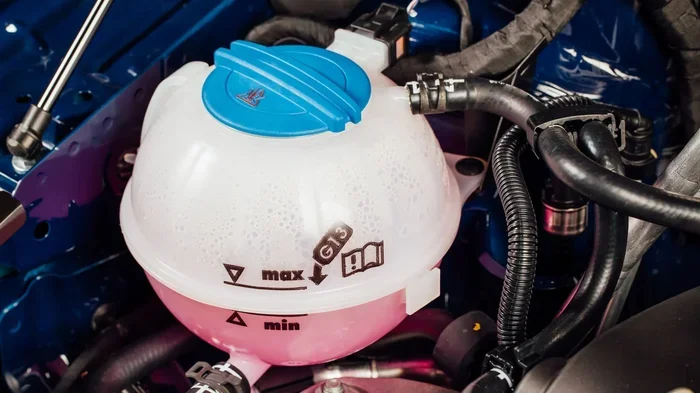
- Coolant Reservoir: This tank holds extra coolant and allows for expansion as the fluid heats up.
- Radiator Cap: The cap maintains pressure in the system, which raises the boiling point of the coolant.
- Hoses: Rubber hoses connect all the components and carry coolant throughout the system.
How Antifreeze Works
Antifreeze is a mixture of ethylene glycol or propylene glycol and water. This mixture has a higher boiling point and a lower freezing point than plain water. That means it can handle extreme temperatures without turning into steam or ice. When the antifreeze level drops, the remaining fluid may not have the right concentration to protect your engine in all conditions.
A common question we hear is: does the type of antifreeze matter? Yes, it does. Different vehicles require different types of coolant, such as IAT, OAT, or HOAT formulations. Using the wrong type can cause corrosion and reduce cooling efficiency. Always check your owner’s manual for the recommended coolant type.
Warning Signs Your Engine Is Overheating
Spotting the signs of overheating early can save you from expensive repairs. Here are the most common warning signals that your engine is running too hot, often linked to can low antifreeze cause overheating.
Temperature Gauge Rising
The most obvious sign is the temperature gauge on your dashboard climbing toward the red zone. If you notice the needle rising steadily while driving, pull over safely and turn off the engine. Continuing to drive with an overheating engine can cause permanent damage.
Steam or Smoke from the Hood
If you see steam or smoke coming from under the hood, your coolant is likely boiling. This happens when there is not enough antifreeze to absorb heat. The coolant turns to steam, and pressure builds up inside the system. Never open the radiator cap when the engine is hot, as the pressurized steam can cause serious burns.
Sweet Smell Near the Engine
A sweet, syrupy smell around your engine often indicates a coolant leak. Antifreeze has a distinct odor that is hard to mistake. If you notice this smell, check your antifreeze level and look for puddles under your car.
Heater Blowing Cold Air
Your car’s heater actually uses hot coolant to warm the cabin. If the heater suddenly blows cold air, it could mean the coolant level is too low to circulate through the heater core. This is one of the earliest and most overlooked signs of a cooling system problem.
Coolant Leaks Under the Car
Puddles of colored fluid under your car are a clear sign of a leak. Coolant can be green, orange, pink, or blue depending on the type. If you see a puddle and your engine is overheating, low antifreeze is very likely the cause.
If you notice any of these signs, do not ignore them. Can low antifreeze cause overheating that leads to a breakdown on the highway? Yes, and it can happen faster than you think.
Common Causes of Low Antifreeze
Understanding why antifreeze levels drop is essential for prevention. Here are the most common reasons your coolant level may be low.
Coolant Leaks
Leaks are the number one cause of low antifreeze. Leaks can occur in many places, including the radiator, hoses, water pump, heater core, and head gasket. Even a small leak can drain your coolant over time. If you find a puddle of colored fluid under your car, have a mechanic inspect the cooling system as soon as possible.
Evaporation Over Time
Antifreeze can evaporate slowly through the radiator cap or tiny cracks in hoses. Older vehicles are especially prone to this. If you have not checked your coolant level in a while, it may have simply evaporated over months of driving.
Blown Head Gasket
A blown head gasket is a serious issue that can cause coolant to leak into the combustion chamber. This results in white exhaust smoke, overheating, and a rapid drop in antifreeze level. A head gasket repair is expensive, so catching low antifreeze early can help you avoid this scenario.
Faulty Radiator Cap
The radiator cap maintains pressure in the cooling system. If the cap is worn or damaged, it can allow coolant to escape through the overflow hose. A simple and inexpensive replacement can often fix this problem.
Cracked Coolant Reservoir
The coolant reservoir tank can crack over time due to heat exposure and age. A cracked reservoir will leak coolant slowly, and you may not notice until the level drops significantly.
Improper Coolant Mixture
Using the wrong ratio of antifreeze to water can cause problems. Too much water lowers the boiling point, making the coolant more likely to boil and evaporate. A 50/50 mixture of antifreeze and distilled water is the standard recommendation for most vehicles.
Figuring out can low antifreeze cause overheating starts with identifying the root cause of the low level. Once you know why the antifreeze dropped, you can take steps to fix it and prevent it from happening again.
How to Check and Top Off Your Antifreeze
Checking your antifreeze level is one of the easiest maintenance tasks you can do at home. It takes just a few minutes and can save you from a costly overheating repair.
Step-by-Step Guide to Checking Coolant Level
- Make sure the engine is cool. Never check coolant when the engine is hot. Pressurized coolant can spray out and cause burns.
- Locate the coolant reservoir. Look for the translucent plastic tank near the radiator. It usually has “MIN” and “MAX” markings on the side.
- Check the level. The coolant should be between the MIN and MAX lines. If it is below the MIN line, you need to add more.
- Inspect the color. Fresh coolant is bright and clear. If the coolant looks rusty, muddy, or has particles floating in it, it is time for a coolant flush.
- Top off with the correct coolant. Use the type recommended in your owner’s manual. You can mix pre-mixed coolant or mix concentrate with distilled water at a 50/50 ratio.
- Replace the cap securely. Make sure the reservoir cap is tightened properly to maintain system pressure.
Quick Tips for Antifreeze Maintenance
- Check your antifreeze level at least once a month.
- Always use distilled water when mixing coolant concentrate.
- Never mix different types of antifreeze unless you are sure they are compatible.
- Keep a spare bottle of coolant in your trunk for emergencies.
- Have a professional perform a coolant flush every 30,000 miles or as recommended by your manufacturer.
Regular checks are the best way to prevent the question of can low antifreeze cause overheating from becoming a real problem for you. A few minutes of maintenance each month can keep your engine running at the right temperature all year long.
Long-Term Damage from Ignoring Low Antifreeze
Ignoring low antifreeze is one of the most expensive mistakes a car owner can make. When your engine overheats repeatedly, the damage compounds over time. Here is what can go wrong if you do not address the issue.
Warped Cylinder Head
Excessive heat can warp the cylinder head, which sits on top of the engine block. A warped head prevents the engine from sealing properly, leading to loss of compression, misfires, and further overheating. Repairing or replacing a cylinder head can cost anywhere from $500 to $2,000 or more.
Blown Head Gasket
The head gasket seals the gap between the engine block and cylinder head. When the engine overheats, the gasket can fail, allowing coolant to leak into the cylinders and oil passages. A blown head gasket is one of the most expensive repairs, often costing $1,000 to $2,500 depending on the vehicle.
Cracked Engine Block
In severe cases, extreme overheating can crack the engine block. A cracked block means the engine needs to be replaced or rebuilt, which can cost several thousand dollars. This is the worst-case scenario and is entirely preventable with proper coolant maintenance.
Damaged Water Pump
The water pump relies on coolant for lubrication. Running it with low antifreeze causes the internal bearings and seals to wear out prematurely. A failed water pump will stop coolant circulation entirely, leading to rapid overheating.
Radiator Damage
Overheating can cause the radiator to develop leaks or internal blockages. A damaged radiator cannot dissipate heat effectively, which perpetuates the overheating cycle. Replacing a radiator typically costs between $300 and $900.
The takeaway is clear: can low antifreeze cause overheating that leads to serious, long-term engine damage? Absolutely. The cost of checking and maintaining your antifreeze level is a tiny fraction of the cost of repairing heat-related engine damage.
When to See a Mechanic
While topping off antifreeze is something you can do yourself, some situations require professional help. If you notice any of the following, it is time to visit a mechanic.
- You are frequently losing coolant despite topping it off.
- Your temperature gauge fluctuates unpredictably.
- You see white smoke coming from the exhaust.
- There is a persistent sweet smell you cannot locate.
- The coolant appears dark, oily, or has a sludgy texture.
- You hear grinding or knocking noises from the engine.
These symptoms often point to deeper issues like a head gasket failure, internal leak, or water pump breakdown. A mechanic can perform a pressure test on the cooling system to find hidden leaks and assess the overall health of your engine.
Remember, can low antifreeze cause overheating is not just a question about fluid levels. It is a question about the health of your entire engine. Addressing the problem early saves time, money, and stress.
Preventing Overheating Through Proper Coolant Care
Prevention is always better than cure, and this holds true for your cooling system. Here are simple steps you can take to keep your antifreeze at the right level and your engine running cool.
Follow the Manufacturer’s Maintenance Schedule
Your vehicle’s owner manual includes a recommended maintenance schedule. This schedule covers coolant flushes, hose inspections, and radiator checks. Following it keeps your cooling system in top condition and helps you avoid the question of can low antifreeze cause overheating in the first place.
Inspect Hoses and Connections Regularly
Rubber hoses degrade over time, becoming brittle and prone to cracks. Inspect them every few months for signs of wear, such as bulging, cracking, or soft spots. Replace any hose that looks damaged before it fails.
Keep Your Radiator Clean
Debris like leaves, bugs, and dirt can accumulate on the front of the radiator, blocking airflow and reducing its ability to cool the antifreeze. Rinse the radiator with a gentle stream of water during car washes to keep it clean.
Monitor Your Temperature Gauge
Make it a habit to glance at your temperature gauge while driving. If you notice any upward trend, pull over and check the coolant level. Catching a problem early can prevent a small issue from becoming a big one.
Use High-Quality Coolant
Not all antifreeze products are created equal. Using a high-quality coolant that meets your vehicle’s specifications ensures better protection against heat, corrosion, and freezing. Look for coolants that meet the ASTM D3306 or D4985 standards.
Taking these preventive steps means you rarely have to worry about can low antifreeze cause overheating. A little attention goes a long way toward keeping your engine healthy and your drives worry-free.
Conclusion
The answer to can low antifreeze cause overheating is a resounding yes. Low antifreeze strips your engine of its ability to regulate temperature, leading to a chain of problems that can range from minor inconvenience to catastrophic engine failure. From heat buildup and water pump strain to warped cylinder heads and blown head gaskets, the damage caused by overheating is extensive and expensive.
The good news is that preventing this problem is simple. Regularly check your antifreeze level, top it off as needed, and follow your vehicle’s maintenance schedule. Pay attention to warning signs like a rising temperature gauge, steam from the hood, or a sweet smell near the engine. These small actions can save you thousands of dollars in repairs and keep your car running reliably for years to come.
Your engine works hard for you every day. Giving it the care it needs, starting with proper antifreeze levels, is the least you can do. Stay proactive, stay informed, and keep your engine cool. Your car will thank you for it.
Frequently Asked Questions
What happens if I drive with low antifreeze?
Driving with low antifreeze puts your engine at serious risk of overheating. Without enough coolant, the engine cannot dissipate heat properly, which can lead to warped cylinder heads, blown head gaskets, and even a cracked engine block. If you notice your antifreeze level is low, top it off immediately and have the cooling system inspected for leaks.
How do I know if my antifreeze is low?
The most common signs of low antifreeze include a rising temperature gauge, steam or smoke from the hood, a sweet smell near the engine, and coolant puddles under the car. You can also check the coolant reservoir tank, which has MIN and MAX markings. If the level is below the MIN line, your antifreeze is low and needs to be topped off.
Can low antifreeze damage the engine even if it does not overheat?
Yes, it can. Even if the engine does not visibly overheat, low antifreeze can cause increased friction, corrosion, and premature wear on internal components like the water pump and thermostat. Over time, this leads to reduced engine efficiency and costly repairs. Always maintain the proper antifreeze level to protect your engine.
How often should I check my antifreeze level?
You should check your antifreeze level at least once a month and before any long road trips. It is also a good idea to check it after any period of extreme weather, as hot temperatures can increase coolant evaporation. Regular checks help you catch leaks early and prevent overheating problems.
What type of antifreeze should I use?
The type of antifreeze you need depends on your vehicle’s make, model, and year. Common types include IAT (Inorganic Acid Technology), OAT (Organic Acid Technology), and HOAT (Hybrid Organic Acid Technology). Always refer to your owner’s manual for the recommended coolant type, and never mix different types unless you are sure they are compatible.
Is it safe to add antifreeze to a hot engine?
No, it is not safe. Adding antifreeze to a hot engine can cause pressurized coolant to spray out and cause severe burns. Always wait for the engine to cool down completely before opening the radiator cap or coolant reservoir. If you are stranded and must add coolant, wait at least 30 minutes for the engine to cool.