What Is the Heaviest Part of a Forklift and Why It Matters
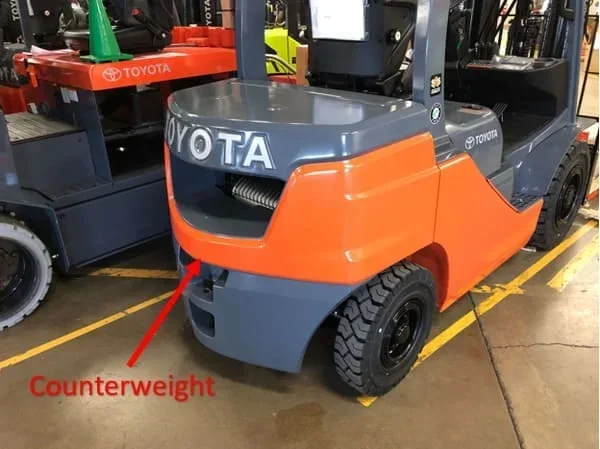
The heaviest part of a forklift is typically the counterweight, a massive block of cast iron or steel mounted at the rear of the truck. This component exists to balance the weight of loads lifted at the front. Understanding forklift weight distribution is essential for safe operation, stability, and preventing dangerous tipping accidents.
Have you ever wondered what makes a forklift so heavy? Or why the back end of these machines looks so much bulkier than the front? The answer comes down to one key component. The heaviest part of a forklift plays a huge role in how the machine works. It keeps the truck stable. It prevents tipping. And it allows operators to lift tons of cargo safely.
In this guide, we will break down exactly what is the heaviest part of a forklift, why it matters, and how different forklift types compare. Whether you operate a forklift daily or are just curious about industrial equipment, this article covers everything you need to know. We will look at the design, the physics, and the safety side of things. By the end, you will have a clear picture of why forklift weight matters so much.
Key Takeaways
- The counterweight is the heaviest single component on most forklifts, often weighing several thousand pounds.
- Forklift weight distribution keeps the truck balanced when lifting heavy loads at the front.
- Different forklift types have different heaviest parts based on their design and power source.
- Understanding the balance point helps operators avoid tipping accidents and workplace injuries.
- Regular maintenance of heavy components like the rear axle and mast improves safety and longevity.
- Load capacity ratings are directly tied to the counterweight and overall forklift design.
- Operator training should always include lessons on forklift stability and weight limits.
📑 Table of Contents
The Counterweight: The Core Heavy Component
When we talk about what is the heaviest part of a forklift, the answer is almost always the counterweight. This is a large, dense block of metal attached to the rear of the forklift chassis. It is usually made of cast iron or steel. Its job is simple but critical. It balances the weight of heavy loads sitting on the forks at the front of the truck.
Without a counterweight, a forklift would tip forward the moment you lifted a heavy pallet. Think of it like a seesaw. The load on the front is one side. The counterweight on the back is the other side. The whole forklift design revolves around keeping these two forces in balance.
How the Counterweight Works in Practice
Here is a simple way to think about it. Imagine you are holding a broomstick at the center. If you put a heavy bag on one end, that end drops. The counterweight works the same way on a forklift. When you pick up a 5,000-pound pallet, the front of the truck wants to dive down. The forklift counterweight at the back keeps the rear wheels planted firmly on the ground.
The size of the counterweight depends on the forklift’s rated capacity. A small warehouse forklift with a 3,000-pound capacity might have a counterweight of around 1,500 pounds. A heavy-duty counterbalanced forklift rated for 10,000 pounds could have a counterweight exceeding 4,000 pounds. The numbers vary, but the principle stays the same.
Counterweight vs. Load: The Balance Equation
The relationship between the counterweight and the load is a delicate equation. Engineers calculate the forklift balance point very carefully. They consider the distance from the front wheel to the load center. They also consider the distance from the rear wheel to the counterweight center.
Here are the key factors that go into this balance:
- Load weight: How heavy is the cargo being lifted?
- Load center distance: How far forward from the carriage is the load’s center of gravity?
- Counterweight mass: How much weight is at the rear of the truck?
- Forklift tare weight: What is the weight of the empty forklift itself?
When any of these factors change, the balance shifts. That is why overloading a forklift is so dangerous. It moves the center of gravity beyond the safe tipping line.
The Mast Assembly: A Close Second in Weight
While the counterweight usually takes the top spot, the forklift mast is no lightweight either. The mast is the tall assembly of rails and channels that rises up and down to lift loads. It contains the forklift carriage, the forks, and the hydraulic cylinders. Together, these parts add significant weight to the front of the truck.
On some forklift models, especially large counterbalanced trucks, the mast assembly can weigh over 1,000 pounds. That makes it one of the heaviest moving parts on the entire machine. It also means that the forklift weight distribution shifts as the mast rises and lowers.
Components of the Forklift Mast
The mast is more than just a pair of rails. It is a complex assembly with several heavy components. Let us look at what is inside:
- Outer rails: The vertical channels that guide the carriage up and down. These are thick steel beams.
- Inner rails: Smaller channels nested inside the outer rails for smooth movement.
- Carriage: The platform that holds the forks. It slides along the rails.
- Hydraulic cylinders: The pumps that push the mast upward using hydraulic fluid pressure.
- Chain assemblies: Heavy roller chains that connect the cylinder to the carriage.
- Forks: The prongs that slide under pallets. They are solid steel and surprisingly heavy.
All of these parts add up. The mast assembly alone can be the second-heaviest component on a forklift. And because it sits at the front, it affects how the truck handles during lifting operations.
Why the Heaviest Part Matters for Stability
Understanding what is the heaviest part of a forklift is not just trivia. It directly affects how the truck performs and how safe it is to operate. The heaviest part sets the forklift stability baseline. It determines how much load the truck can handle at different angles and heights.
Understanding Forklift Weight Distribution
Every forklift has a center of gravity. This is the point where the truck’s weight is evenly balanced in all directions. When the forklift is empty, the center of gravity sits close to the middle of the chassis. When you add a heavy load at the front, the center of gravity shifts forward.
The counterweight keeps the center of gravity from shifting too far. But there is a limit. If the load is too heavy or too far forward, the center of gravity moves past the tipping point. That is when the forklift flips forward. This is one of the most common and most dangerous forklift accidents in warehouses and construction sites.
Here is why this matters:
- A forward tip can crush anything in its path. That includes workers, walls, and equipment.
- A rear tip can happen too. This occurs when the mast is raised high and the truck moves forward on an incline.
- Side tipping happens on slopes or when turning too fast with a raised load.
The forklift rear axle and the counterweight work together to prevent these scenarios. They keep the truck grounded and stable during all types of lifting and moving operations.
The Role of the Rear Axle in Balance
The rear axle is another heavy component that works hand in hand with the counterweight. It supports the rear wheels and transfers the truck’s weight to the ground. A heavy rear axle adds to the overall stability of the forklift. It also helps absorb shocks when the truck moves over uneven surfaces.
Together, the counterweight, rear axle, and chassis form the forklift chassis. This is the backbone of the entire machine. Every other part hangs off this structure. If the chassis is not strong enough, the whole truck becomes unstable.
How Different Forklift Types Compare
Not all forklifts are built the same. The heaviest part of a forklift can vary depending on the type of truck, its power source, and its intended use. Let us compare a few common forklift types to see how their weight profiles differ.
| Forklift Type | Typical Counterweight Weight | Heaviest Part | Rated Capacity |
|---|---|---|---|
| Electric Counterbalanced | 1,200 – 2,500 lbs | Battery pack + counterweight | 3,000 – 8,000 lbs |
| IC Counterbalanced (Gas/Diesel) | 2,000 – 5,000 lbs | Cast iron counterweight | 3,000 – 15,000 lbs |
| Reach Truck | 800 – 1,800 lbs | Rear stabilization unit | 2,500 – 4,500 lbs |
| Telehandler | 1,500 – 4,000 lbs | Counterweight + boom | 5,000 – 12,000 lbs |
| Order Picker | 600 – 1,500 lbs | Counterweight + platform | 2,000 – 5,000 lbs |
As you can see from the comparison, the heaviest part shifts depending on the forklift type. For electric trucks, the battery pack often adds significant weight to the rear. This is one reason electric forklifts are naturally more stable than their internal combustion counterparts. The heavy battery acts like a built-in counterweight.
For internal combustion (IC) forklifts, the forklift engine weight is also a major factor. A diesel engine can weigh over 1,000 pounds on its own. But most IC forklifts still rely on a dedicated cast iron counterweight for balance.
Electric vs. Internal Combustion: Weight Differences
Electric forklifts tend to be lighter overall. Their counterweight is smaller because the heavy battery does much of the balancing work. This makes them ideal for indoor use where floor surfaces are smooth and the risk of tipping is lower.
Internal combustion forklifts are built for heavy-duty outdoor work. They need larger counterweights to handle bigger loads. The forklift rated capacity on these machines is often much higher. But with that capacity comes more weight and more risk if the truck is not operated correctly.
Expert Insight: Always check the forklift’s data plate before operating. It lists the rated capacity at specific load centers and mast heights. Ignoring this information is one of the fastest ways to create an unsafe situation on the job site.
Common Mistakes and Safety Tips
Knowing what is the heaviest part of a forklift is only half the battle. The other half is using that knowledge to operate safely. Many forklift accidents happen because operators do not understand how weight affects stability. Let us look at some common mistakes and how to avoid them.
Quick Tips for Safe Operation
- Always keep the load low when driving. Raised loads shift the center of gravity upward and make tipping much more likely.
- Never exceed the rated capacity. The counterweight is designed for a specific load limit. Going over it puts everyone at risk.
- Check the load center. A load that is off-center puts uneven stress on the mast and can cause the forklift to lean.
- Slow down on turns. Speed combined with a raised load is a recipe for a side tip-over.
- Inspect the counterweight regularly for cracks or damage. A compromised counterweight is a serious safety hazard.
- Wear your seatbelt. In the event of a tip-over, the seatbelt keeps you inside the operator cage. It is your best protection.
Common Mistakes to Avoid
Even experienced operators make mistakes when it comes to forklift weight and balance. Here are the ones to watch out for:
Mistake 1: Assuming all loads are evenly distributed. A pallet might look balanced but could have heavy items stacked on one side. Always check the load before lifting.
Mistake 2: Ignoring mast height during travel. Some operators raise the forks high for visibility while driving. This raises the center of gravity and reduces stability. Keep the forks close to the ground whenever possible.
Mistake 3: Operating on slopes without adjusting speed. Inclines put extra stress on the counterweight and the front axle. Go slow on any slope, and never turn on a grade.
Mistake 4: Using the wrong forklift for the job. A small warehouse forklift is not built to handle loads meant for a heavy-duty counterbalanced truck. Always match the machine to the task.
Expert Insight: The forklift balance point is not a fixed number. It changes with every load, every mast height, and every surface condition. The best operators constantly think about weight distribution. They make small adjustments to stay safe. This mindset separates good operators from great ones.
Maintenance Tips for Heavy Components
The heaviest parts of a forklift take the most punishment over time. Regular maintenance keeps them working properly and extends the life of the machine. Here is what to focus on:
- Inspect the counterweight for any signs of cracking or rust. A damaged counterweight can break free during operation.
- Check the rear axle bearings for wear. Heavy loads put a lot of stress on these components.
- Monitor the mast chains for stretch and tension. Worn chains can cause the carriage to drop unexpectedly.
- Lubricate all moving parts on the mast assembly. This reduces friction and prevents premature wear.
- Test the hydraulic system regularly. Leaks in the hydraulic cylinders can affect lifting performance and safety.
- Keep the chassis clean of debris. Built-up dirt and grease can hide damage and affect weight balance.
Taking care of the heavy components means taking care of the entire forklift. A well-maintained machine is safer, more efficient, and lasts much longer than one that is neglected.
Key Takeaways
- The counterweight is the heaviest part of most forklifts, and it exists to balance loads at the front of the truck.
- The mast assembly is the second-heaviest component and includes the carriage, chains, forks, and hydraulic cylinders.
- Forklift stability depends on weight distribution between the counterweight at the rear and the load at the front.
- Different forklift types have different heaviest parts based on design, power source, and capacity.
- Electric forklifts use the battery as part of the counterbalance, while IC forklifts rely on dedicated cast iron weights.
- Regular maintenance of heavy components like the counterweight, rear axle, and mast is essential for safe operation.
- Operator training should always cover weight distribution so that every driver understands how the machine stays balanced.
Conclusion
What is the heaviest part of a forklift? The answer is the counterweight, a heavy block of metal at the rear that keeps the truck stable when lifting loads. But the story does not stop there. The mast assembly, the rear axle, and the battery (on electric models) all play important roles in the overall forklift weight distribution and forklift stability.
Understanding these heavy components helps operators work more safely. It helps managers choose the right machine for the job. And it helps everyone in the workplace avoid dangerous tipping accidents. The next time you see a forklift, take a moment to notice the counterweight at the back. That heavy block is doing critical work every single shift.
Remember these key points. Respect the weight limits. Keep the load low when driving. Inspect heavy components regularly. And never skip operator training. When it comes to forklift safety, knowledge is the best counterweight of all.
Take what you have learned here and apply it on the job. Share this information with your team. The more everyone understands about forklift design and forklift balance, the safer your workplace becomes.
Frequently Asked Questions
What is the heaviest part of a forklift?
The counterweight is typically the heaviest single part on a forklift. It is a dense block of cast iron or steel mounted at the rear of the truck. Its job is to balance the weight of loads lifted at the front of the forks.
Why does the counterweight matter so much?
The counterweight prevents the forklift from tipping forward when lifting heavy loads. It works by shifting the center of gravity toward the rear wheels. Without it, even a moderately heavy load could cause the truck to flip forward.
How much does a forklift counterweight usually weigh?
The weight varies by forklift type and capacity. A small electric forklift might have a counterweight of around 1,200 pounds. A heavy-duty internal combustion forklift could have a counterweight exceeding 5,000 pounds. Always check the forklift’s data plate for specific details.
Can the heaviest part of a forklift change depending on the model?
Yes, it can. On electric forklifts, the battery pack often adds significant rear weight and acts as part of the counterbalance. On telehandlers, the boom and counterweight together form the heaviest assembly. The design of each forklift type affects which part is the heaviest.
What happens if a forklift is overloaded?
Overloading shifts the center of gravity past the safe tipping point. The forklift can tip forward, even at low speeds. This can cause serious injuries, equipment damage, and cargo loss. Always stay within the rated capacity listed on the data plate.
How can operators improve forklift stability?
Operators can improve stability by keeping loads low during travel, never exceeding the rated capacity, checking the load center before lifting, and slowing down on turns and slopes. Regular maintenance of the counterweight, mast, and rear axle also helps maintain safe operation.