How to Move a Forklift for Beginners Step by Step Guide
This guide walks you through how to move a forklift for beginners in simple, easy-to-follow steps. You will learn forklift controls, pre-operation checks, safe maneuvering, and common mistakes to avoid. By the end, you will feel more confident and prepared to operate a lift truck safely.
Have you ever watched someone glide a forklift through a warehouse and thought, “I want to do that”? Maybe you just started a new job in a warehouse or distribution center. Or perhaps you are curious about how material handling works behind the scenes. Either way, learning how to move a forklift for beginners does not have to be scary.
A forklift is a powerful machine. It can lift thousands of pounds with ease. But with that power comes real responsibility. Every year, thousands of workplace injuries happen because of forklift accidents. Many of these accidents are preventable with the right knowledge and training. This guide breaks everything down into simple steps you can follow right away.
We will cover everything from basic forklift controls to safe load handling. You will also learn about forklift stability, pre-operation inspections, and common mistakes beginners make. By the time you finish reading, you will have a solid foundation in forklift operation. Let us get started.
Key Takeaways
- Know Your Machine: Understanding forklift controls and parts is the first step to safe operation.
- Pre-Operation Checks Save Lives: Always inspect the forklift before starting the engine.
- Stability Matters: The forklift stability triangle keeps you and your load balanced.
- Load Capacity Is Not a Suggestion: Exceeding weight limits causes tip-overs and serious injuries.
- Maneuvering Requires Patience: Slow and steady wins the race when operating a forklift.
- Certification Matters: Proper forklift training and certification keep you legal and safe on the job.
- Practice Makes Perfect: Hands-on practice in a safe environment builds real confidence.
📑 Table of Contents
- Understanding Your Forklift Before You Move It
- Pre-Operation Inspection: Your Safety Checklist
- Forklift Controls and How They Work
- How to Move a Forklift: Step by Step
- Common Mistakes Beginners Make with Forklift Operation
- Forklift Safety Rules Every Beginner Must Know
- Maintenance Tips to Keep Your Forklift Running Safely
- Conclusion: Your Forklift Journey Starts Now
Understanding Your Forklift Before You Move It
Before you turn any key or touch any lever, you need to understand what you are working with. A forklift is not like a car. It steers from the rear. The back wheels do the turning. This makes the machine feel very different to drive. Many new operators find this surprising at first.
There are several types of forklifts you might encounter. A counterbalance forklift is the most common type. It has weight in the back to balance the load in the front. Reach trucks are designed for narrow aisles. Rough terrain forklifts work outdoors on uneven ground. Each type has its own controls and handling characteristics.
No matter which type you are using, the basic principles stay the same. You need to understand the machine before you move it. Take a few minutes to read the operator manual. Every forklift model is slightly different. The manual will tell you about your specific machine’s capacity, controls, and safety features.
The Forklift Stability Triangle
One of the most important concepts in forklift operation is the stability triangle. Imagine a triangle drawn between the two front wheels and the pivot point of the rear axle. This is your forklift stability triangle. As long as the combined center of gravity stays inside this triangle, the forklift remains stable.
When you pick up a load, the center of gravity shifts forward. If the load is too heavy or lifted too high, the center of gravity can move outside the triangle. This is when tip-overs happen. Understanding this concept will change the way you think about forklift safety forever.
Here are some quick tips to keep the center of gravity stable:
- Never raise the load while the forklift is moving.
- Keep the load low during travel.
- Do not add extra weight to the rear of the forklift to counterbalance.
- Know the weight of your load before you lift it.
- Drive slowly on slopes and inclines.
Pre-Operation Inspection: Your Safety Checklist
Every time you operate a forklift, you should perform a pre-operation inspection. This is not optional. It is a critical safety step that protects you and everyone around you. Most workplaces require this as part of forklift training and certification programs.
The pre-operation inspection happens in two parts. First, you do a walk-around check before starting the engine. Second, you do an operational check after the engine is running. Let us break both parts down.
Walk-Around Inspection
Start by walking around the entire forklift. Look for any visible damage. Check the tires for cracks, flat spots, or embedded debris. Inspect the forks for cracks, bends, or excessive wear. The forks are the part of the forklift that contacts the load, so they need to be in perfect condition.
Check the hydraulic hoses for leaks. Look at the mast for any damage or unusual noise. Make sure the overhead guard is secure. Verify that all lights, horns, and backup alarms are working. Check the fluid levels, including engine oil, hydraulic fluid, and coolant.
Operational Check
Once the engine is running, test all the controls. Try the steering, brakes, horn, lights, and lift mechanism. Listen for any unusual sounds. Feel for any vibration or roughness in the controls. Test the parking brake and service brake separately.
If anything feels off or looks wrong, do not operate the forklift. Report the issue to your supervisor immediately. A quick inspection can prevent a serious accident. Make this a habit every single time you get behind the wheel.
Forklift Controls and How They Work
Understanding the forklift controls is essential for safe operation. The basic controls are similar across most forklift models, but there may be slight differences. Let us go through each control one by one.
The steering wheel is on the front of the forklift. This feels different from a car because the rear wheels steer. The ignition switch starts the engine. The parking brake locks the wheels when the forklift is stationary.
The service brake slows or stops the forklift while driving. The parking brake holds the forklift in place when parked. The accelerator controls your speed. The brake pedal may serve as both the service brake and parking brake on some models.
The lift lever controls the mast. This is the mechanism that raises and lowers the forks. The tilt lever tilts the mast forward or backward. The steering controls move the forklift left and right. Some forklifts also have a horn button, light switches, and a parking brake lever.
Take time to familiarize yourself with every control before you start moving. Sit in the operator seat and press each button and lever. Know exactly what each one does. This simple step builds confidence and reduces errors during operation.
Understanding Load Capacity and the Data Plate
Every forklift has a data plate, also called a capacity plate. This plate tells you the maximum weight the forklift can safely lift at a specific load center. The load center is the distance from the front face of the forks to the center of the load.
For example, a forklift might have a rated capacity of 5,000 pounds at a 24-inch load center. If you lift a load that is off-center or has an irregular shape, the effective capacity drops. This is a concept many beginners overlook. Always check the data plate before you lift anything.
Exceeding the load capacity is one of the leading causes of forklift tip-overs. Never guess the weight of a load. Use a scale if you are unsure. When in doubt, choose a heavier forklift or split the load into smaller portions.
How to Move a Forklift: Step by Step
Now that you understand the basics, let us walk through the actual process of moving a forklift. This section breaks down the steps into a clear, easy-to-follow sequence. Follow these steps every time you operate a forklift.
Step 1: Put On Your Safety Gear
Before you touch the forklift, put on your personal protective equipment. This includes a hard hat, safety shoes, high-visibility vest, and gloves if required by your workplace. Some environments also require eye protection. Safety gear is your last line of defense if something goes wrong.
Step 2: Perform Your Pre-Operation Inspection
Complete the walk-around inspection and operational check we covered earlier. Make sure everything is in good working order. Document your inspection if your workplace requires it. This creates a record of due diligence.
Step 3: Start the Engine Safely
Sit in the operator seat and fasten your seatbelt. This is non-negotiable. A seatbelt can save your life in a tip-over situation. Start the engine and let it warm up for a few moments. Listen for any unusual sounds during startup.
Step 4: Check Your Surroundings
Before you move, look in all directions. Check for pedestrians, other vehicles, and obstacles. Use your mirrors and backup camera if your forklift has one. Sound the horn at crosswalks and blind corners. Always assume people may not see you.
Step 5: Start Moving Slowly
Release the parking brake and gently press the accelerator. Move at a walking pace to start. Forklifts are heavy machines and they do not stop as quickly as cars. Keep your speed low, especially in areas with foot traffic or tight corners.
Step 6: Steer Smoothly
Remember, the rear wheels do the steering. Turn the steering wheel smoothly and gradually. Avoid sharp, jerky turns. Sharp turns can shift the center of gravity and cause a tip-over. Take wide turns to keep the forklift stable.
Step 7: Use the Horn and Signals
Use the horn at intersections, blind spots, and doorways. Let others know you are approaching. Use your lights in low-visibility conditions. Good communication with coworkers prevents accidents in busy warehouses.
Step 8: Stop and Park Properly
When you reach your destination, lower the forks to the ground completely. Engage the parking brake. Shift the lever to neutral. Turn off the engine and remove the key. Never leave a running forklift unattended.
Common Mistakes Beginners Make with Forklift Operation
Everyone makes mistakes when they are learning. The key is to avoid the ones that cause the most harm. Here are the most common mistakes beginners make when learning how to move a forklift.
Raising the load while driving. This is extremely dangerous. A raised load raises the center of gravity and makes the forklift unstable. Always keep the load low during travel, about 4 to 6 inches above the ground.
Driving with an obstructed view. If the load is too tall and blocks your forward vision, you are driving blind. In this case, travel in reverse so you can see where you are going. Many forklift accidents happen because the operator could not see an obstacle or pedestrian.
Ignoring the load capacity. We mentioned this earlier, but it deserves repeating. Overloading a forklift is the number one cause of tip-overs. Respect the data plate and never exceed the rated capacity.
Skipping the pre-operation inspection. Some beginners think a quick visual check is enough. This is not good enough. A thorough inspection takes 10 to 15 minutes and can catch serious problems before they become accidents.
Speeding in the warehouse. Forklifts are not race cars. They are heavy industrial machines designed for precision, not speed. Driving too fast reduces your ability to react to obstacles and increases stopping distance dramatically.
Not wearing a seatbelt. This one is simple but critical. In the event of a tip-over, the seatbelt keeps you in the operator compartment. Without it, you are at serious risk of being thrown from the seat or crushed by the overhead guard.
Quick Tips for Beginners
- Practice in a quiet area first. Find an empty section of the warehouse or yard to get comfortable with the controls.
- Ask questions. If you are unsure about anything, ask your supervisor or a trained operator. No question is too small.
- Keep the forks low at all times when moving. This keeps your center of gravity stable.
- Never let anyone ride on the forks. Only approved personnel should ride in the operator compartment.
- Stay alert at all times. Fatigue and distraction are silent killers in forklift operation.
Forklift Safety Rules Every Beginner Must Know
Safety is the most important part of forklift operation. These rules are not suggestions. They are essential practices that protect your life and the lives of your coworkers.
Always maintain a clear line of sight. If the load blocks your view, travel in reverse. Keep a safe distance from edges, ramps, and loading docks. Never drive off a loading dock. Use wheel chocks when loading or unloading trucks.
Respect speed limits in your workplace. Most warehouses have posted speed limits for forklifts. Follow them strictly. Keep a safe following distance from other forklifts and vehicles. A loaded forklift can take much longer to stop than you expect.
Never operate a forklift under the influence of drugs or alcohol. This includes prescription medications that may impair your judgment or reaction time. If you are feeling drowsy, take a break. Fatigue slows your reaction time and impairs your decision-making.
Keep the workplace clean and organized. Spills, debris, and uneven floors create hazards for forklift operators. Report any unsafe conditions immediately. A clean workspace is a safe workspace.
Forklift Certification and Training Requirements
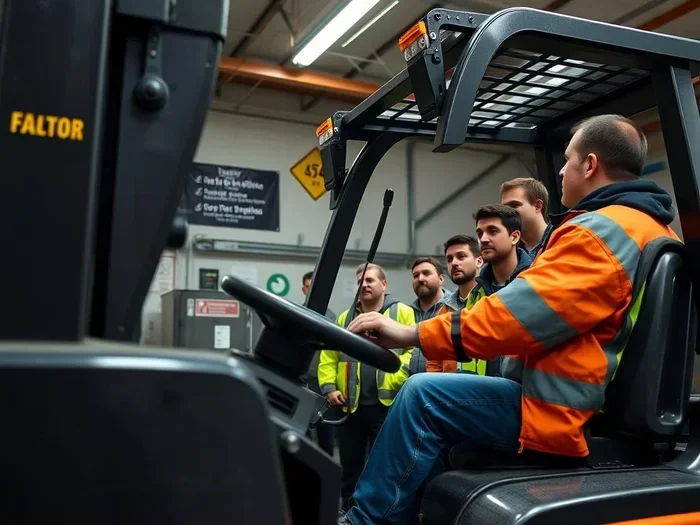
In most countries, forklift operators must be trained and certified. This is not just a formality. It is a legal requirement in many places. Forklift training covers safety rules, operation procedures, and hands-on practice.
Training typically includes classroom instruction and practical evaluation. You will learn about forklift stability, load handling, inspection procedures, and hazard recognition. After completing training, you receive a certification card that proves you are qualified to operate a forklift.
Certification is not a one-time event. Most employers require refresher training every three years. Some also require retraining after an accident or near-miss incident. Stay current with your training. It keeps you safe and keeps you employed.
Maintenance Tips to Keep Your Forklift Running Safely
A well-maintained forklift is a safe forklift. Regular maintenance keeps the machine running smoothly and prevents unexpected breakdowns. Here are some basic maintenance tips every operator should know.
- Check the fluid levels daily. This includes engine oil, hydraulic fluid, and coolant.
- Inspect the tires before each shift. Worn or damaged tires affect stability and braking.
- Keep the forks in good condition. Replace forks that are cracked, bent, or worn beyond safe limits.
- Clean the forklift regularly. Dirt and debris can hide damage and interfere with controls.
- Report any issues immediately. Do not try to fix serious problems yourself. Let the maintenance team handle it.
Following a regular maintenance schedule extends the life of your forklift. It also reduces the risk of mechanical failure during operation. A broken hydraulic line or a failed brake can turn a routine job into a dangerous situation.
Expert Insight on Forklift Maneuvering
Experienced forklift operators will tell you that maneuvering is an art. It takes practice to master smooth starts, stops, and turns. The key is to make all movements gradual and predictable. Jerky movements unsettle the load and destabilize the forklift.
When approaching a corner, slow down well in advance. Sound the horn to alert anyone who might be nearby. Take corners wide to avoid clipping doorframes or racking systems. Always look in the direction you are traveling. If you need to look behind you, use your mirrors and do not twist your body for extended periods.
On ramps and inclines, always travel with the load pointed upgrade. This means the forks point up the slope when going forward and down the slope when traveling in reverse. Never travel with a raised load on a ramp. This is one of the most dangerous things you can do with a forklift.
Conclusion: Your Forklift Journey Starts Now
Learning how to move a forklift for beginners is a journey that starts with knowledge and ends with practice. You now understand the basic controls, the importance of pre-operation inspections, the forklift stability triangle, and safe maneuvering techniques. You know the common mistakes to avoid and the safety rules that protect everyone on the job.
Remember, forklift operation is a skill that improves with experience. Take your time, stay patient, and always put safety first. Follow the steps in this guide every time you operate a forklift. Ask questions when you are unsure. Practice in safe, controlled environments until the controls feel natural.
Your forklift certification is your ticket to operating this powerful equipment safely and legally. Keep your training current, stay alert, and respect the machine. With the right knowledge and a cautious approach, you can become a confident and competent forklift operator. Start your journey today, and make safety your top priority every single shift.
Frequently Asked Questions
What is the first thing I should do before moving a forklift?
The first thing you should do is perform a pre-operation inspection. Walk around the forklift and check the tires, forks, hydraulic hoses, mast, lights, and horn. Then complete an operational check after starting the engine. This ensures the forklift is safe to operate before you move it.
Do I need a certification to operate a forklift?
Yes, in most places you need forklift certification to operate a forklift legally. Certification involves classroom training and hands-on evaluation. It teaches you safety rules, proper operation, and hazard recognition. Without certification, you are not only breaking the law but also putting yourself and others at risk.
Why does a forklift steer from the rear instead of the front?
Forklifts use rear steering because the rear wheels are the driven wheels. This design allows the forklift to pivot tightly in small spaces, which is essential for warehouse work. However, it also means the rear end swings wide during turns, which beginners must account for.
What is the forklift stability triangle and why does it matter?
The forklift stability triangle is an imaginary triangle formed by the two front wheels and the rear axle pivot point. As long as the combined center of gravity stays inside this triangle, the forklift remains stable. If the center of gravity moves outside the triangle, the forklift can tip over. Keeping the load low and within capacity helps maintain stability.
Can I raise the forklift forks while driving?
No, you should never raise the forks while the forklift is in motion. A raised load shifts the center of gravity upward and forward, making the forklift unstable. Always keep the forks low during travel, about 4 to 6 inches above the ground, and only raise them when the forklift is stationary and in the designated lifting area.
How often should I inspect my forklift?
You should perform a pre-operation inspection before every single shift. This is a quick but thorough check of the forklift’s condition. In addition, follow your workplace’s scheduled maintenance plan for deeper inspections and servicing. Regular inspections catch small problems before they become serious safety hazards.