At What Speed Can Cruise Control Be Activated Safely
You can typically activate cruise control at speeds between 25 and 30 mph, though this varies by vehicle and system type. Knowing the correct activation speed helps you drive safer and more comfortably on highways and open roads. This guide covers the exact speeds, system types, and practical tips for every driver.
Have you ever wondered at what speed cruise control can be activated safely? It is a question many drivers ask, especially when they first get behind the wheel of a new car. The answer is not always the same for every vehicle. Different cars, different systems, and different road conditions all play a role.
Understanding cruise control activation speed is essential for safe and comfortable driving. Whether you are planning a long road trip or just commuting on the highway, knowing when and how to use cruise control makes a big difference. In this guide, we will walk you through everything you need to know about setting cruise control the right way.
We will cover the exact speeds, the different types of systems, and practical tips that apply to almost any vehicle. By the end, you will feel confident about using your car’s cruise control features safely and effectively. Let us dive in.
Key Takeaways
- Standard cruise control activates at 25-30 mph: Most vehicles require this minimum speed before you can set cruise control.
- Adaptive cruise control may work at lower speeds: Some ACC systems can function at a complete stop or very low speeds in traffic.
- Always check your owner’s manual: Every vehicle has different speed thresholds and activation rules.
- Never use cruise control in heavy traffic or bad weather: Safety should always come first when road conditions are unpredictable.
- Deactivating and resuming cruise control is simple: Learn the button functions to stay in control on the road.
- Speed limiter vs. cruise control matters: These are two different systems with distinct purposes and activation rules.
📑 Table of Contents
- What Is Cruise Control and How Does It Work?
- At What Speed Can Cruise Control Be Activated?
- Why Activation Speed Matters for Safety
- How to Activate Cruise Control Properly
- Common Mistakes Drivers Make With Cruise Control
- Expert Tips for Using Cruise Control Safely
- How Different Vehicle Types Handle Cruise Control Activation
- Key Takeaways
- Conclusion
What Is Cruise Control and How Does It Work?
Before we talk about speeds, let us quickly cover what cruise control actually is. Cruise control is a driving assist technology that maintains your vehicle’s speed without you needing to keep your foot on the gas pedal. It uses the vehicle speed sensor and throttle control to hold a steady pace.
You set a desired speed, and the system takes over. It is especially helpful on long highway drives where you want to reduce fatigue. The system works by sending signals to the engine management unit, which adjusts fuel flow to maintain the set speed.
How the System Activates
Most cruise control systems have a simple activation process. You press an on or set button, usually located on the steering wheel or stalk. Once the car reaches the minimum speed threshold, you can set the cruise control and take your foot off the accelerator.
The system then monitors your speed and makes small adjustments to keep you at the target. If you need to slow down, you can tap the brake pedal, which temporarily pauses the system. This is important to know because it affects how and when you can use cruise control safely.
At What Speed Can Cruise Control Be Activated?
This is the core question, and the answer depends on several factors. Let us break it down by vehicle type and system category so you know exactly what to expect.
Standard Cruise Control Activation Speed
For most traditional vehicles, the standard cruise control activates at around 25 to 30 miles per hour. This is the general rule across most car brands, including Toyota, Honda, Ford, and Chevrolet. However, some vehicles may require a slightly higher speed, such as 35 mph.
The reason for this minimum speed is safety. At lower speeds, you need more immediate control over your throttle and braking. Automatic speed regulation through cruise control is designed for steady, predictable driving conditions, which typically means roads with consistent flow.
Here are some common activation speed ranges by vehicle category:
- Sedans and compact cars: Usually 25 to 30 mph
- SUVs and trucks: Typically 25 to 35 mph
- Luxury vehicles: Often 20 to 30 mph, depending on the model
- Older vehicles: May require 30 mph or higher
Always refer to your vehicle’s owner manual for the exact specifications. The manual will list the precise minimum speed for cruise control activation for your specific make and model.
Adaptive Cruise Control Activation Speed
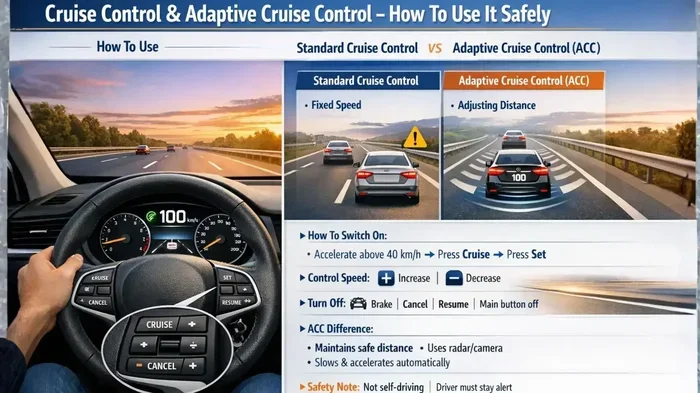
Adaptive cruise control, often called ACC, is a more advanced system. It uses radar sensors and cameras to detect vehicles ahead and adjust your speed accordingly. Adaptive cruise control can sometimes activate at lower speeds than standard cruise control.
Many modern ACC systems can work at speeds as low as 0 mph in stop-and-go traffic. This is a game-changer for drivers in congested areas. You can set the system to follow the car ahead of you, and it will slow down and speed up automatically.
However, there is still a minimum activation speed for setting a target speed on most ACC systems. This is usually around 20 to 25 mph. Below that, you may need to use the accelerator pedal manually until the traffic picks up enough speed.
Speed Limiter vs. Cruise Control
It is easy to confuse a speed limiter with cruise control, but they are different systems. A speed limiter prevents your vehicle from exceeding a certain speed. You can usually activate it at any speed, even when the car is stationary.
Cruise control, on the other hand, maintains a set speed and requires a minimum activation speed. Here is a quick comparison:
- Cruise control: Maintains a set speed. Requires 25-30 mph minimum to activate.
- Speed limiter: Caps your maximum speed. Can activate at any speed.
- Adaptive cruise control: Maintains set speed and adjusts for traffic. Activation varies by system.
Understanding this difference is important because many drivers use these terms interchangeably. They are not the same, and knowing which system your vehicle has helps you use it correctly and safely.
Why Activation Speed Matters for Safety
The activation speed for cruise control exists for a very good reason. Safety is the number one priority. Let us look at why this minimum speed threshold matters and what can go wrong if you try to use cruise control too early.
Risks of Activating Cruise Control Too Early
Using cruise control at very low speeds can be dangerous. In urban areas or residential streets, traffic is unpredictable. Cars stop suddenly, pedestrians cross, and cyclists appear without warning. Cruise control is not designed for these conditions.
If you activate cruise control below the recommended speed, the system may not engage properly. This can lead to unexpected acceleration or a failure to respond when you need it most. The system relies on a certain level of momentum to function correctly.
Here are some risks to keep in mind:
- Unexpected speed surges in low-speed zones
- Delayed response when you need to brake
- System confusion on winding or hilly roads
- Reduced driver awareness and engagement
When Cruise Control Is Safe to Use
Cruise control works best on open highways and roads with consistent traffic flow. When the speed limit is steady and there are few surprises, the system can help reduce driver fatigue and improve comfort.
Good conditions for cruise control include:
- Straight, well-lit highways
- Consistent speed limits with little variation
- Light to moderate traffic
- Clear weather with good visibility
- Familiar roads with predictable patterns
As a general rule, if you find yourself frequently braking or accelerating in short bursts, cruise control is not the right choice. Save it for stretches of road where you can maintain a steady pace for several minutes at a time.
How to Activate Cruise Control Properly
Now that you know the speeds, let us talk about the actual process. Activating cruise control correctly ensures the system works as intended and keeps you safe on the road.
Step-by-Step Activation Process
Follow these steps to activate cruise control safely. The exact button locations may vary, but the general process is similar across most vehicles.
- Accelerate to the minimum speed: Reach at least 25 to 30 mph on a clear road.
- Locate the cruise control buttons: These are usually on the steering wheel or the stalk behind the steering column.
- Press the on or set button: This turns the system on and sets your current speed.
- Confirm the indicator light: Most dashboards show a green or white cruise control icon when the system is active.
- Release the accelerator pedal: The vehicle will now maintain the set speed on its own.
Adjusting Speed While Cruise Control Is Active
Once cruise control is set, you can adjust the speed in small increments. Most vehicles have resume and set buttons that let you increase or decrease the speed by 1 to 5 mph per tap. Some newer models allow you to scroll through speeds using a joystick or touchscreen.
If you need to slow down significantly, tap the brake pedal. This temporarily deactivates the system. To resume, simply press the resume button once you are back at the desired speed.
Deactivating Cruise Control
Knowing how to turn off cruise control is just as important as knowing how to turn it on. You can deactivate the system by pressing the cancel button, tapping the brake pedal, or pressing the off button. Some vehicles also deactivate cruise control automatically when you press the clutch pedal in a manual transmission car.
Always stay alert even when cruise control is active. The system does not steer the vehicle, and it may not respond to all road hazards. You remain responsible for safe driving at all times.
Common Mistakes Drivers Make With Cruise Control
Even experienced drivers make mistakes with cruise control. Being aware of these common errors can help you avoid accidents and get the most out of your vehicle’s driving assist technology.
Using Cruise Control in Bad Weather
This is one of the most dangerous mistakes drivers make. Never use cruise control on wet, icy, or snowy roads. If your tires lose traction while cruise control is active, the system may continue to accelerate, which can cause a skid or loss of control.
Rain, fog, and ice change road conditions quickly. Your reaction time needs to be faster than what cruise control allows. Always disable cruise control when weather conditions are less than ideal.
Falling Asleep or Losing Focus
Some drivers mistakenly believe cruise control means they can take a break from driving. This is a dangerous misconception. Cruise control only manages your throttle. It does not steer, and it does not monitor the road for obstacles.
If you feel drowsy, pull over and take a break. No driving assist feature can replace an alert and attentive driver. Your safety depends on staying engaged with the road at all times.
Ignoring Road Conditions
Cruise control works best on flat, straight roads. On hilly terrain, the system may struggle to maintain speed on inclines and may overshoot on declines. In sharp curves, the system will not slow you down automatically unless you have adaptive cruise control with curve speed assist.
Always assess the road ahead and be ready to take manual control when needed. Road conditions should always influence whether you use cruise control or not.
Expert Tips for Using Cruise Control Safely
Getting the most out of your cruise control system comes down to a few smart habits. Here are some expert tips that every driver should know.
Match Your Speed to the Road
Do not set cruise control at a speed that exceeds the posted limit or feels unsafe for the road. The safe driving speed is always the first priority. Use cruise control as a convenience tool, not as a reason to drive faster.
Keep Your Hands on the Wheel
Even when cruise control is active, keep both hands on the steering wheel. This ensures you are ready to respond to any sudden changes in traffic or road conditions. Many modern vehicles even have sensors that detect hands-off driving and issue warnings.
Use Adaptive Cruise Control in Traffic
If your vehicle has adaptive cruise control, take advantage of it in stop-and-go traffic. The system can follow the car ahead of you and reduce the need for constant braking and accelerating. This is especially helpful during long commutes on congested highways.
Regularly Check Your System
Like any electronic system in your car, cruise control can malfunction. If you notice warning lights on your dashboard, unusual behavior, or inconsistent speed maintenance, have the system checked by a professional. Cruise control malfunction can lead to unexpected acceleration or failure to maintain speed.
Know Your Vehicle’s Specific Features
Every vehicle is different. Take the time to read your owner manual and understand exactly how your cruise control system works. Know the activation speed, the button functions, and any special features your model offers. This small investment of time pays off in safety and confidence.
How Different Vehicle Types Handle Cruise Control Activation
The type of vehicle you drive affects how and when you can activate cruise control. Let us look at how different categories of vehicles handle this feature.
Sedans and Compact Cars
Most sedans and compact cars activate standard cruise control at 25 mph. These vehicles are lightweight and responsive, so the system engages quickly once you reach the minimum speed. Popular models like the Toyota Camry and Honda Accord offer reliable cruise control systems that work well on highways.
SUVs and Trucks
Larger vehicles like SUVs and trucks may require a slightly higher activation speed, typically around 30 to 35 mph. The extra weight and size mean the throttle response is slower, so the system needs a bit more momentum to maintain a steady speed effectively.
Electric and Hybrid Vehicles
Electric and hybrid vehicles often have very smooth cruise control systems. The instant torque from electric motors allows for precise speed maintenance. Many EV models, such as the Tesla Model 3, offer advanced cruise control features that can activate at very low speeds and even in traffic jams.
Luxury and Premium Vehicles
High-end vehicles come with the most advanced cruise control and driver assistance features. Brands like Mercedes-Benz, BMW, and Audi offer systems that can handle highway merging, lane changes, and complex traffic scenarios. These premium systems often activate at lower speeds and provide a more seamless driving experience.
Key Takeaways
- Standard cruise control activates at 25-30 mph: Most vehicles require this minimum speed before you can set cruise control.
- Adaptive cruise control may work at lower speeds: Some ACC systems can function at a complete stop or very low speeds in traffic.
- Always check your owner’s manual: Every vehicle has different speed thresholds and activation rules.
- Never use cruise control in heavy traffic or bad weather: Safety should always come first when road conditions are unpredictable.
- Deactivating and resuming cruise control is simple: Learn the button functions to stay in control on the road.
- Speed limiter vs. cruise control matters: These are two different systems with distinct purposes and activation rules.
Conclusion
So, at what speed can cruise control be activated safely? For most vehicles, the answer is around 25 to 30 miles per hour. This is the sweet spot where the system engages properly and works as designed. Knowing this information helps you drive smarter, safer, and more comfortably on your daily commutes and long road trips alike.
Remember that adaptive cruise control offers more flexibility, especially in varying traffic conditions. Always match your use of cruise control to the road conditions, weather, and traffic flow. The system is a helpful tool, but it is not a replacement for attentive driving.
Take a moment to familiarize yourself with your vehicle’s cruise control features. Read the manual, practice in safe conditions, and build good habits. When you use cruise control the right way, it truly enhances your driving experience. Stay safe, stay informed, and enjoy the ride.
Frequently Asked Questions
Can you activate cruise control below 20 mph?
For most standard cruise control systems, no. The minimum activation speed is typically 25 to 30 mph. However, some adaptive cruise control systems can function at lower speeds or even at a complete stop in stop-and-go traffic. Always check your vehicle’s manual for specific details.
What happens if you set cruise control too fast?
If you set cruise control at a speed above what is safe for the road, you risk speeding and losing control. The system will maintain the set speed regardless of road conditions, which can be dangerous on curves, hills, or in heavy traffic. Always set a speed that matches the posted limit and current road conditions.
Does cruise control work on hilly roads?
Standard cruise control can struggle on hilly terrain. On inclines, the system may not provide enough power to maintain speed. On declines, it may allow the vehicle to pick up speed. Adaptive cruise control handles hills better, but you should still be ready to take manual control when needed.
Can cruise control cause a car to accelerate unexpectedly?
In rare cases, a cruise control malfunction can cause unintended acceleration. This is usually due to a faulty vehicle speed sensor, throttle issue, or electronic glitch. If you experience unexpected acceleration, tap the brake pedal to disengage the system immediately and have your vehicle inspected.
Is it illegal to use cruise control in all 50 states?
No, it is not illegal to use cruise control in any U.S. state. However, you are always responsible for maintaining a safe speed and staying in control of your vehicle. If cruise control causes you to exceed the speed limit or drives unsafely, you can be held liable for any resulting violations or accidents.
How do I know if my car has adaptive cruise control?
Check your vehicle’s manual or look for an ACC symbol on the dashboard, which usually looks like a radar dish. Adaptive cruise control is more common in newer vehicles and often comes as part of a driver assistance package. Your dealer can also confirm which system your vehicle has.