How Many Catalytic Converters Does a Dodge Ram 1500 Have
A Dodge Ram 1500 typically has two catalytic converters, one for each exhaust bank on the V8 or V6 engine. The exact number depends on your engine type, model year, and whether you drive a gasoline or diesel version. Understanding your truck’s exhaust system setup helps with maintenance, emissions testing, and avoiding costly repairs.
Let’s talk about something every Dodge Ram 1500 owner should know. How many catalytic converters does a Dodge Ram 1500 have? It is a simple question, but the answer depends on a few key factors. Your engine type, model year, and trim level all play a role. Most Ram 1500 trucks come with two catalytic converters. These small but mighty devices do a big job. They clean up the exhaust gases your engine produces before they leave the tailpipe. Without them, your truck would fail emissions tests and pollute the air. In this guide, we will break down everything you need to know. You will learn about converter locations, replacement costs, and warning signs of failure. Let’s dive in.
The catalytic converter is a critical part of your truck’s exhaust system. It sits between the exhaust manifold and the muffler. Its job is to reduce harmful emissions. Inside the converter, chemical reactions turn toxic gases into less harmful ones. This process keeps your Ram 1500 running clean and legal on the road. Knowing how many converters your truck has helps with maintenance, repairs, and even theft prevention. Whether you own a 2010 model or a brand-new 2024 Ram 1500, this guide covers it all.
Key Takeaways
- Two catalytic converters: Most Dodge Ram 1500 models come with two converters, one per exhaust bank.
- Engine type matters: Gasoline and diesel Ram 1500s have different exhaust setups and converter configurations.
- Location varies: The converters sit close to the exhaust manifold, near the front of the truck.
- Replacement costs are high: Expect to pay several hundred to over a thousand dollars per converter.
- Theft is a real risk: Ram 1500 catalytic converters are targeted by thieves due to precious metals inside.
- Warning signs exist: Check engine lights, rattling noises, and poor fuel economy signal potential converter issues.
- Regular maintenance helps: Proper care extends the life of your converters and keeps emissions in check.
📑 Table of Contents
- How Many Catalytic Converters Does a Dodge Ram 1500 Have
- Understanding the Exhaust System of a Dodge Ram 1500
- Gasoline vs Diesel: Different Converter Setups
- Signs Your Catalytic Converter Is Failing
- Replacement Cost and Maintenance Tips
- Protecting Your Catalytic Converters from Theft
- Common Mistakes to Avoid
- Final Thoughts
How Many Catalytic Converters Does a Dodge Ram 1500 Have
The short answer is two. Most Dodge Ram 1500 models come equipped with two catalytic converters. This setup applies to both the V6 and V8 engine options. Each converter handles one side of the engine’s exhaust output. Think of it like this. Your V8 engine has two banks of cylinders. Each bank produces its own stream of exhaust gases. A single catalytic converter treats each bank’s exhaust separately. This dual-converter design is standard across most model years.
However, there are exceptions. Some older models or special trims may differ. Diesel versions of the Ram 1500 also have a unique setup. We will explore those differences in detail below. For now, remember that two is the standard number for the majority of Ram 1500 trucks on the road today.
Why Two Converters and Not One?
You might wonder why manufacturers use two converters instead of a single large one. The answer comes down to efficiency. A single converter would need to be much larger to handle all the exhaust from a V8 engine. Two smaller converters work better. They heat up faster and operate more efficiently. This design also allows for better emissions control across both engine banks. Each converter can focus on treating the exhaust from its specific bank. The result is cleaner exhaust and better overall performance.
Additionally, two converters reduce back pressure on the engine. Back pressure happens when exhaust gases build up before exiting the tailpipe. Too much back pressure hurts engine performance. The dual-converter setup keeps things flowing smoothly. Your Ram 1500 stays powerful while still meeting strict emissions standards.
Understanding the Exhaust System of a Dodge Ram 1500
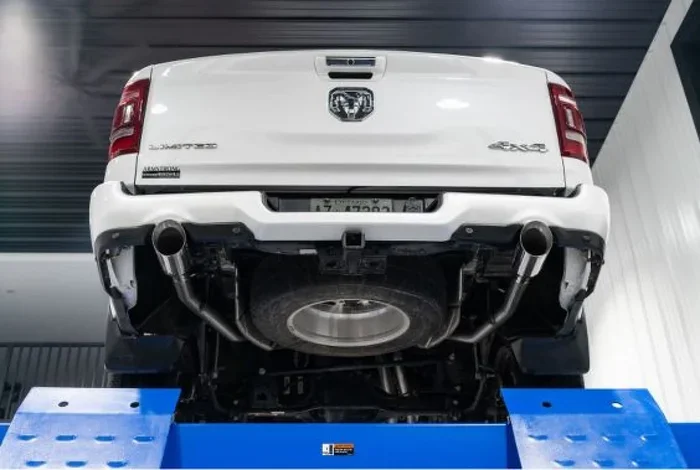
To fully understand your truck’s catalytic converters, you need to know the basics of the exhaust system. The system starts at the engine. Exhaust gases exit the combustion chambers through the exhaust valves. They flow into the exhaust manifold. From there, the gases travel into the catalytic converters. After treatment, the gases move through the resonator and muffler. Finally, they exit through the tailpipe.
Each component plays an important role. The exhaust manifold collects gases from the cylinders. The catalytic converter cleans those gases. The resonator reduces noise. The muffler further dampens sound. The tailpipe releases the treated exhaust into the atmosphere. In a Dodge Ram 1500, this system is designed for durability and performance. But it does require attention and care over time.
Where Are the Catalytic Converters Located?
On a Ram 1500, the catalytic converters sit close to the engine. They are positioned near the exhaust manifold, underneath the truck. You will find one converter on the driver’s side and one on the passenger side. This placement allows each converter to treat exhaust from its respective engine bank right away. The close proximity to the engine also helps the converters reach operating temperature quickly.
Locating the converters is important for maintenance and replacement. You may need to get under the truck to access them. In some model years, the converters are part of the exhaust manifold assembly. This design is called a “manifold-integrated converter.” It saves space and improves efficiency. Check your owner’s manual or consult a mechanic if you are unsure about your specific model’s setup.
Gasoline vs Diesel: Different Converter Setups
Not all Ram 1500 trucks are the same. The engine type changes the converter setup significantly. Let us break this down by fuel type.
Gasoline Ram 1500 Models
Most Ram 1500 trucks run on gasoline. These models use a standard two-converter setup. The 3.6-liter Pentastar V6 and the 5.7-liter HEMI V8 both use two catalytic converters. The 3.0-liter EcoDiesel V6 also uses two converters, though the design differs slightly. In gasoline models, the converters use a ceramic or metallic substrate coated with precious metals. These metals include platinum, palladium, and rhodium. They trigger the chemical reactions that clean the exhaust.
Gasoline converters are prone to certain issues over time. Carbon buildup can reduce their effectiveness. Oil consumption or coolant leaks can damage them prematurely. Regular maintenance of your engine helps protect the converters. Keep your engine tuned and address any leaks quickly.
Diesel Ram 1500 Models
The 3.0-liter EcoDiesel V6 is the diesel option for the Ram 1500. Diesel engines produce different exhaust gases than gasoline engines. They generate more nitrogen oxides and particulate matter. Because of this, diesel converters have a different design. They are built to handle higher temperatures and different chemical processes.
Diesel Ram 1500 models still use two catalytic converters in most cases. However, they also include additional emissions components. A diesel particulate filter, or DPF, traps soot particles. A selective catalytic reduction, or SCR, system uses diesel exhaust fluid to reduce nitrogen oxides. These systems work alongside the catalytic converters to meet strict diesel emissions standards. The exhaust system on a diesel Ram 1500 is more complex than on a gasoline model.
| Feature | Gasoline Ram 1500 | Diesel Ram 1500 |
|---|---|---|
| Number of Catalytic Converters | Two | Two |
| Engine Options | 3.6L V6, 5.7L HEMI V8 | 3.0L EcoDiesel V6 |
| Additional Emissions Components | None typically | DPF, SCR system |
| Converter Substrate | Ceramic or metallic | Metallic (high-temp) |
| Common Issues | Carbon buildup, thermal damage | DPF clogging, SCR fluid depletion |
| Replacement Cost Range | $500 – $1,200 per converter | $800 – $1,500 per converter |
Signs Your Catalytic Converter Is Failing
Knowing the warning signs of a failing converter saves you money and headaches. Catching problems early prevents more damage to your exhaust system. Here are the most common symptoms to watch for.
Check Engine Light
The check engine light is your first clue. When a converter stops working properly, the OBD-II scanner detects it. The most common code is P0420, which means catalyst system efficiency is below threshold. This code appears when the oxygen sensors detect that the converter is not cleaning exhaust gases effectively. Do not ignore this light. Get your truck diagnosed as soon as possible.
Rattling Noise
A rattling sound from underneath the truck is a red flag. Inside the converter, the ceramic substrate can crack or break apart. These broken pieces rattle around inside the housing. The noise is often louder when you start the truck cold. It may get worse when you accelerate. A rattling converter usually means internal damage. Replacement is often the only fix.
Poor Fuel Economy
A failing converter can hurt your fuel economy. When the converter becomes clogged, exhaust gases cannot flow freely. This creates back pressure on the engine. Your engine works harder to push exhaust out. The result is reduced fuel efficiency. If you notice you are filling up more often, a clogged converter could be the cause.
Failed Emissions Test
Your truck needs to pass emissions testing in many states. A bad converter will cause your truck to fail. The exhaust gases coming out of the tailpipe will contain too many pollutants. If your Ram 1500 fails an emissions test, a faulty converter is a common culprit. Have the converter inspected before replacing other parts.
Reduced Engine Performance
A severely clogged converter restricts exhaust flow. This leads to a noticeable loss of power. Your truck may feel sluggish or hesitate when you press the accelerator. In extreme cases, the engine may stall. These symptoms often get worse at higher speeds. If your truck feels weak and the check engine light is on, suspect the converter.
Quick Tips for Converter Health
- Use high-quality fuel to reduce carbon buildup.
- Address engine misfires immediately. Unburned fuel damages converters.
- Keep up with regular oil changes to prevent oil contamination.
- Avoid prolonged idling, which can cause overheating.
- Use an OBD-II scanner to monitor converter efficiency regularly.
Replacement Cost and Maintenance Tips
Replacing a catalytic converter is not cheap. Understanding the costs and maintenance needs helps you plan ahead. Let us look at what to expect.
How Much Does It Cost to Replace a Converter?
The catalytic converter replacement cost varies based on several factors. The model year of your Ram 1500 matters. The engine type also affects the price. On average, expect to pay between $500 and $1,200 per converter for a gasoline model. Diesel converters tend to cost more, ranging from $800 to $1,500 each. Labor costs add another $100 to $300 per converter. So for a full replacement on a gasoline Ram 1500, you could pay $1,200 to $3,000 total.
Aftermarket converters cost less than OEM parts. But they may not last as long or meet emissions standards in your state. Always check local laws before installing an aftermarket converter. Some states require CARB-certified parts. Using non-compliant parts can lead to failed inspections and fines.
How Long Do Converters Last?
A well-maintained catalytic converter can last 100,000 miles or more. Some last the entire life of the truck. However, several factors shorten their lifespan. Engine misfires send unburned fuel into the converter. This causes overheating and damage. Oil or coolant leaks contaminate the substrate. Road debris can dent or puncture the converter housing. Driving habits also matter. Short trips that do not allow the converter to fully warm up can cause premature wear.
Maintenance Best Practices
You cannot really “maintain” a catalytic converter directly. But you can protect it through proper truck care. Keep your engine in good shape. Fix misfires, oil leaks, and coolant leaks promptly. Use the recommended fuel grade. Avoid towing beyond your truck’s capacity. These steps go a long way in preserving your converters and the entire exhaust system.
Protecting Your Catalytic Converters from Theft
Catalytic converter theft has become a serious problem across the country. Thieves target trucks like the Ram 1500 because the converters contain precious metals. Platinum, palladium, and rhodium are valuable on the black market. A stolen converter costs the owner hundreds or thousands of dollars to replace. It also leaves the truck illegal to drive.
How to Prevent Theft
Several steps can help protect your Ram 1500 from converter theft. Consider installing a converter anti-theft shield. These metal plates cover the converter and make it harder to cut. Welded anti-theft brackets are another option. They secure the converter to the frame, making removal difficult. Some owners engrave their VIN number on the converter. This helps police identify stolen parts and deters thieves.
Parking in well-lit areas reduces theft risk. Garages and secure lots are best. Security cameras and motion-sensor lights also deter criminals. Some insurance policies cover converter theft. Check your policy and consider adding comprehensive coverage if you do not have it already.
What to Do If Your Converter Is Stolen
If your converter gets stolen, act quickly. File a police report right away. Take photos of the damage for your insurance claim. Contact your insurance company to start the claims process. Replace the converter as soon as possible. Driving without a converter is illegal in most states and can damage your engine. The truck will sound loud and run poorly without it.
Expert Insights
Mechanics who work on Ram 1500 trucks daily recommend a proactive approach. “Inspect your exhaust system at every oil change,” says one certified technician. “Catching a small crack or loose bolt early prevents a full converter failure down the road. And if you live in an area with high theft rates, invest in an anti-theft device now. The cost is small compared to a stolen converter replacement.”
Common Mistakes to Avoid
Every truck owner makes mistakes sometimes. Here are common errors related to catalytic converters that you should avoid.
- Ignoring the check engine light: A glowing check engine light often points to converter problems. Delaying diagnosis makes the issue worse and more expensive.
- Using cheap fuel: Low-quality fuel causes carbon deposits. These deposits build up in the converter and reduce its efficiency over time.
- Skipping engine tune-ups: A misfiring engine sends raw fuel into the exhaust. This overheats and destroys the converter substrate.
- Buying the cheapest replacement: Ultra-cheap aftermarket converters may not last. They can also cause your truck to fail emissions tests. Invest in a quality part.
- Driving on a damaged converter: A cracked or leaking converter lets exhaust gases escape before treatment. This is bad for the environment and your wallet. Fix it promptly.
Final Thoughts
So, how many catalytic converters does a Dodge Ram 1500 have? The answer is almost always two. Whether you drive a gasoline V6, a V8 HEMI, or the diesel EcoDiesel, your truck relies on a pair of converters to keep emissions in check. These components work silently but play a huge role in your truck’s performance, legality, and environmental impact.
Taking care of your converters means taking care of your truck. Regular maintenance, prompt repairs, and theft prevention go a long way. Watch for warning signs like rattling noises, check engine lights, and poor fuel economy. Address problems early to avoid expensive replacements. Your Ram 1500 is a powerful, capable truck. Keep its exhaust system in top shape, and it will serve you well for many miles to come.
Now you have the knowledge to understand your truck’s catalytic converter setup. You know what to look for, what to expect, and how to protect your investment. Share this guide with fellow Ram 1500 owners. Knowledge is power, and a well-maintained truck is a reliable truck.
Frequently Asked Questions
Can a Dodge Ram 1500 run without a catalytic converter?
Technically, yes, but it is illegal in most states. Driving without a converter will cause your truck to fail emissions testing. It also increases harmful exhaust emissions. The truck may sound louder and run rougher without the converter in place.
How often should I replace the catalytic converters on my Ram 1500?
Most catalytic converters last 100,000 miles or more with proper care. You may never need to replace them if your truck stays in good condition. However, engine problems like misfires or oil leaks can shorten their lifespan significantly.
Is it legal to remove catalytic converters from a Dodge Ram 1500?
No, removing catalytic converters is illegal for street-driven vehicles in the United States. The Clean Air Act requires emissions control devices to remain intact. Violators can face heavy fines and failed inspections.
What is the P0420 code on a Ram 1500?
The P0420 code means the catalytic converter is not working efficiently. The oxygen sensors detect that exhaust gases are not being cleaned properly. This code usually indicates the converter needs inspection or replacement. It is one of the most common converter-related codes on the Ram 1500.
Are aftermarket catalytic converters worth it for a Ram 1500?
Aftermarket converters cost less than OEM parts, but quality varies. Some aftermarket converters meet or exceed OEM standards. Others are low-quality and fail quickly. Always choose a converter that is CARB-certified if required in your state. Check reviews and ratings before purchasing.
Does a cold weather affect catalytic converter performance?
Yes, cold weather can temporarily reduce converter efficiency. Converters need to reach a certain temperature to work properly. In cold climates, it takes longer for the converter to warm up. This is normal and usually not a cause for concern unless the converter never reaches operating temperature.
=== CONCLUSION ===
The Dodge Ram 1500 is a legendary truck, and its exhaust system is built to match. With two catalytic converters handling emissions for each engine bank, your truck stays clean, legal, and powerful. Understanding how these converters work, where they are located, and what signs of failure to watch for puts you ahead as an owner. Keep up with maintenance, protect against theft, and address issues early. Your Ram 1500 will reward you with years of reliable, efficient performance.