What Are the Three Pedals on a Forklift For Explained
The three pedals on a forklift serve distinct purposes: the brake pedal stops the machine safely, the accelerator pedal controls your speed, and the inching pedal allows for precise, slow movement in tight spaces. Understanding each pedal is essential for every forklift driver, whether you are new to the job or refreshing your skills. This guide breaks down each pedal function with clear, practical advice so you can operate your forklift with confidence and stay safe on the job every single day.
If you have ever wondered what are the three pedals on a forklift for, you are not alone. Many new forklift drivers feel confused the first time they see those three pedals under the dashboard. Each pedal has a specific job that keeps you safe and helps you control the machine. In this guide, we will break down forklift pedals one by one so you understand exactly how they work. By the end, you will feel confident about using forklift controls the right way every single time.
Forklifts are powerful machines used in warehouses, construction sites, and factories around the world. They lift heavy loads and move them from place to place with ease. But operating a forklift is not as simple as hopping in and driving. You need to understand every control, especially the pedals. Forklift pedals are the foot-operated controls that manage your speed, stopping power, and precision. Without proper knowledge, you could cause accidents or damage property. That is why learning about these three pedals is so important for anyone who operates industrial equipment daily.
Whether you are taking a forklift training course or just starting on the job, knowing what each pedal does can make a huge difference. This article will walk you through each pedal in detail. You will learn their functions, how to use them together, and common mistakes to avoid. Let us get started with a closer look at forklift operation and the role each pedal plays.
Key Takeaways
- Brake Pedal: Located on the left, this pedal stops or slows the forklift and is your primary safety control.
- Accelerator Pedal: In the middle, it controls your speed and should always be used with gentle, steady pressure.
- Inching Pedal: On the right, it allows for slow, precise movement perfect for tight spaces and delicate loads.
- Pedal Coordination: Using all three pedals together smoothly is the key to safe and efficient forklift operation.
- Regular Maintenance: Checking your pedals and brakes regularly prevents accidents and extends equipment life.
- Certification Matters: Proper forklift training and certification ensure you know how to use each pedal correctly.
- Avoid Common Mistakes: Do not ride the brake, slam the accelerator, or ignore the inching pedal for better safety and performance.
📑 Table of Contents
- Understanding the Three Pedals on a Forklift
- The Brake Pedal – Your First Line of Safety
- The Accelerator Pedal – Controlling Speed and Power
- The Inching Pedal – Precision Control for Tight Spaces
- Using All Three Pedals Together
- Common Mistakes Forklift Operators Make
- Tips for New Forklift Drivers
- Conclusion
Understanding the Three Pedals on a Forklift
Before we dive into each pedal, let us look at the big picture. Every forklift has three foot pedals on the floor. These pedals control braking, acceleration, and fine-tuning your movement. The layout might look different depending on the model, but the basic functions stay the same. Think of them like the pedals in a car, but with some key differences that make forklift operation unique.
Why Pedals Matter in Forklift Design
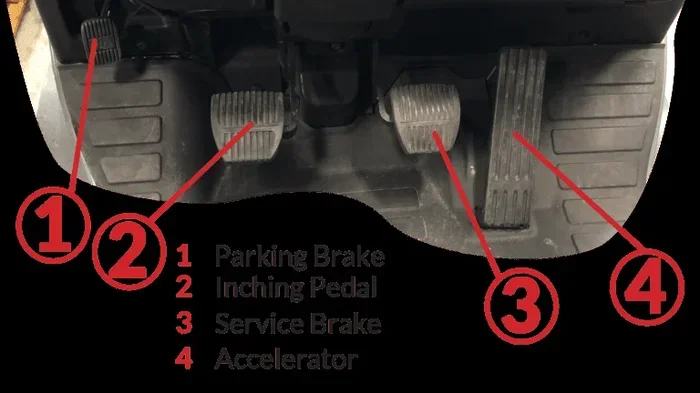
Forklift designers place the pedals in a specific order for a reason. The left pedal is usually the brake. The middle pedal is the accelerator. The right pedal is the inching pedal. This arrangement helps drivers operate the machine safely. You do not have to think too hard about which pedal to press. With practice, it becomes second nature.
The pedals also work together with the steering and hydraulic controls. Your hands manage the steering wheel and the levers. Your feet handle the three pedals. This division of labor makes forklift maneuvering much smoother. It also reduces the chance of errors during busy shifts when you are under pressure to move loads quickly.
The Three Pedals at a Glance
Here is a quick overview of what each pedal does:
- Brake Pedal (Left): Slows down or stops the forklift completely. This is your primary safety control.
- Accelerator Pedal (Middle): Controls the speed of the forklift. Use gentle pressure for smooth movement.
- Inching Pedal (Right): Allows for slow, precise movement while keeping the engine running at a steady pace.
Each of these pedal functions plays a vital role in daily operations. Let us now look at each one in detail so you fully understand how they work.
Comparison Table: The Three Forklift Pedals
| Pedal | Location | Primary Function | When to Use | Common Mistake |
|---|---|---|---|---|
| Brake Pedal | Left side | Stops or slows the forklift | Approaching stops, obstacles, parking | Riding the brake while driving |
| Accelerator Pedal | Middle | Controls speed and engine power | Moving between locations | Slamming the pedal for quick acceleration |
| Inching Pedal | Right side | Precision slow movement | Tight spaces, loading, stacking | Ignoring it and using only brake and accelerator |
This table gives you a quick reference for the three pedals. Keep it in mind as you read through the detailed sections below.
The Brake Pedal – Your First Line of Safety
The brake pedal is the most important pedal on any forklift. It is usually located on the far left side. When you press it, the forklift slows down or comes to a full stop. This pedal is all about safety and control. Every experienced forklift driver will tell you that the brake pedal is your best friend on the job.
How the Brake Pedal Works
When you step on the forklift brake pedal, it activates the braking system. Most forklifts use hydraulic brakes, similar to what you find in a car. The pressure from your foot sends fluid through the lines to the brake pads. These pads then grip the wheels to slow them down.
Forklifts can be heavy, especially when carrying a full load. A counterbalance forklift can weigh several tons. That is why the brake system needs to be strong and responsive. You should always test the brakes before starting your shift. A quick press of the pedal will tell you if the brakes feel firm and responsive. If they feel spongy or weak, report it immediately.
When to Use the Brake Pedal
You should use the brake pedal in many situations. Here are the most common ones:
- When approaching a stop sign or intersection in the warehouse
- When lowering a load to the ground
- When turning a corner at a slow speed
- When you notice an obstacle in your path
- When parking the forklift at the end of your shift
- When a pedestrian steps into your path unexpectedly
The brake pedal should always be your first response in an emergency. Train yourself to reach for it quickly. The faster you react, the safer you and your coworkers will be. Remember that forklift safety depends heavily on your ability to stop the machine when needed.
Brake Pedal Maintenance Tips
Taking care of your brake pedal extends its life and keeps you safe. Here are some simple forklift maintenance tips:
- Check the brake fluid level every week
- Listen for unusual sounds when pressing the pedal
- Make sure the pedal returns to its original position after you release it
- Report any spongy or loose feeling to your supervisor right away
- Have a professional inspect the brakes during regular service intervals
Good brake maintenance is a key part of forklift safety. Never ignore warning signs like squeaking or grinding sounds. A well-maintained brake pedal can prevent serious accidents.
The Accelerator Pedal – Controlling Speed and Power
The accelerator pedal sits in the middle of the three pedals. It controls how fast the forklift moves. Think of it like the gas pedal in a car. But on a forklift, you need to be much more careful with how much pressure you apply. Forklifts are not built for high speeds, and the accelerator pedal reflects that.
What the Accelerator Pedal Does
When you press the forklift accelerator pedal, you increase the engine speed. This makes the forklift move faster. The accelerator gives you control over your pace as you move through the warehouse or job site. Most forklifts operate at a walking pace, which is around 5 to 8 miles per hour.
The accelerator pedal lets you adjust within that safe range. You can go slow for tight spaces or speed up a bit for open areas. The key is to match your speed to the environment. A crowded warehouse needs slower speeds than an empty loading dock.
Smooth Acceleration Techniques
Learning to use the accelerator smoothly is a skill that takes practice. Here are some tips that help:
- Press the pedal gently rather than slamming it down
- Match your speed to the floor conditions and load weight
- Release the pedal gradually when you need to slow down
- Keep both hands on the steering wheel at all times
- Watch for pedestrians and other forklifts before increasing speed
- Reduce accelerator pressure on wet or uneven floors
Smooth acceleration reduces wear on the machine. It also keeps the load stable, which is especially important when you are carrying heavy materials. Jerky movements can cause the load to shift, which creates a dangerous situation for everyone nearby.
Common Errors with the Accelerator
New forklift drivers often make a few mistakes with the accelerator. Here are the most common ones:
- Pressing too hard and causing the forklift to lurch forward
- Forgetting to ease off the accelerator before turning
- Leaving the foot on the accelerator while braking
- Using the accelerator on uneven or slippery surfaces without reducing pressure
Avoiding these errors will make you a much better forklift driver. It also protects the people and goods around you. Remember that the goal is smooth, controlled movement at all times.
The Inching Pedal – Precision Control for Tight Spaces
The inching pedal is the one that confuses most new operators. It is usually on the right side and looks similar to a clutch pedal in a manual car. But it does something very different. This pedal allows you to move the forklift at a very slow speed while keeping the engine running at a higher RPM. It is essential for precision tasks.
What Is the Inching Pedal?
The forklift inching pedal disconnects the transmission from the engine. This lets you control the forklift’s movement without changing the engine speed. It is like having a separate control for precision tasks. When you press the inching pedal, the forklift moves forward or backward very slowly. You can barely crawl forward. This is perfect for situations where you need exact placement of the forks.
You can lower a load onto a narrow shelf without overshooting by using the inching pedal. It gives you the fine control that the brake and accelerator cannot provide on their own. Many experienced operators say the inching pedal is what separates a good driver from a great one.
How the Inching Pedal Helps You Maneuver
The inching pedal is a game-changer for forklift maneuvering. Here are some situations where it really shines:
- Loading and unloading trucks in tight dock areas
- Placing pallets on high shelves with precision
- Navigating narrow aisles in a warehouse
- Stacking materials on a hydraulic lift platform
- Moving through crowded work areas with pedestrians nearby
- Positioning the forklift exactly under a overhead storage rack
Without the inching pedal, you would have to constantly shift between forward and reverse. This wastes time and increases the risk of accidents. The inching pedal gives you smooth, continuous control over short distances.
When to Use the Inching Pedal
You should use the inching pedal whenever precision matters. Here are some clear guidelines:
- When you are within 10 feet of your target location
- When the floor is uneven or slippery
- When carrying an oversized or unstable load
- When working in areas with limited visibility
- When you need to make fine adjustments to the fork position
The inching pedal works best when combined with the brake and accelerator pedals. Together, they give you full control over the forklift’s movement. Practice using the inching pedal in a safe area until you feel comfortable with its response.
Using All Three Pedals Together
Using the three pedals together is where real skill comes in. Each pedal has its own job, but they all work as a team. Learning to coordinate them is the key to smooth and safe forklift operation. No single pedal does the job alone.
Coordinating Pedals for Smooth Operation
Here is how the three pedals work together in a typical scenario:
- Start by pressing the brake pedal to stop or slow down
- Release the brake and press the accelerator to move forward
- As you approach your target, lift off the accelerator
- Press the inching pedal for the final few feet of movement
- Use the brake pedal to make a final stop at the exact spot
This sequence might feel awkward at first. But with practice, it becomes automatic. The key is to stay relaxed and let your feet do the work. Tension in your legs will make it harder to control the pedals smoothly. Take deep breaths and stay calm while operating the forklift.
Real-World Scenarios
Let us look at a couple of real-world examples. Imagine you are moving a pallet of boxes across a warehouse. You start by accelerating to a comfortable speed. As you approach the aisle where you need to place the pallet, you ease off the accelerator. You press the inching pedal to creep forward. Then you use the brake pedal to stop exactly where you need to be. The whole process takes just a few seconds.
Now imagine you are loading a truck. The dock is narrow, and you need to back the forklift into the trailer. You use the brake pedal to stop, then the inching pedal to creep backward in small increments. The accelerator is used sparingly to maintain just enough momentum. This careful coordination keeps everyone safe and the load secure.
These scenarios show why understanding forklift controls is so important. Each pedal has a purpose, and using them together makes your job easier and safer. The more you practice coordinating all three pedals, the more natural it will become.
Common Mistakes Forklift Operators Make
Even experienced operators can fall into bad habits. Knowing the common mistakes helps you avoid them. Here are the top errors people make with forklift pedals.
Riding the Brake Pedal
One of the most common mistakes is resting your foot on the brake pedal while driving. This is called “riding the brake.” It causes unnecessary wear on the brake pads and rotors. It also confuses other workers around you because your brake lights stay on constantly. Always keep your foot off the brake pedal unless you need to slow down or stop. This simple habit will extend the life of your braking system and make your operation clearer to others.
Slamming the Accelerator
New operators sometimes press the accelerator too hard. This causes the forklift to lurch forward suddenly. It can shift the load and create an unstable situation. Always apply gentle pressure to the accelerator pedal. Smooth and steady wins the race. A sudden burst of speed is never worth the risk it creates.
Ignoring the Inching Pedal
Many drivers skip the inching pedal and try to use only the brake and accelerator. This leads to jerky movements and poor precision. The inching pedal exists for a reason. Use it whenever you need fine control over your forklift’s movement. Skipping this pedal means you are working harder and taking more risks than necessary.
Tips for New Forklift Drivers
If you are new to forklift operation, these tips will help you get started on the right foot and build strong habits from day one.
Practice Makes Perfect
The best way to master the three pedals is through practice. Find a quiet area in your warehouse where you can drive without distractions. Practice pressing each pedal separately. Then practice using them together. The more you practice, the more natural it will feel. Muscle memory is real, and it develops with repetition.
Ask your supervisor if you can get extra practice time. Many companies offer forklift training sessions for new hires. Take advantage of these opportunities. They build your confidence and your skills. You will also learn how to handle different floor surfaces, load weights, and tight spaces during these practice sessions.
Get Certified and Stay Safe
Operating a forklift requires proper forklift certification in most places. Do not try to operate a forklift without the right training. Certification programs teach you about pedal functions, safety rules, and emergency procedures. They also cover material handling best practices and warehouse equipment safety standards.
Stay up to date with your certification. Refresher courses are available and highly recommended. They keep your skills sharp and your knowledge current. Safety should always be your top priority when operating any heavy machinery. The three pedals are your main tools for controlling the forklift. Respect them, learn them, and use them correctly every single day.
Conclusion
Now you know what are the three pedals on a forklift for. The brake pedal keeps you safe by stopping the machine when needed. The accelerator pedal controls your speed and power as you move through the workspace. The inching pedal gives you precision for tight spaces and delicate placement tasks. Together, these three forklift pedals make the machine safe and effective for daily use in any material handling operation.
Understanding forklift operation starts with knowing your pedals. Take the time to practice and get comfortable with each one. Follow the tips in this guide and avoid the common mistakes we discussed. Your forklift training will pay off when you operate with confidence and care. Always remember that safety comes first. The pedals are your main tools for controlling the machine. Respect them, learn them, and use them correctly every single day. With solid knowledge of forklift controls and pedal functions, you will become a skilled and safe forklift operator.
Frequently Asked Questions
What is the purpose of the three pedals on a forklift?
The three pedals on a forklift serve distinct functions. The brake pedal stops or slows the machine for safety. The accelerator pedal controls your driving speed. The inching pedal allows for slow, precise movement in tight spaces. Together, they give the operator full control over the forklift.
Can you drive a forklift with only two pedals?
Some forklift models may have only two pedals, but the standard design includes three. The inching pedal is especially important for precision tasks like loading and stacking. If your forklift has three pedals, you should learn to use all of them for the safest and most efficient operation.
What is the difference between the brake pedal and the inching pedal?
The brake pedal slows or stops the forklift by engaging the braking system. The inching pedal disconnects the transmission from the engine to allow very slow, controlled movement without changing engine speed. They serve different purposes and should both be used during operation.
Do I need certification to operate a forklift?
Yes, in most regions, forklift operators must have proper certification. Certification programs cover pedal functions, safety procedures, and operating best practices. Operating without certification is not only unsafe but also often against workplace regulations and legal requirements.
How often should I maintain the forklift pedals and brakes?
You should perform a quick visual and tactile check of the pedals before each shift. More thorough maintenance, including brake inspections and fluid checks, should be done weekly and during regular service intervals. Keeping up with maintenance prevents accidents and extends the life of your forklift.
What should I do if the brake pedal feels spongy or unresponsive?
A spongy or unresponsive brake pedal is a serious safety concern. Stop using the forklift immediately and report the issue to your supervisor. Do not attempt to operate the machine until a qualified technician has inspected and repaired the braking system. Your safety and the safety of others depends on responsive brakes.
=== KEY TAKEAWAYS ===
Key Takeaways
- Brake Pedal (Left): Stops or slows the forklift and is your primary safety control on the job.
- Accelerator Pedal (Middle): Controls your driving speed; always use gentle, steady pressure for smooth operation.
- Inching Pedal (Right): Provides slow, precise movement essential for loading, stacking, and tight-space maneuvering.
- Pedal Coordination: Using all three pedals together smoothly is the foundation of safe forklift operation.
- Regular Maintenance: Checking your pedals and brakes weekly prevents accidents and extends equipment life.
- Certification Matters: Proper forklift training and certification ensure you know how to use each pedal correctly and safely.
- Avoid Common Mistakes: Do not ride the brake, slam the accelerator, or skip the inching pedal for better safety and performance.